At a glance
Key facts
The essentials to compare before deciding whether this breed fits your home and routine.
- Size
- Toy
- Lifespan
- 12 to 14 years
- Energy
- Medium
- Temperament
- Bold, terrier tempered, mischievous and fiercely loyal
- Good with children
- Better suited to homes with older, considerate children
- Exercise
- About 45 minutes a day plus lively play at home
- Trainability
- Moderate
- Grooming
- Hand stripping two or three times a year plus weekly combing
- Estimated monthly cost, GBP
- £70 to £130 per month
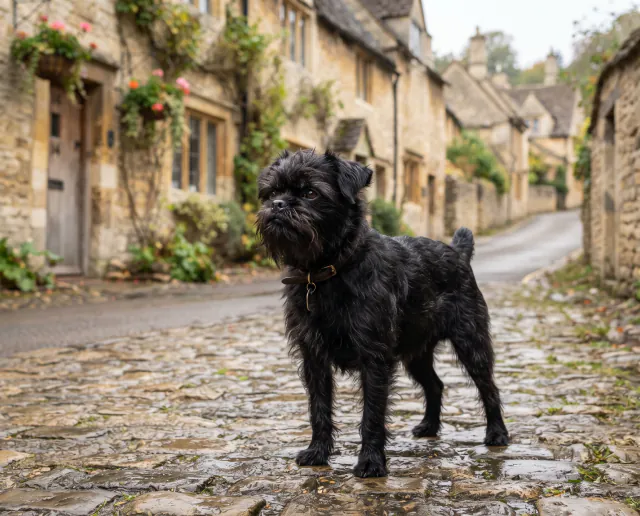
Centuries before it became a show ring curiosity, the Affenpinscher earned its keep in German stables and kitchens, hunting rats and mice among the grain sacks. The name translates loosely as monkey terrier, a nod to the flat, whiskered face and the quick, inquisitive expression that still defines the breed today. Nothing about the modern dog looks accidental. The wiry brows, the pushed up muzzle and the shaggy beard combine into an expression owners fairly describe as impish, and it sits on a body built more like a scaled down terrier than a conventional lapdog.
Numbers remain small in most countries. Anyone wanting a puppy usually joins a waiting list, and some buyers end up considering an import once the relevant health testing has been confirmed. The national breed club is a far better starting point than a general advert. What arrives at the end of that patience is a genuinely bold small dog, closer in temperament to a working terrier than to a typical toy companion.
Temperament in the home
Confidence arrives entirely out of proportion to size. An Affenpinscher will square up to a dog many times its weight without apparent concern, and owners quickly learn to step in before enthusiasm becomes a real mismatch. At home the breed is devoted to its own household and often reserved, sometimes suspicious, with strangers, which makes early and continued socialisation important rather than optional. Watchfulness translates into barking at the doorbell, passing dogs and unfamiliar noises, so a household hoping for a silent flat companion should look elsewhere. The comic side is real too, and much of the breed’s following comes from clowning for an audience once trust is established. Children who understand that a small dog is not a toy tend to get on well with the breed, though very young children and a feisty terrier temperament are not always a comfortable pairing.
Exercise and training
Around 45 minutes of walking a day, split into two outings, suits most adults, with small joints better served by several shorter walks than one long march. Mentally the breed needs almost as much as it needs physically. Scent games, short training sessions and supervised garden time keep a naturally busy mind occupied, and boredom tends to show up as digging, chewing or persistent barking. Training rewards patience and a sense of humour, since the dog thinks for itself rather than working purely to please. Food and play both motivate reliably, and brief, upbeat sessions outperform anything that turns into a battle of wills. Recall around squirrels, rats and other small moving targets needs careful proofing, since the ratting instinct that built the breed has not been bred out of it, and a lead stays the sensible default in open parkland.
Coat and grooming
The coat lies short over the body and grows noticeably longer and wirier around the face, giving the breed its monkeyish look, with harsh guard hairs over a finer undercoat. Hand stripping two or three times a year keeps the jacket harsh and correctly textured, and a groomer used to wire coated breeds manages it without trouble. Clipping is sometimes used instead on pet dogs and produces a softer, less weatherproof coat needing more frequent attention. Between grooming sessions, a weekly comb through the beard, brows and leg furnishings prevents matting and clears out the food debris a whiskery face collects. Shedding is genuinely light, one reason the breed appeals to owners who dislike hair on the sofa. Nails, ears and teeth need the same routine checks as any small dog, and the crowded jaw common to toy breeds makes dental care worth taking seriously from puppyhood.
Health and lifespan
A well kept Affenpinscher commonly reaches twelve to fourteen years. Patellar luxation, where the kneecap slips from its groove, turns up across small breeds generally, and a vet can check stability at a routine appointment. The compact jaw and closely set teeth make dental disease a real risk, and brushing started early matters more here than the size of the mouth might suggest. Some toy breeds with a domed skull and narrow pelvis have a higher rate of assisted delivery, and asking a breeder how their bitches have whelped in the past is a fair question. Eye problems are not unusual in small breeds generally, and a check at routine puppy visits is normally enough to catch anything developing early. Keeping the dog lean protects the joints far more than any supplement, and an Affenpinscher carrying extra weight ages faster than one kept trim throughout its life.
Costs and space
Monthly costs typically fall between about £70 and £130, covering food, insurance, veterinary care and periodic coat stripping, though the figure depends on insurer, region and the individual dog. Space requirements are minimal, and the breed suits a flat or small house as readily as anything larger, provided daily walks and mental work genuinely happen. A secure garden matters less than secure company, since this is not a dog that thrives being left alone for long stretches. Buying one means patience. Litters are few and far between, waiting lists are normal rather than a sign of a poor breeder, and the national breed club offers far better guidance than a general classified listing.
Verdict
The Affenpinscher suits owners drawn to a characterful small dog with genuine terrier grit, who have time for training, socialising and coat care, and who are prepared to wait for the right puppy to become available.
Anyone wanting a placid lapdog, a breed that tolerates being left alone for long days, or a puppy available at short notice should look at a more common toy breed instead. Patience at the start of ownership tends to be repaid by a dog with far more personality than its size suggests.