
At a glance
Key facts
The essentials to compare before deciding whether this breed fits your home and routine.
- Size
- Small
- Lifespan
- 12 to 15 years
- Energy
- Medium
- Temperament
- Merry, affectionate and dependent on company
- Good with children
- Usually very good with children taught to handle a long-eared dog gently
- Exercise
- About an hour a day in two or three outings
- Trainability
- Beginner friendly
- Grooming
- Daily brushing at full length, or professional clipping every six to eight weeks
- Estimated monthly cost, GBP
- £90 to £165 per month
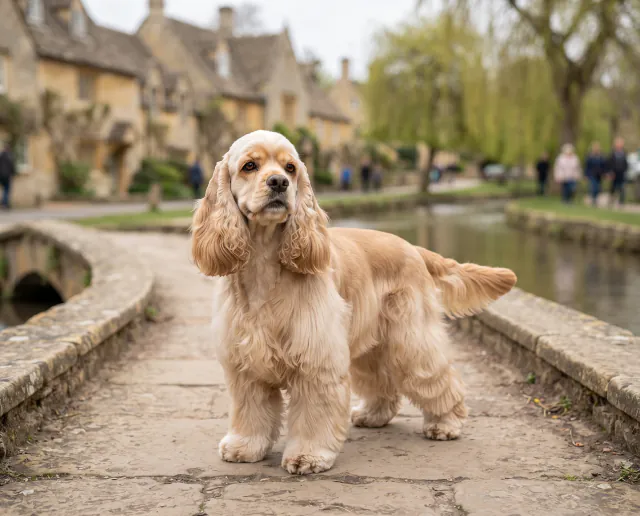
Put an American Cocker Spaniel next to an English Cocker and the split is obvious within seconds. The American is shorter in the leg and back, its skull rounder and more domed, the muzzle shorter and squarer, and the coat falls in a skirt that almost brushes the ground at show length. The Kennel Club separated the two in 1970 and judges them as different breeds.
Both descend from the small flushing spaniels of England that crossed the Atlantic in the late nineteenth century. American breeders selected for a more compact dog with a heavier coat, and outside North America the breed is kept almost entirely as a house dog. The hunting instinct has faded rather than vanished, and a nose that finds every dropped chip on a pavement is the proof.
Temperament in the home
The best examples are cheerful, gentle and eager to be with their people, following from room to room and settling on whichever lap is nearest. They are soft in temperament and respond poorly to shouting, which tends to produce a spaniel that submissively wets the floor rather than one that learns. A poorly bred or badly socialised individual can become nervy, and a fearful spaniel can still bite, so buying from a breeder who raises puppies in the house and shows calm parents matters more here than most breeds. Long working days suit them badly, and barking or chewing usually follows. Children get on well with them, though a small dog with heavy ears and prominent eyes needs careful handling. Most live peacefully with other dogs and cats raised alongside them.
Exercise and training
An hour a day split into two or three outings keeps an adult fit and settled, and many are happy with a little less. This is not a breed for a running partner over Dartmoor. Sniffing walks, retrieving in the garden and a weekly outing somewhere new give the nose work. Puppies should be kept to short, gentle sessions while they grow, and jumping on and off furniture is best discouraged until the joints have matured. Training is easy since these dogs will do almost anything for a piece of chicken, but sessions must stay light. Lead walking, a reliable recall away from other dogs and tolerance of grooming and ear cleaning are the priorities, and a puppy taught to stand on a table for brushing from eight weeks saves trouble later.
Coat and grooming
The coat is the breed’s defining feature and its most demanding one. It is silky, flat or slightly wavy, growing long on the ears, chest, belly and legs to form the skirt seen in the show ring. Left untended it mats within days, and a matted cocker is a miserable, often sore animal, particularly behind the ears and between the toes. Owners who keep the full coat brush and comb it daily, right down to the skin, and bath the dog every couple of weeks. Most pet owners have the body clipped short by a professional groomer every six to eight weeks and keep the ears, legs and feet trimmed, cutting the daily work to a few minutes of combing. Groomer visits are a fixed cost and a puppy must be introduced early. Shedding is moderate, though a clipped coat leaves less hair around. The ears need weekly checking and cleaning because they trap warmth and moisture, and ear infections are the most frequent reason these dogs see a vet. A snood or narrow bowl at mealtimes keeps them out of the food.
Health and lifespan
Twelve to fifteen years is typical, and the breed is generally robust in its frame. The eyes carry the heaviest health burden. Cataracts, glaucoma, progressive retinal atrophy, dry eye and cherry eye are all well documented, and an annual eye examination under the BVA and Kennel Club scheme for both parents, plus a DNA test for the prcd form, are reasonable to ask a breeder for. Hip dysplasia occurs and hip scoring under the same scheme is available. Luxating patellas, low thyroid function and greasy seborrhoea are also seen. Autoimmune haemolytic anaemia is recognised in the breed and sudden lethargy with pale gums is a same day appointment. Weight creeps on quickly because these dogs are small, persuasive and greedy, and a heavy cocker suffers more with its joints, back and heart. Feel for the ribs weekly and adjust the food rather than the walk.
Costs and space
Monthly running costs sit above those of a typical small dog, around £90 to £165 depending on insurer, region and how much grooming is done at home. Professional clipping every six to eight weeks is the main fixed extra, and eye or ear treatment can add up over a lifetime, so insurance taken out early and kept going is sensible. Space needs are modest, and a flat with a nearby park works provided the dog is not alone all day. Finding a puppy takes patience. The American Cocker is registered in far smaller numbers than its English cousin, and a good breeder will have a waiting list. The breed club is the sensible starting point, and also helps rehome the occasional adult. Ask specifically for eye certificates and hip scores rather than a general assurance.
Verdict
The American Cocker suits someone who is home a good deal, enjoys the routine of grooming or is content to pay for it, and wants a gentle, cheerful small dog with modest exercise needs. Retired owners and quiet families do well with it.
Anyone who dislikes brushing, works long days away from home or wants a low maintenance dog that can be hosed down after a muddy walk should look at a shorter coated breed. Buying cheaply and without eye testing is how the breed’s known problems end up in someone’s kitchen.