At a glance
Key facts
The essentials to compare before deciding whether this breed fits your home and routine.
- Size
- Medium
- Lifespan
- 12 to 14 years
- Energy
- Medium to high
- Temperament
- Keen, affectionate and reserved with strangers
- Good with children
- Often good with children in a family that trains and exercises the dog
- Exercise
- An hour or more a day, ideally with swimming and retrieving
- Trainability
- Beginner friendly
- Grooming
- Weekly combing with regular brushing of the curls and light trimming
- Estimated monthly cost, GBP
- £75 to £135 per month
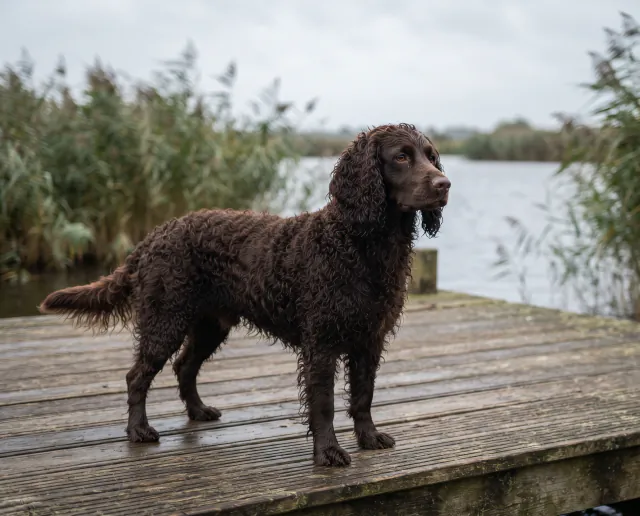
Most British dog owners have never seen an American Water Spaniel, and many experienced gundog people would struggle to name one. The breed was developed in the river valleys of Wisconsin in the nineteenth century by market hunters who needed a small dog that could sit in a skiff, mark fallen ducks, retrieve them from cold water, and flush game from cover on the walk home. Size was set by the boat rather than the quarry, giving a compact, curly coated brown dog of eleven to twenty kilos, between a cocker and a springer in bulk.
In the United Kingdom the breed sits on the Kennel Club’s Imported Breed Register, and registered numbers are tiny. Anyone drawn to it needs to accept that a puppy may be a year or more away and may come from abroad.
Living with the breed
Indoors the American Water Spaniel is a settled, affectionate house dog that bonds tightly to its family and tends to pick one person as its own. Reserve with strangers is normal rather than a fault, and it needs plenty of early socialising so it stays reserved rather than sliding into suspicion. Some are watchful and will announce visitors, and a few are talkative, a habit from working close to a handler in a boat. They can be wilful when bored, with a stubborn streak that shows as selective deafness. Other dogs are generally accepted, and cats can work with a puppy raised alongside them, though small pets in the garden are at risk from a dog bred to flush and catch. Long days alone are a poor fit for a breed this attached to its people.
Daily exercise
An adult needs an hour or more a day, and a walk on a lead round the block will not do it. These dogs were made to swim, and a river, lake or safe stretch of coast used regularly does more for their wellbeing than anything on dry land. Retrieving is second nature and a dummy thrown into water or long grass will occupy one for as long as the owner’s arm lasts. Puppies should be built up gradually, with short outings and no repetitive jumping until the joints finish growing at around a year. In winter the oily coat sheds water well and the dog will happily go in when the owner would rather not, so a towel and a dry car are part of the kit. Near livestock the lead goes on, and recall around waterfowl needs proofing early because the urge to chase a duck across a lake is strong.
Training and mental work
The breed is intelligent and quick to learn, but soft in the sense that raised voices and heavy hands shut it down. Reward based methods with short, varied sessions suit it well, and food and retrieving both work as motivators. Gundog training classes give the dog an outlet and the owner a structure, and many working test skills, such as steadiness and delivery to hand, are within reach of a pet dog trained at home. Scent work and swimming to retrieve give the brain something to do when a proper outing is impossible. Left without mental work the breed invents projects, usually chewing or digging. Early exposure to other dogs, traffic, children and strangers matters more here than with a more outgoing breed, because natural reserve can harden into shyness if never tested.
Grooming and shedding
The coat is a dense mass of tight curls or loose waves, always some shade of liver or dark chocolate, with a natural oil that makes it feel slightly waxy and keeps water out. It is not a heavy shedding coat, though loose hair tends to stay caught in the curls until combed out. A thorough comb once a week, with regular brushing of the feathering on the legs and ears to stop mats forming, is enough for most. The ears need checking weekly and drying after every dip. Some owners trim the coat lightly around the feet, ears and tail for tidiness, but the curls should never be clipped short across the body, because the protective texture takes a long time to grow back. Bathing too often strips the oil and makes the coat dry and itchy, so rinsing after swimming and a proper bath only when the dog smells is the usual routine.
Health and costs
Hip dysplasia is recognised and hip scoring under the BVA and Kennel Club scheme is the sensible request. Eye conditions including cataracts and progressive retinal atrophy occur, so eye examination under the same scheme for both parents should be on the list. Low thyroid function is reported often enough to raise with a breeder. Because the breed is so scarce outside North America, the gene pool is small and the club’s advice on matings and imports carries weight. Running costs are moderate, around £75 to £135 a month for food, insurance, veterinary care and grooming. The bigger financial reality is acquiring the dog at all. Litters are rare in most countries, buyers usually wait, some dogs are imported from North America, and the breed club is the sensible first contact. Rescue dogs of the breed are almost unheard of.
Verdict
The American Water Spaniel suits an active owner near water who enjoys training, wants a medium sized retrieving dog with a coat that is easy to keep, and is patient enough to wait for a puppy from a responsible source.
It is a poor fit for someone wanting an outgoing dog that greets every stranger in the park, for households that are out all day, or for anyone who needs a dog quickly. Most buyers wanting this kind of dog will find a working cocker or a springer far easier to find and just as capable.