At a glance
Key facts
The essentials to compare before deciding whether this breed fits your home and routine.
- Size
- Medium
- Lifespan
- 10 to 14 years
- Energy
- Medium to high
- Temperament
- Calm, devoted, reserved and single-minded on scent
- Good with children
- Often good with children in a household that gives the dog work
- Exercise
- About 90 minutes a day with tracking work included
- Trainability
- Experienced handler
- Grooming
- Weekly brushing with moderate seasonal shedding
- Estimated monthly cost, GBP
- £85 to £150 per month
Deer stalkers were the first people in Britain to take the Bavarian Mountain Hound seriously, and they remain the breed’s natural owners. The dog was developed in the Bavarian Alps in the late nineteenth century to follow the blood trail of a wounded deer or boar over steep ground, often hours after the shot, and to hold the animal at bay until the hunter arrived. A lighter, more agile hound was wanted than the heavier Hanoverian type used on the lowlands, and the Bavarian was bred for exactly that.
In the UK the breed has moved from a curiosity to a regular sight at stalking events and in the show ring, though numbers are still modest. A growing number are being bought as pets on the strength of a handsome red coat and a manageable size. That is where problems start, because a dog bred to work a cold trail on its own for hours is not a dog that settles for a walk round the block.
Temperament in the home
Indoors the breed is quiet, clean and attached to its people to an unusual degree, often choosing one person and shadowing them from room to room. Strangers are met with reserve rather than friendliness, and early socialisation is needed to stop reserve hardening into suspicion. These dogs do not do well left alone for a working day and can become vocal or destructive. With other dogs they are generally sociable, and many live alongside cats they have been raised with, but the prey drive is strong and small animals outside the household are fair game. Children are usually treated with tolerance, and the breed is not a boisterous one, though a hound that has bonded closely to one adult may be indifferent rather than affectionate towards the rest of the family. Kennelling suits them badly.
Exercise and training
An adult needs around ninety minutes of exercise a day, and the quality matters more than the distance. A road walk on a lead does little for a dog whose whole design is about scent, and the owners who succeed are those who lay tracks for it, whether with a drag of deer blood, a hidden article or a person walking off across a field. Tracking clubs and working trials give a non-stalking owner a structured route. Puppies should be kept to short outings until the joints have matured at around a year. Recall is fair by hound standards, but a fresh deer line in a Scottish glen will pull the dog away from any handler, and a long line is wise in unfenced country. Training is rewarding because the breed is thoughtful and biddable with a handler it trusts, and it resents harsh treatment. Fields with livestock are lead-only, and a dog that hunts deer needs a secure garden fence of some height.
Coat and grooming
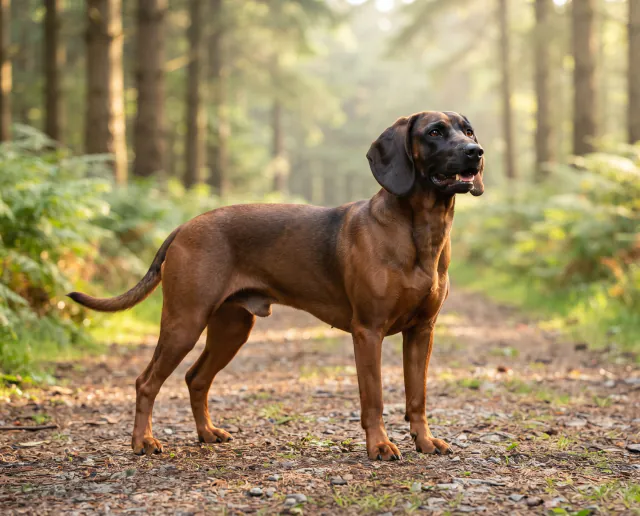
The coat is short, dense and close, in shades from fawn and red to brindle, usually with a darker mask. Care is minimal, with a weekly brush and a heavier session during the spring and autumn moult, when the shedding is noticeable on furniture. Ears hang and need a weekly look for wax or smell. The feet and dew claws of a dog that works through bramble and bracken need regular checking, and a scan for ticks after a day on the hill is routine in deer country. The coat gives little insulation against a wet British winter, and a jacket for standing about at the end of a cold day is reasonable.
Health and lifespan
The breed is generally sound, with ten to fourteen years typical. Hip dysplasia is recognised, and buyers should ask for hip scores under the BVA and Kennel Club scheme for both parents, with elbow scores a bonus. Ear infections in a drop-eared dog and eyelid problems where the lids are loose are the other common issues, so look at the eyes of the parents. Keep the dog lean, since a hound that is fed for the work it might do rather than the work it actually does puts on weight quickly, and a heavy tracking dog wears its joints out early.
Costs and space
Running costs sit in the region of £85 to £150 a month, with insurance and food the main drivers and grooming almost nothing. Veterinary bills are those of any medium dog. Space is less important than access to countryside, and the breed is happiest within reach of woods, moorland or farmland where it can do what it was bred for. A flat with no garden is a poor fit. Finding a puppy takes patience. The Bavarian Mountain Hound Society is the first contact, and breeders often favour working homes over pet homes, which is fair given what the dog needs. Some dogs are still imported from Germany and Austria, and litters elsewhere can have waiting lists.
Verdict
The breed suits a stalker, a gamekeeper, or an active owner ready to commit to tracking or working trials, who wants a calm, devoted dog at home and a serious one in the field.
Anyone wanting a casual pet, an outgoing dog for a busy household or something that can be left for the working day should look at a different breed. Bought for looks alone, this hound becomes a frustrated one.