At a glance
Key facts
The essentials to compare before deciding whether this breed fits your home and routine.
- Size
- Large
- Lifespan
- 10 to 12 years
- Energy
- Medium to high
- Temperament
- Steady, protective and calmly self assured
- Good with children
- Often good with children when raised in the household
- Exercise
- About 1 to 2 hours a day of varied activity
- Trainability
- Moderate
- Grooming
- Thorough brushing several times weekly plus regular trimming
- Estimated monthly cost, GBP
- £110 to £190 per month
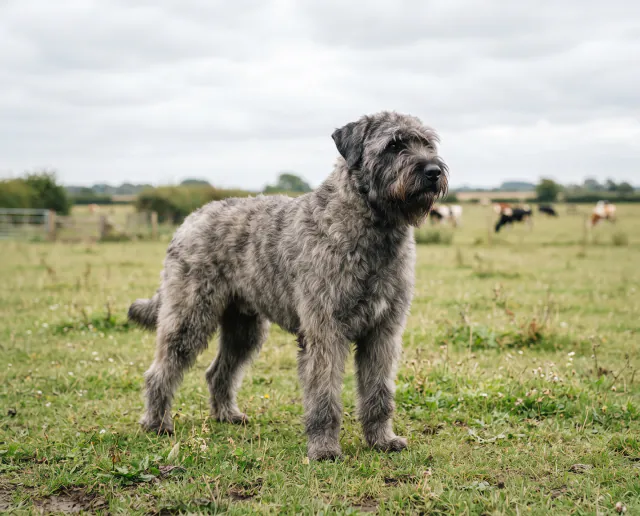
Flemish farmers on the low, wet ground straddling the Belgian and French border needed a dog that could drive cattle, pull a milk cart, guard the farmyard and shrug off filthy weather, and the Bouvier des Flandres does all of it from the same thickset, weatherproof frame. The name translates roughly as cowherd of Flanders, and the breed’s working brief across dairy country explains both its calm handling of livestock and its readiness to stand its ground when something threatens the farm.
Two world wars nearly ended the breed, since Flanders sat directly on the front line in both conflicts, and much of what survives today traces back to a small number of dogs rebuilt from scattered stock after 1918. That near loss has left a breed that remains uncommon relative to its size and usefulness, though dedicated breeders keep reasonably sound numbers going.
Living with the breed
A Bouvier is typically calm, watchful and deeply attached to its family, carrying an air of quiet authority rather than nervous energy. Protective instincts are genuine and well documented in the breed, which makes early, thorough socialisation with visitors, other dogs and normal daily comings and goings essential rather than optional. Left undersocialised, a Bouvier’s natural wariness of strangers can harden into something a household then has to manage for the dog’s whole life. With its own family the breed is affectionate and often surprisingly gentle for its bulk, and most get on well with children raised alongside them, though supervision matters given the dog’s sheer size and strength. Other dogs are usually accepted, particularly when introduced as a puppy, and the breed’s herding background means a tendency to shepherd children and other pets around a room is fairly common.
Daily exercise
An hour to two hours of exercise a day suits most adults, combining lead walks with some off lead time in a secure area and, ideally, some form of structured work, since a Bouvier bred to think and problem solve on a farm does not thrive on a simple loop of the park. Herding trials, tracking, carting and protection sport style training all suit the breed’s working instincts where these activities are available locally. Puppies need exercise built up gradually given the size the dog will reach, and repeated jumping or long forced walks before the growth plates close should be avoided on the advice of a vet. Once mature, the breed copes well with a working day of mixed physical and mental activity and tends to flag less than its size might suggest.
Training and mental work
Bouviers are intelligent and were bred to work semi independently with cattle, which shows up in training as a dog that thinks about a command rather than simply obeying it. Firm, calm, reward based handling from an experienced or well supported owner gets further than repetition or pressure. Early lessons in accepting handling, calm greetings and settling on command matter given the eventual size and protective instinct of the adult dog. Bored Bouviers can become pushy or vocal, so mental work through scent games, herding style exercises or structured obedience helps considerably. The breed responds badly to harsh correction, which tends to produce stubbornness rather than compliance.
Grooming and shedding
The double coat is harsh and wiry on top with a fine dense undercoat beneath, and it needs serious commitment. Several thorough brushing sessions a week, right down to the skin, prevent the matting that a coat this dense and this long develops quickly if neglected, particularly behind the ears, under the arms and around the beard and eyebrows that give the breed its gruff expression. Professional trimming every couple of months keeps the coat at a manageable length and removes dead hair that brushing alone will not shift. Shedding itself is comparatively low for a double coated breed, since the wiry outer coat holds dead hair rather than dropping it everywhere, though that hair still needs to be removed by the owner. Beard and facial hair collect food and water after every meal and need regular attention.
Health and costs
Ten to twelve years is a realistic lifespan. Hip and elbow dysplasia are well documented in a breed of this size and build, and buyers should ask for hip and elbow scores under the British Veterinary Association and Kennel Club scheme for both parents. Glaucoma and other inherited eye conditions occur in the breed, making the BVA and Kennel Club eye scheme a sensible question to raise with a breeder. As a large, deep chested dog, the Bouvier carries a real risk of gastric dilatation and torsion, and owners should know the warning signs and avoid strenuous exercise close to mealtimes. Monthly costs typically run from a hundred and ten to a hundred and ninety pounds, with grooming, whether done at home or professionally, forming a significant and recurring part of that figure.
Verdict
The Bouvier des Flandres suits an owner with space, a genuine commitment to coat care, and an interest in a working minded dog that wants a job of some kind. It suits families able to manage a large protective breed responsibly and to socialise it thoroughly from puppyhood.
It is a poor fit for anyone wanting a low grooming breed, a small home without a proper garden, or a first time owner unwilling to invest in structured training and socialisation from the outset. Get the early groundwork right and the reward is an exceptionally steady, capable companion for a decade or more.