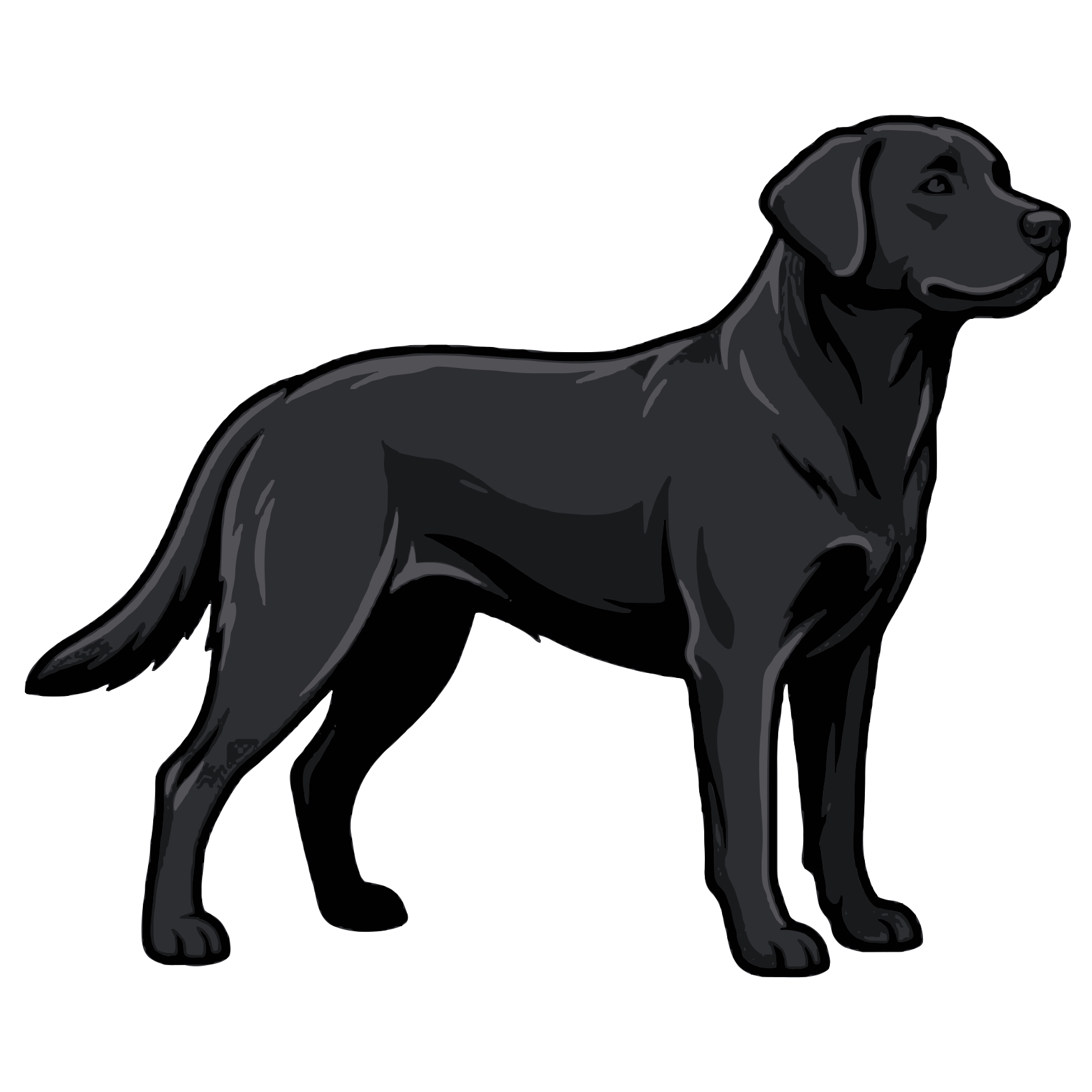

Also known as: Berger de Brie.
At a glance
Key facts
The essentials to compare before deciding whether this breed fits your home and routine.
- Size
- Large
- Lifespan
- 10 to 12 years
- Energy
- High
- Temperament
- Bold, protective and deeply attached to its family
- Good with children
- Often good with a family it has grown up with
- Exercise
- About an hour and a half a day across two outings
- Trainability
- Moderate
- Grooming
- Thorough brushing two or three times a week plus regular dewclaw trimming
- Estimated monthly cost, GBP
- £105 to £190 per month
A Briard looks out at the world from behind a heavy fall of hair that all but hides its eyes, and that half hidden gaze is oddly fitting for a breed that has always watched more than it reacts. French shepherds used the breed for centuries to guard flocks as much as move them, working alongside a shorter coated cousin, the Beauceron, across the farmland south of Paris. Thomas Jefferson reportedly kept Briards at Monticello, and the breed’s watchful, protective character has changed remarkably little since.
An adult Briard stands up to 68 centimetres and carries a long, slightly wavy double coat with a texture often compared to a goat’s, over a solidly built frame closer to forty kilograms than thirty. The look draws admirers at dog shows, but the temperament underneath is that of a working guard dog that takes its own family seriously and everyone else considerably less so.
Suitability
Briards bond intensely with their household and tend to regard strangers with genuine suspicion rather than easy friendliness, a trait that needs deliberate management from puppyhood onward rather than being left to sort itself out. Properly socialised, most are controlled and dignified around visitors instead of reactive, but that outcome depends on consistent early exposure rather than good luck. Within the family the breed is often notably gentle and patient, and many Briards form a close, almost supervisory bond with children they have grown up with, though the size and protective instinct mean new child visitors should be introduced carefully. First time owners can manage a Briard with real commitment and support from an experienced breeder, but it is not an easy introduction to dog ownership, and a household without previous experience of a large, independent breed should think carefully before committing.
Exercise
An hour and a half a day across two separate outings suits most adult Briards, ideally including some form of structured work such as obedience, herding or tracking rather than plain walking alone. The breed retains real herding instinct and enjoys having a task, and a Briard without one tends to invent its own, which usually means shepherding the household rather than the sheep. Puppies grow steadily into a large frame and should have exercise limited to short, frequent sessions rather than long walks or excessive stair use until the skeleton has matured, generally around eighteen months.
Grooming
The long double coat is one of the more demanding aspects of ownership, needing thorough brushing two or three times a week right down to the skin to prevent matting, particularly behind the ears, under the legs and around the hindquarters. The hair over the eyes needs regular trimming or careful management so the dog can see clearly, and many owners keep the coat trimmed shorter than the show length purely for practicality. The breed’s distinctive double dewclaws on the hind legs, required by the breed standard and thought to help stability on uneven ground, do not wear down naturally and need checking and trimming on a regular schedule to avoid catching or tearing.
Health
Hip dysplasia is recorded in the breed, and BVA and Kennel Club hip scores for both parents are a reasonable and standard request. As a deep chested large dog, the Briard carries a real risk of bloat, and owners should know to treat a swollen abdomen, unproductive retching or sudden distress as an emergency rather than something to monitor overnight. A form of stationary night blindness with a DNA test has been identified in the breed and is worth checking in breeding lines through the BVA and Kennel Club eye scheme alongside the genetic test. Keeping a working breed of this size lean throughout its life protects joints that already carry a substantial frame.
Choosing and training
Briards are not common outside France, and prospective owners usually go through the breed club and accept a wait rather than expecting a quick purchase. Meeting the parents gives a realistic sense of the guarding temperament involved, since a poorly socialised line produces a genuinely difficult adult. Training should begin from the first week home, using confident, reward based methods, since the breed responds far better to clarity and consistency than to repetition or correction, both of which tend to make an already wary dog more guarded rather than more obedient. Broad early socialisation with people, other dogs and everyday situations is essential groundwork rather than an optional extra for a breed this protective by instinct.
Verdict
The Briard suits an owner prepared to commit to serious grooming, thorough socialisation and a dog that takes its guarding role seriously, in return for an intelligent, devoted and genuinely capable working companion.
It is a poor match for anyone wanting low maintenance coat care, a dog that welcomes every stranger, or a first time owner without support from an experienced breeder. Given the right start, a Briard’s loyalty to its own family is difficult to match.