Also known as: Berger de Beauce.
At a glance
Key facts
The essentials to compare before deciding whether this breed fits your home and routine.
- Size
- Large
- Lifespan
- 10 to 12 years
- Energy
- High
- Temperament
- Confident, loyal and naturally protective of family
- Good with children
- Often good with the family it is raised with
- Exercise
- About an hour and a half a day including training work
- Trainability
- Experienced handler
- Grooming
- A weekly brush keeps the short coat tidy
- Estimated monthly cost, GBP
- £110 to £200 per month
France produced two well known herding breeds from the same broad stock, one with a long coat that became the Briard and one with a short, hard coat that became the Beauceron. Where the Briard worked mostly with sheep, the Beauceron was put to cattle and to guarding farms across the plains south of Paris, a job that demanded size, confidence and a readiness to challenge anything that threatened the property. Napoleon reputedly kept them, and the modern breed still carries the bearing of an animal bred to be taken seriously.
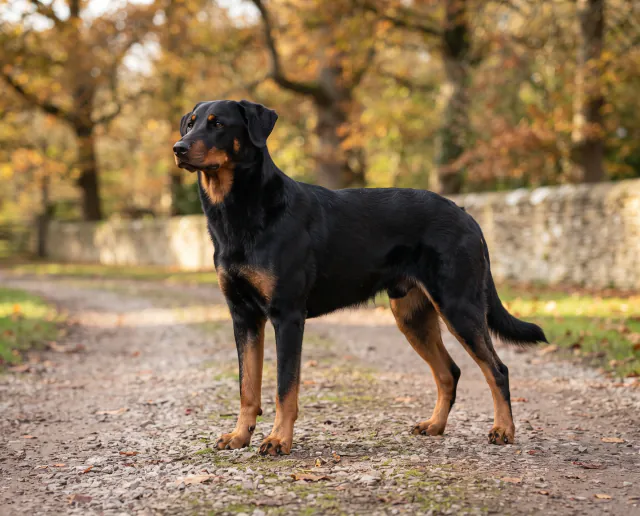
A Beauceron in good condition is a substantial dog, often forty kilograms and close to seventy centimetres at the shoulder, with a black and tan coat and a naturally suspicious eye for strangers. Behind that guarding instinct sits a genuinely intelligent, biddable working dog, but the combination needs an owner who has handled large, strong minded breeds before.
Suitability
This is not a first dog, and most reputable breeders in France and beyond will say so plainly. A Beauceron bonds deeply with its family and is naturally wary of anyone it does not know, a trait that needs careful early management rather than encouragement, since an unsocialised adult of this size and confidence is genuinely difficult to live with. Given proper exposure from puppyhood the breed is calm and controlled around visitors rather than reactive, but that outcome depends entirely on the work put in during the first year. Children in the family are usually treated with real gentleness, though the size difference alone means young children should not be left unsupervised with any dog this large. A secure garden and a home with enough room for a big, active dog to move around matter more here than in most medium sized breeds.
Exercise
An hour and a half a day, with a good part of it devoted to structured training or a job rather than plain walking, suits the breed’s temperament far better than exercise alone. Beaucerons were bred to think as well as move, and a dog given only physical exercise without mental engagement tends to become pushy or destructive rather than settled. Herding, tracking, obedience and protection sport all appeal to the working instincts still present in most lines. Puppies grow quickly into a large frame and need exercise limited to short, frequent outings rather than long walks or repeated stair use until they are physically mature, usually around eighteen months to two years for a breed this size.
Grooming
The short, dense double coat is genuinely easy to keep, needing only a weekly brush to remove loose hair and keep the coat glossy. There is no clipping, stripping or professional grooming required at any point, which makes the Beauceron one of the more forgiving large breeds for coat care. The double dewclaws on the hind legs, a distinctive and required feature of the breed standard, need to be checked and trimmed regularly since they do not wear down naturally the way front toenails do and can catch or tear if left too long.
Health
Hip and elbow dysplasia are recorded in the breed, and buyers should ask to see BVA and Kennel Club hip and elbow scores for both parents. As a large, deep chested dog the Beauceron carries a real risk of bloat, and owners should know the warning signs of a distended abdomen, unproductive retching and sudden distress well enough to treat them as an emergency. A DNA test for a form of progressive retinal atrophy is available and worth checking in breeding lines. Because the breed is active and muscular rather than naturally prone to weight gain, most Beaucerons stay lean without much effort, though joint health still benefits from keeping a working dog on the slim side of ideal condition throughout its life.
Choosing and training
The Beauceron remains relatively scarce outside France, and prospective owners should expect to wait for a litter and to travel some distance, often through the breed club rather than a general advertisement. Meeting the parents, particularly the mother, gives a realistic sense of the guarding temperament an owner will be managing. Training should begin immediately and continue consistently, since the breed responds very well to clear, confident, reward based handling and poorly to inconsistency or harsh correction, which tends to sharpen the guarding instinct rather than calm it. Wide early socialisation with people, dogs and everyday situations is not optional for a breed this capable of unsettling a stranger without meaning any harm by it.
Verdict
The Beauceron suits an experienced owner who wants a genuinely capable working and guarding dog, has the space and commitment for thorough training, and is prepared to manage natural wariness of strangers throughout the dog’s life.
It is unsuitable for a first time owner, a household without secure space, or anyone wanting a dog that greets every visitor as a friend. Properly raised, it is an exceptionally loyal and controlled companion rather than a difficult one.