Also known as: Alsatian.
At a glance
Key facts
The essentials to compare before deciding whether this breed fits your home and routine.
- Size
- Large
- Lifespan
- 9 to 13 years
- Energy
- High
- Temperament
- Loyal, alert and responsive
- Good with children
- Can be very good with training and supervision
- Exercise
- At least 2 hours a day
- Trainability
- Experienced handler
- Grooming
- Brush several times weekly
- Estimated monthly cost, GBP
- £110 to £190 per month
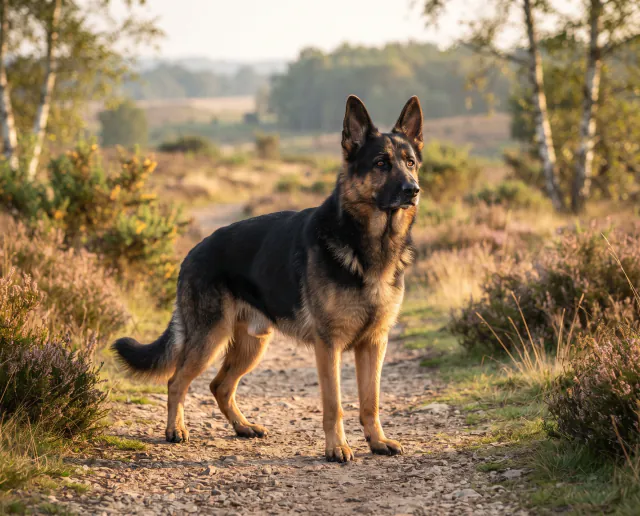
German Shepherd Dogs are versatile working animals with intelligence, stamina and a strong awareness of their surroundings. They often form close bonds and learn quickly. Those traits bring responsibility. Poor socialisation, uncertain handling or unsuitable breeding can contribute to fear, over-protectiveness or difficult reactivity. A Shepherd needs owners who can manage a large adolescent, provide structured work and reward calm behaviour. Appearance should come after sound movement, stable temperament and documented health screening.
Origin and purpose
The German Shepherd was assembled in Germany at the end of the nineteenth century from regional herding dogs, with Max von Stephanitz driving a deliberate programme to standardise a working animal rather than a show type. The original job was tending flocks, moving sheep along unfenced boundaries and keeping them out of crops, which called for stamina, judgement and constant attention to a handler. Military and police work followed within two decades and now dominates the breed’s public image.
Much of what owners meet at home follows from that. The tendency to patrol, to notice arrivals before anyone else and to settle where the whole household is visible is a tending dog’s habit rather than trained guarding. So is the appetite for repetitive, structured tasks, along with the frustration that surfaces when a capable dog is given nothing to organise.
Suitability
The breed fits active, experienced households best, although a prepared first-time owner with professional support may succeed. Small children can be knocked over, and visiting friends need calm introductions. Supervision is essential. Well-socialised Shepherds can live with other dogs and with cats they have grown up alongside, although same-sex tension and a strong interest in anything that runs both need managing. Shepherds commonly want to monitor household activity and may bark at movement outside. Teach them to disengage and settle away from doors or windows. They require enough indoor space to rest comfortably and a vehicle that can carry them safely. Routine long absences are unlikely to support good welfare or behaviour.
Exercise
Healthy adults usually need at least two hours of exercise, plus mental work. Mix steady walking with sniffing, obedience, tracking, controlled play and suitable canine activities. More speed is not always better. Repetitive ball chasing can increase arousal and load the joints. Puppies need measured exercise while bones and coordination develop. Recall and a reliable stop cue are important, but use a lead wherever livestock, traffic or public safety demands it. Train calm focus around dogs and people rather than encouraging indiscriminate greetings.
Grooming
The double coat sheds throughout the year and heavily during seasonal changes. Brush several times a week, reaching through dense undercoat without scraping the skin. Long-coated individuals need extra attention behind the ears, on the legs and around the tail. Check paws after rough-ground walks and dry the coat properly after rain. Maintain nails and teeth from puppyhood. Shepherds can be sensitive about handling if it is rushed, so pair brief checks with rewards and stop before the dog becomes worried.
Health
Responsible breeders should provide hip and elbow scores and follow current eye and breed-specific recommendations. Ask how the parents move, how long close relatives lived and whether neurological or digestive problems have occurred in the family. A sloping outline or unstable rear movement should not be accepted as desirable style. Maintain lean condition and build fitness steadily. Persistent lameness, weakness, scuffed paws, digestive trouble or sudden abdominal swelling needs veterinary attention, with swelling and distress treated as an emergency. Arrange comprehensive insurance early.
Choosing and training
Meet the mother, review original health results and observe adult dogs moving freely. The breeder should discuss temperament honestly and avoid promoting aggression or extreme guarding. Working lines can demand more activity than many pet homes can provide. A good rescue will assess behaviour and disclose handling needs. Use reward-based training for lead skills, recall, cooperative care, visitor routines and settling. Seek qualified help early if the dog becomes fearful or reactive. Physical strength makes prevention especially important.
Size and lifespan
Males typically stand 60 to 65 cm (24 to 26 in) at the withers and weigh 30 to 40 kg (66 to 88 lb). Females usually measure 55 to 60 cm (22 to 24 in) and weigh 22 to 32 kg (49 to 71 lb). Working lines tend to be lighter and more angular than show stock, and the difference in build tells you more than the difference in weight. Growth continues to around eighteen months, so a large adolescent should not be exercised as though it were a finished adult.
Published lifespan sits at roughly 9 to 13 years, with the breed median towards the lower half of that range. The hip and elbow scoring discussed above is administered through recognised schemes, including the BVA and Kennel Club programmes in the United Kingdom and the Orthopedic Foundation for Animals in the United States, and DNA tests exist for several inherited conditions seen in the breed. Take the written results to your own vet before committing to a puppy.
Verdict
A well-bred, well-trained German Shepherd can be an attentive companion and capable working partner. The breed demands time, physical ability and sound judgement. It is a poor choice for someone seeking a naturally protective status symbol or a dog that will educate itself. Suitable owners value stable behaviour, functional movement and daily cooperation. They can provide substantial exercise without constant excitement and are prepared for the financial demands of a large dog.
Meet stable adult Shepherds in ordinary settings before deciding. Notice recovery after a surprise, comfort around strangers and ease of movement. These qualities are more relevant to family life than dramatic guarding displays or exaggerated show-ring outlines.
Plan carefully.