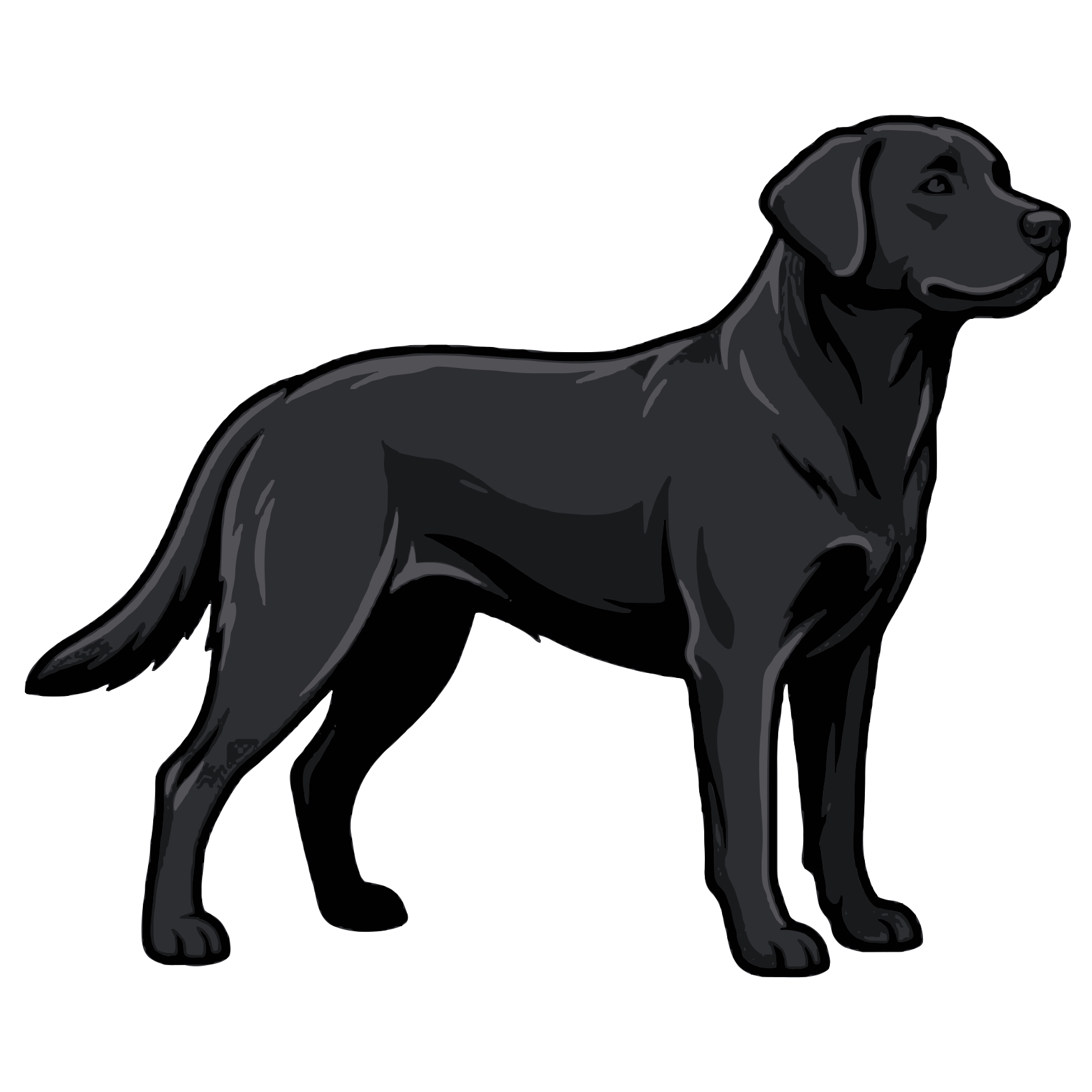

At a glance
Key facts
The essentials to compare before deciding whether this breed fits your home and routine.
- Size
- Medium
- Lifespan
- 12 to 15 years
- Energy
- High
- Temperament
- Watchful, independent and naturally wary of strangers
- Good with children
- Often good with its own family given careful socialisation
- Exercise
- One to two hours a day with secure, considered off lead time
- Trainability
- Experienced handler
- Grooming
- Minimal routine brushing, more during a heavy seasonal moult
- Estimated monthly cost, GBP
- £90 to £150 per month
Feral dogs surviving in the Negev desert formed the foundation stock for the Canaan Dog, gathered and selectively bred from the 1930s onward by the Israeli cynologist Rudolphina Menzel to create working dogs for the fledgling state, first as sentries and mine detectors and later as guide and assistance dogs. That origin as a landrace shaped by survival rather than by a breeder’s pen makes the Canaan Dog a genuinely primitive breed, closer in instinct and independence to a wild dog than to most pedigree companions, and it remains the national dog of Israel.
In the UK the breed is still rare, registered by the Kennel Club and supported by a small, dedicated breed club rather than widespread availability, and anyone drawn to the breed should expect a search that takes patience and direct contact with people who know the dogs personally. Wariness of strangers is a defining trait rather than a training failure, and owners considering the breed need to be comfortable with a dog that watches rather than welcomes.
Suitability
The Canaan Dog suits an experienced owner who wants a genuinely independent, alert companion and who has no interest in a dog that greets every visitor enthusiastically. It bonds closely with its own family and is typically affectionate and even playful at home, while remaining reserved, sometimes to the point of aloofness, with people it does not know. Early and continuous socialisation makes a real difference to how manageable that wariness becomes, though it rarely disappears entirely, since it is a deeply bred trait rather than a habit. Households with very young children can work well provided the dog is raised with them from puppyhood, but a Canaan Dog is not the breed to introduce into a home already full of visiting children and constant activity. Other pets require careful introduction given the breed’s strong hunting instincts.
Exercise
A Canaan Dog needs a genuine one to two hours of exercise most days, and simple road walking rarely satisfies a breed built for covering desert terrain at pace. Secure, enclosed spaces for off lead time matter enormously, since the breed’s independence and hunting drive make recall around wildlife or unfamiliar dogs unreliable at best. Fencing needs to be both tall and dug in, since a Canaan Dog is an accomplished climber and digger when motivated to explore beyond a garden. Mental engagement through varied routes, scent work and training games matters as much as physical distance, since an under stimulated Canaan Dog can become a determined escape artist.
Grooming
The double coat, with a harsh straight outer layer over a dense undercoat, sheds heavily during two marked seasonal moults each year and needs daily brushing during those periods to keep the volume of loose hair under control. Outside the moult, a weekly brush is generally enough to keep the coat in good order, since the breed is naturally clean and largely self maintaining between times. Nails, ears and teeth need the standard routine care any medium sized dog requires, and starting handling young matters more than usual given the breed’s wariness, since a dog uncomfortable with strangers can become genuinely difficult to manage at the vet without early, positive preparation.
Health
The Canaan Dog benefits from a relatively broad and unrefined gene pool by pedigree dog standards, and serious inherited disease is less commonly reported than in many longer established breeds, though the small UK population means data specific to British dogs remains limited. Hip dysplasia occurs across working and medium sized breeds generally, and hip scoring under the British Veterinary Association and Kennel Club scheme is a reasonable and available request to make of any breeder. Some lines carry a recognised predisposition to hypothyroidism, and unexplained weight gain, lethargy or coat changes in an adult dog are worth investigating with a blood test. Buyers are well served by asking the UK breed club directly about current health priorities, since a small population can see issues emerge or resolve more quickly than in mainstream breeds with larger data sets.
Choosing and training
Contacting the breed club before searching for a puppy is the sensible first step, given how few litters are bred in any given year, and a wait of many months is normal rather than exceptional. Many available dogs have come from breeders overseas, and buyers should be comfortable with the logistics and paperwork that can involve. Training responds best to calm, confident consistency rather than force or repetition, since a Canaan Dog that feels pressured tends to shut down or become more guarded rather than compliant. Building trust through structured routine and clear boundaries from puppyhood pays off far more than any single training technique, and many owners find the breed genuinely rewarding once that foundation is in place.
Verdict
The Canaan Dog suits a patient, experienced owner with secure space, realistic expectations about a naturally wary temperament, and a genuine interest in a primitive breed rather than a conventionally sociable pet. The bond it offers its own family is considerable, even if strangers never see much of it.
Anyone wanting a dog that welcomes visitors, socialises easily with strange dogs, or fits a busy, unpredictable household should look toward a different breed entirely, since the traits that make the Canaan Dog distinctive are exactly the ones that make it unsuitable for casual ownership.