At a glance
Key facts
The essentials to compare before deciding whether this breed fits your home and routine.
- Size
- Small
- Lifespan
- 12 to 14 years
- Energy
- High
- Temperament
- Curious, fastidious, independent and inventive
- Good with children
- Can be good with older children who respect a dog's space
- Exercise
- At least an hour daily with secure space to run
- Trainability
- Experienced handler
- Grooming
- Weekly wipe over with a mitt and light seasonal shedding
- Estimated monthly cost, GBP
- £70 to £140 per month
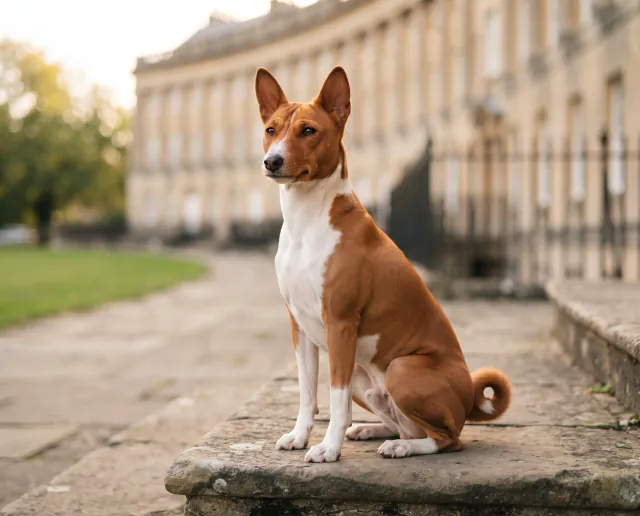
Barkless does not mean quiet. A Basenji’s larynx is shaped differently from that of other dogs, so instead of barking it produces a yodel, a chortle, a scream when frustrated and a low growl when it means business, and a bored one left alone will use the full range. The breed comes from the forests of the Congo basin, where village hunters used it to drive game into nets, and a bell tied round the dog’s hips told the hunters where it was in the undergrowth. Silence was a working asset. Independence was another, and both remain.
British breeders imported the first dogs in the 1930s, and the breed has kept a small but devoted following here ever since.
Temperament in the home
The comparison with cats is made so often because it is accurate. Basenjis wash themselves, dislike getting wet, seek out the warmest spot in the house and treat instructions as suggestions. They are affectionate with their own people and reserved with strangers, and they watch everything. Boredom is the enemy. A Basenji with nothing to do will open cupboards, empty bins, shred cushions and find a way over or under the fence, and owners routinely describe them as escape artists. Prey drive is high, so cats need to have been there first and small pets are not safe. Older children who understand that a dog may want to be left alone get on well with the breed; the rough and tumble of a toddler is usually resented. Females typically come into season once a year rather than twice, which surprises owners used to other breeds. Most Basenjis hate rain and will hold on rather than toilet in a downpour.
Exercise and training
An hour a day is the minimum, and a fit adult wants more. Much of it should be on the lead, because a hunter that sees a squirrel is gone, and recall training in this breed is a lifelong project rather than a puppy milestone. Hired secure fields and a long line on quiet beaches solve the running question. Puppies need short outings and lots of free play on soft ground until they are around a year old. Training works when the reward is worth having and the session is short. Basenjis learn a behaviour in three repetitions and then evaluate whether it is worth repeating, and a trainer who relies on repetition and correction ends up with a dog that leaves the room. Puzzle feeders, scent games, agility and lure coursing all suit the breed. Teach a settle early, because a dog this active benefits from an off switch it has been shown how to use.
Coat and grooming
The short, fine coat in red, black, tricolour or brindle, always with white feet, chest and tail tip, needs very little from an owner. A weekly rub with a rubber mitt lifts loose hair, and the dog does the rest with its tongue. Shedding is light, with a heavier moult in spring. Bathing is rarely needed and rarely welcomed. Nails need regular attention because Basenjis are light on their feet and do not wear them down, and the tight curl of the tail and the wrinkled forehead need no special care. The thin coat offers little protection in winter, and most owners keep a fleece by the door from November onwards.
Health and lifespan
Twelve to fourteen years is typical, and the breed’s health picture is better than it was because of DNA testing. Fanconi syndrome, a kidney disorder in which the tubules fail to reabsorb nutrients and which was once widespread in the breed, can now be identified by a DNA test, and no buyer should accept a puppy whose parents have not been tested. A DNA test also exists for the form of progressive retinal atrophy seen in Basenjis, and for pyruvate kinase deficiency, an inherited anaemia. Eye examination under the BVA and Kennel Club scheme is sensible, since persistent pupillary membranes are common in the breed. Hypothyroidism and umbilical hernias occur, and a chronic bowel disease is recognised in some lines and shows as weight loss and persistent diarrhoea in a young adult. A breeder who can produce all these results, and who talks openly about what has appeared in their dogs, is the one to buy from.
Costs and space
A dog of ten to eleven kilograms eats little, and grooming costs nothing, so monthly outgoings of roughly £70 to £140 are driven mostly by insurance and routine veterinary care, with the higher figure reflecting a policy that would cover the kidney and eye conditions the breed is known for. Space needs are modest, and Basenjis live well in flats provided the exercise happens and the dog is not left for long stretches. The garden must be secure to a standard that would keep in a cat, which usually means checking for climbable fences, gaps under gates and low walls. In Britain the breed is uncommon but findable, with a breed club, a few dedicated breeders and a wait of months rather than years for a well-bred puppy.
Verdict
The Basenji suits an active, patient owner with a sense of humour, a secure garden and a liking for a dog that is clean, quiet and self-possessed. People who have kept cats and independent breeds, and who enjoy training as a negotiation, tend to be happiest.
It suits nobody who wants easy obedience, a dog that can be left all day, a home with small pets, or a family with very young children. Those who find the independence charming keep Basenjis for life; those who find it maddening usually find out within the first year.