At a glance
Key facts
The essentials to compare before deciding whether this breed fits your home and routine.
- Size
- Medium
- Lifespan
- 12 to 14 years
- Energy
- High
- Temperament
- Affectionate, playful, vocal and driven by prey
- Good with children
- Often good with calm children who leave the ears alone
- Exercise
- An hour a day plus free running in a secure field
- Trainability
- Moderate
- Grooming
- Weekly rub over with a mitt, with light shedding
- Estimated monthly cost, GBP
- £80 to £145 per month
Despite the name and the resemblance to dogs on Egyptian tomb paintings, the Pharaoh Hound is a Maltese rabbit dog, known on the islands as the Kelb tal-Fenek and declared the national dog of Malta. Farmers there still use it to hunt rabbits over dry stone walls and rocky terraces, often at night, working with a ferret and by scent, sight and hearing together. The working history is what an owner actually lives with.
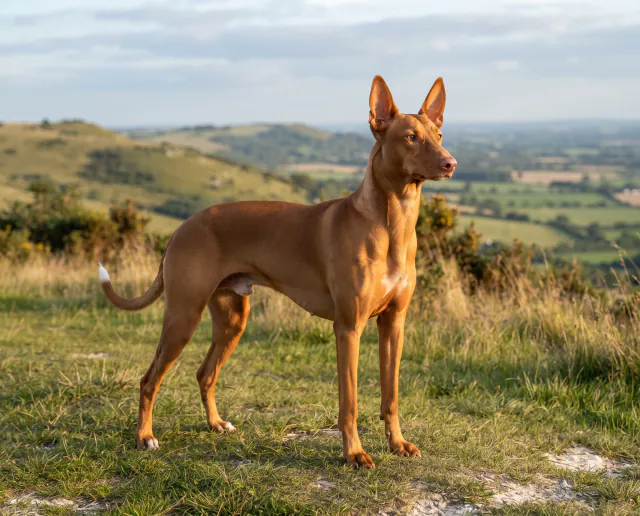
The dog itself is elegant and athletic, 53 to 63cm at the shoulder and around 20 to 25kg, in a rich tan coat with white on the chest, toes and often the tail tip. Large upright ears and amber eyes give it an alert, slightly startled look. The party trick is the blush. When a Pharaoh Hound is excited or pleased, the nose and the inside of the ears flush a deep pink, and the effect is visible from across a room.
Living with the breed
Pharaoh Hounds are affectionate and playful with their own people and a little reserved with strangers, without being nervous or guarding. They are sensitive to tone, dislike rough handling and thrive on being included. Many are vocal, producing a range of yodels, howls and barks when excited, when left, and when something moves in the garden. Home alone for a working day is not a pattern most take to. They are clean, light shedding and do not smell, which suits a house, but they are also warm-climate dogs with thin skin, little body fat and a short coat, and they feel a British winter keenly. A fleece or waterproof coat for walks and a warm bed away from draughts are basic kit, not indulgence. Children who are calm around the dog are generally welcomed; toddlers who grab ears are not. Cats and small pets are prey unless raised with the dog from puppyhood, and even then the garden rules differ from the house rules.
Daily exercise
An adult needs an hour or more a day and, above all, a chance to run flat out somewhere secure several times a week. This is a sprinter that also has stamina, and a walk round the block on a lead does not touch it. Off-lead freedom is for enclosed spaces only. The prey drive is intense, the dog can clear a 1.8 metre fence from a standing start when motivated, and recall against a rabbit or a deer is a hope rather than a plan. Lure coursing and agility both suit the breed well. Puppies need shorter outings and no repetitive jumping until they are fully grown at around eighteen months. Cold, wet weather cuts walks short, and a soaked Pharaoh Hound shivers within minutes.
Training and mental work
Intelligent, quick and easily bored is the honest summary. Pharaoh Hounds learn fast when the reward is worth having and switch off entirely under repetition or pressure. Short sessions, high value food, and a sense of humour from the handler go a long way. Recall training should be started early, made hugely rewarding and never relied upon near roads. Scent games, food puzzles and hide-and-seek in the house give the hunting brain something to do. Socialisation should be broad and gentle, since the breed’s natural reserve can tip into shyness without it.
Grooming and shedding
The coat is short, glossy and fine, and a rubber mitt once a week takes off the small amount of dead hair. Shedding is light and mostly unnoticed. Skin is thin and tears easily on brambles and barbed wire, so check the dog after a run through cover. Nails wear down on hard ground but need trimming otherwise, and the large ears should be checked for scratches and dirt. The breed has no facial folds, no heavy coat and no strong odour, and it is one of the least demanding dogs to keep clean.
Health and costs
Pharaoh Hounds are generally healthy and twelve to fourteen years is a fair expectation. Like other sighthounds they have little body fat and can be sensitive to some anaesthetic drugs, which a vet needs to know about before any procedure. Hip scoring under the BVA and Kennel Club scheme is a fair question for a breeder, and some also test eyes, though the breed has no long list of well-documented inherited disease. Allergic skin reactions and sensitivity to some insecticides are reported by owners. A lean sighthound looks thin to people used to Labradors, and the last two or three ribs being visible is normal; the greater risk is an owner feeding it up to look like other dogs. Costs run at about £80 to £145 a month for food, insurance and routine care, with the extra of coats for winter. The breed is established but numbers are small, litters are not frequent, and the Pharaoh Hound Club is the sensible first contact for anyone who wants a puppy rather than a long search.
Verdict
The Pharaoh Hound suits an active, home-based owner with a secure garden, access to enclosed running space, a warm house and a taste for a clever, expressive dog that wants to be part of everything. Lure coursing enthusiasts and people who enjoy training for its own sake often do very well with the breed.
It is a poor choice for households with free-roaming cats or rabbits, for owners out all day, for anyone wanting reliable off-lead walks in open country, or for a cold, draughty home. The blush is charming; the prey drive is the thing to plan around.