
At a glance
Key facts
The essentials to compare before deciding whether this breed fits your home and routine.
- Size
- Small
- Lifespan
- 12 to 15 years
- Energy
- Medium
- Temperament
- Affectionate, sociable and responsive
- Good with children
- Often good with gentle children
- Exercise
- About 1 hour a day
- Trainability
- Beginner friendly
- Grooming
- Brush several times weekly with professional grooming
- Estimated monthly cost, GBP
- £80 to £150 per month
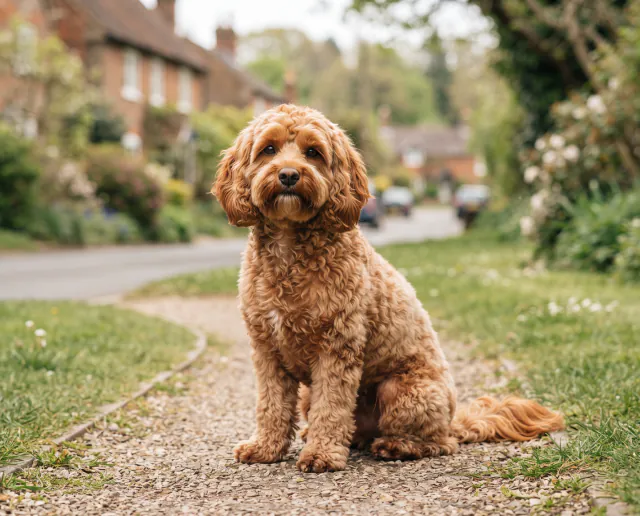
A Cavapoo combines Cavalier King Charles Spaniel and Poodle ancestry, usually using a Miniature or Toy Poodle. It is a crossbreed rather than a standardised breed, so adult size, coat, shedding and behaviour vary. Many are affectionate, quick to learn and happiest near their people. That closeness can make separation difficult if it is never taught. Buyers should research the health and temperament of both parent breeds rather than relying on claims about a best-of-both result.
Origin and purpose
The Cavapoo pairs the Cavalier King Charles Spaniel, a small companion spaniel bred over centuries to sit close to people, with the Poodle, originally a water retrieving dog and one of the more trainable working breeds. Deliberate crossing of the two spread from the 1990s onwards, following the commercial success of Poodle crosses generally and driven by demand for a small companion said to shed less. There is no breed standard, no closed registry and no agreed type, so a Cavapoo is defined only by its parentage. Coat, adult size, shedding and temperament all vary, including between littermates and between generations of the cross. The trait most Cavapoos do share, a strong preference for human company, comes from both sides of the pairing and is the one least likely to be diluted.
Suitability
Cavapoos can suit family homes, active older owners and attentive first-time owners. Their smaller size makes them manageable in many properties, but they still need outdoor exercise and training. They often dislike a full day alone. Build independence through brief, comfortable absences from puppyhood and arrange suitable care during longer workdays. Children should sit calmly, allow the dog to move away and avoid lifting it. The smaller examples are vulnerable to accidental injury. Most are sociable with other dogs and settle readily with a resident cat, particularly when the introduction happens early and calmly. A secure garden is useful but not essential if walks are reliable.
Exercise
Most healthy adults benefit from about an hour of daily activity, divided into walks and play. The individual may inherit spaniel enthusiasm for scents or Poodle interest in training. Use food searches, simple retrieves, trick training and varied walking routes. Recall should be developed gradually on a long line before freedom is considered. Puppies need short outings and plentiful rest. Avoid forced running and repeated jumping while they grow. A Cavapoo still needs calm days and should learn to settle without constant entertainment.
Grooming
Wavy or curly coats can tangle close to the skin. Brush to the roots several times each week with suitable tools, checking behind the ears, under the harness, in the armpits and around the feet. Many need professional grooming every six to eight weeks. No coat can be guaranteed not to shed or trigger allergies. Check ears for soreness and keep them dry after bathing. Start nail care, tooth brushing and whole-body handling early. A practical short trim is often easier to maintain than a long fluffy coat.
Health
Health screening should reflect both parent breeds. Ask for written results rather than accepting a general statement that the parents were checked. Heart, eye, joint and inherited conditions may be relevant, depending on the exact parents and Poodle variety. Discuss current recommendations with the breeder and your vet. Keep the dog lean and feed a complete diet appropriate to its life stage. Coughing, fainting, persistent limping, repeated ear irritation or changes in drinking require veterinary advice. Insurance is best arranged before any concern is recorded.
Choosing and training
Meet the mother with her puppies and ask about the father’s size, temperament and verified tests. Avoid sellers promising a precise adult appearance or using unusual colour as the main selling point. A good breeder explains uncertainty and asks questions about your home. Rescue dogs offer the advantage of a visible adult coat and build. Reward-based training should cover recall, loose-lead walking, calm greetings, handling and short separations. Prevent barking habits by managing triggers and rewarding quiet observation.
Size and lifespan
Adults typically stand 23 to 35 cm (9 to 14 in) at the withers and weigh 4 to 11 kg (9 to 24 lb). The range is wide because adult size depends largely on which Poodle was used. A Toy Poodle parent produces a noticeably smaller dog than a Miniature Poodle parent, and later generation crosses widen the spread further, so no seller can state an adult size with real confidence. Ask for the measured weights of both parents instead of accepting a prediction. A typical lifespan is 12 to 15 years. As set out in the health section above, screening should address the conditions recognised in both parent breeds, using the schemes that apply to each, with written results issued for the individual parents rather than a general statement about the line. Take any certificate you cannot interpret to your own vet before paying a deposit.
Verdict
A Cavapoo can be a cheerful, trainable companion for a home with time for company, exercise and coat care. Small size does not mean low maintenance. Professional grooming, careful sourcing and gradual separation training are central responsibilities. The cross is a poor choice for someone expecting guaranteed traits or a dog content with long daily absences. Owners who accept variation and enjoy close involvement may find the Cavapoo adaptable and rewarding.
Budget for grooming before choosing a puppy and locate an experienced groomer. Regular appointments, daily handling and a realistic plan for workdays remove common pressures. The outcome depends less on the crossbreed label than on health, upbringing and consistent care.