At a glance
Key facts
The essentials to compare before deciding whether this breed fits your home and routine.
- Size
- Small
- Lifespan
- 9 to 14 years
- Energy
- Medium
- Temperament
- Gentle, affectionate and happiest in company
- Good with children
- Usually very good with children who handle a small dog gently
- Exercise
- About an hour a day split into two gentle walks
- Trainability
- Beginner friendly
- Grooming
- Brush several times weekly with regular attention to ears and feathering
- Estimated monthly cost, GBP
- £70 to £130 per month
Most decisions about a Cavalier are made after the puppy arrives. The important one is made before. The choice of breeder, and the quality of the questions asked about the parents, shapes the years ahead more than any later training decision will.
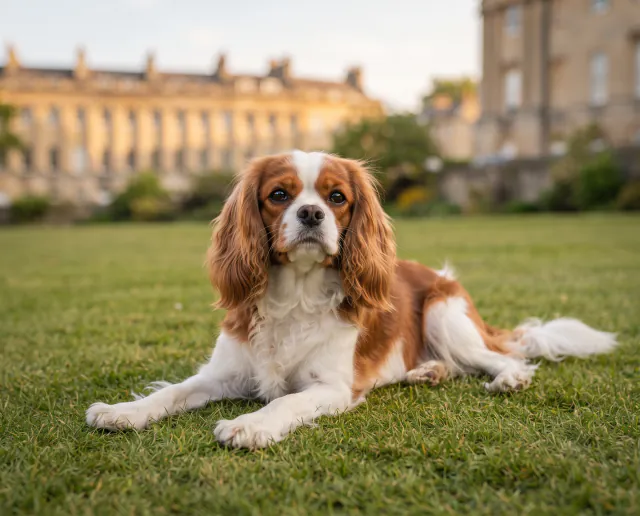
The dog itself is a toy spaniel rather than a purely ornamental lapdog. The modern breed was reconstructed in the 1920s from the flatter faced King Charles Spaniel, with the aim of returning to the longer muzzled small spaniels that appear in Stuart portraits. A Cavalier will lie on a lap for an hour and then follow a scent across a field with real enthusiasm.
Suitability
Few small breeds fit as easily into ordinary family life. Cavaliers are typically gentle with children, undemanding with visitors and rarely inclined to guard resources or space. Supervision is needed in the other direction, since a toddler is far more likely to injure the dog than the reverse. Adults usually weigh between five and eight kilograms, so a fall from a sofa is a genuine risk.
Company is the breed’s real requirement. Cavaliers were developed as companions across several centuries and most want to be near a person for most of the day. A home where somebody is usually in works far better than one empty from eight until six, and separation needs teaching in small steps from the first week. First-time owners often do well here, because the breed is forgiving of ordinary mistakes. Flats, terraced houses and homes without gardens are all workable, provided the walks happen.
Exercise
An hour a day, split across two outings, suits most healthy adults. Cavaliers are not fragile and will manage considerably more when fit, though they are equally content with less on a wet Tuesday. Puppies need much shorter sessions, and sniffing time matters more than distance.
Many will follow a scent, chase a squirrel or fail to notice a road, so recall needs proper work and a long line is sensible in open spaces. Weight control is the other exercise-related issue. Cavaliers gain weight easily, and extra kilograms on a small frame put pressure on joints, breathing and the heart. Treats used in training should come out of the daily food allowance.
Grooming
The coat is silky, moderately long and free of curl, with feathering on the ears, legs, tail and feet. The breed standard asks for no trimming, so most owners manage the coat at home with brushing several times a week. Tangles form fastest behind the ears, in the armpits and around the trousers, and a mat left in place becomes uncomfortable quickly.
Ears need routine attention. Long, heavy leathers trap moisture and debris, and the hair around them collects burrs after a country walk. Look inside regularly, dry the ears after rain, and ask a vet about any smell, discharge or repeated head shaking. Nail trimming, tooth brushing and regular handling practice are all easier when introduced during puppyhood.
Health
This is the part of Cavalier ownership that demands the most research. In general terms, the areas the breed type is commonly screened or watched for include the heart, a neurological condition affecting the skull and spine, the eyes, the kneecaps and the hips. Recognised screening schemes exist for several of these, and responsible breeders use them on the parent dogs and can produce dated certificates showing the results.
Ask which schemes were used, how old the parents were when tested, and what the results actually said. A puppy from tested parents carries no guarantee, but unscreened breeding removes the only useful information available. Register with a vet before the puppy comes home and arrange insurance early, because cover is easier to obtain while a dog is young and healthy. Coughing, tiring on walks, reduced appetite, persistent scratching at the neck or shoulder, or any change in gait should be assessed by a vet promptly. Keeping the dog lean and maintaining routine dental care both help.
Choosing and training
Visit the litter at home and see the mother interacting with her puppies. A confident, friendly adult female in a normal household is a good sign. Be wary of anyone offering several breeds at once, meeting in a car park, or presenting health claims without paperwork. Rescue is also worth considering, since adults of known temperament come into rehoming regularly.
Training is straightforward with food and patience. The breed learns quickly and dislikes being told off, so reward-based methods produce far better results than correction. Priorities are calm separation practice, recall on a long line, loose-lead walking and cooperative handling for grooming and veterinary visits. Teach a settle so the dog can relax while the household carries on around it.
Verdict
A Cavalier suits gentle households, families with reasonably careful children, retired owners and anyone who wants an affectionate small dog for company rather than for sport. Someone at home for much of the day and prepared to research breeders thoroughly will usually find the breed rewarding and easy to live with.
It is the wrong choice for a home empty all day, for an owner unwilling to budget for veterinary care and insurance, or for anyone who buys on appearance alone from the first available advertisement. The temperament is close to ideal for many families. The care taken over sourcing and ongoing veterinary support determines how long that temperament can be enjoyed.