Also known as: Entlebucher Sennenhund.
At a glance
Key facts
The essentials to compare before deciding whether this breed fits your home and routine.
- Size
- Medium
- Lifespan
- 12 to 14 years
- Energy
- High
- Temperament
- Busy, bold and fiercely attached to its own people
- Good with children
- Often good with older children who play actively
- Exercise
- Over an hour a day plus a working task
- Trainability
- Experienced handler
- Grooming
- Weekly brushing with light seasonal shedding
- Estimated monthly cost, GBP
- £90 to £160 per month
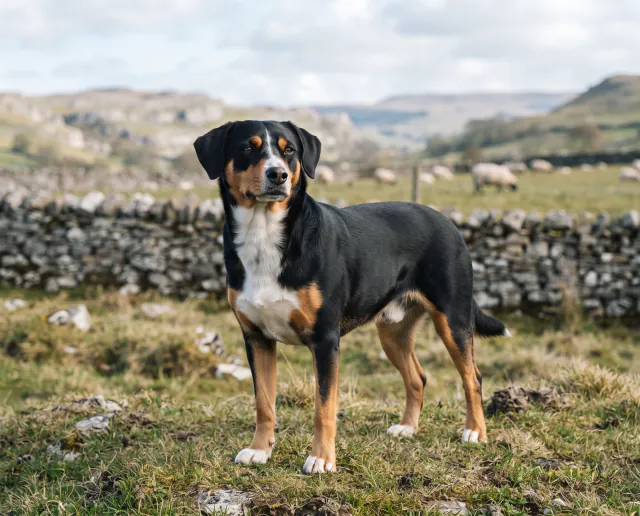
Four Swiss mountain breeds share the same tricolour pattern and the same working origin as cattle and farm dogs of the Alpine valleys, and the Entlebucher is the smallest and, by most accounts, the busiest of the four. It comes from the Entlebuch valley in the canton of Lucerne, where it drove cattle to summer pasture and back, and the breed still moves and thinks like a dog with a job rather than a dog bred to sit quietly by a fire.
In the UK the Entlebucher remains genuinely rare, appearing on the Kennel Club’s Imported Breed Register and producing only a handful of litters in any given year. Anyone drawn to the breed should expect a wait, should expect some dogs to come from continental breeders, and should treat the UK breed club as the first and most useful point of contact rather than a general search for puppies for sale.
Suitability
This is not a beginner’s dog. Entlebuchers are intelligent, opinionated and physically capable of testing an inexperienced handler within weeks. They bond intensely with their own household and can be genuinely reserved with strangers, which needs shaping through consistent early socialisation rather than being left to develop unchecked. Barking is frequent and purposeful, since the breed was bred to vocalise at cattle and intruders alike, and neighbours in a terraced street will notice. Children who play actively and understand dog boundaries usually get on well with the breed, though the herding instinct can show as nipping at heels during rough games, which needs interrupting early and consistently.
Exercise
An adult Entlebucher wants well over an hour of exercise most days, and idle time without a job tends to produce a frustrated, noisy or destructive dog rather than a settled one. The breed does well with structured activity such as agility, herding trials where available, long line tracking or simply a working routine of fetch, scent games and varied terrain. A securely fenced garden is close to essential, since the breed’s drive to chase and its athleticism combine badly with weak boundaries. Puppies should have exercise built up gradually to protect developing joints, but the adult dog genuinely needs the mileage rather than merely tolerating it.
Grooming
The double coat is short, flat and low maintenance by working breed standards, needing a weekly brush to manage the moderate year round shedding and the heavier coat blow that comes with the seasons. Bathing is occasional. Nails, ears and teeth need the routine attention any active dog requires, and owners should keep an eye on weight, since a lean, well muscled Entlebucher moves and behaves far better than an overweight one.
Health
Documented health information on the breed is thin outside Switzerland simply because numbers are so small, but hip dysplasia is recognised in the wider Swiss mountain dog group and hip scoring under the BVA and Kennel Club scheme is a reasonable thing to ask an importing breeder about. A progressive retinal condition has been identified in the breed on the continent, and a DNA test exists that a careful breeder should be able to discuss. Ear infections can follow from the drop ear shape if moisture is left unchecked after wet walks. Given how few UK dogs exist, prospective owners are better served asking the breed club directly what health testing continental breeders they work with actually carry out, rather than relying on general assumptions.
Choosing and training
Finding a puppy takes patience. Litters are infrequent, waiting lists are normal, and some buyers end up importing a dog with the breed club’s guidance rather than waiting for a UK litter. Training should start from day one with a firm, fair, reward based approach, since the breed’s intelligence works against an owner who is inconsistent or heavy handed. Recall around livestock needs particular attention given the herding background, and UK law on control near sheep and cattle is not optional in the countryside this breed is often best suited to. Rescue routes for the breed are close to nonexistent given the small population, so most owners will be raising a dog from puppyhood without the option of an older rehomed animal to compare notes against.
Size and lifespan
Males typically stand 44 to 50 cm (17.5 to 19.5 in) at the shoulder and weigh 20 to 30 kg (44 to 66 lb). Females are similar, usually 42 to 48 cm (16.5 to 19 in) and the same weight range. It is the smallest of the four Swiss mountain dog breeds but still solidly built and muscular for its size.
A typical lifespan is 12 to 14 years, a good outcome for a breed of this build, and the compact size means it carries its weight comfortably into old age provided it is kept lean.
Verdict
The Entlebucher Mountain Dog suits an experienced, active owner in a rural or semi rural setting who wants a genuinely working minded companion and is prepared for the realities of a rare breed, including the wait for a puppy and the possibility of importing one. Structured activity and a securely fenced space are close to essential rather than optional extras.
Anyone wanting a quiet, low maintenance dog, living in a flat or a noise sensitive terrace, or hoping for an easy first experience of dog ownership should look toward a more common and less driven breed instead.