Also known as: Grosser Schweizer Sennenhund.
At a glance
Key facts
The essentials to compare before deciding whether this breed fits your home and routine.
- Size
- Giant
- Lifespan
- 8 to 10 years
- Energy
- Medium
- Temperament
- Steady, good natured and calmly self assured
- Good with children
- Usually very good with children of all ages
- Exercise
- About an hour a day at an easy pace
- Trainability
- Moderate
- Grooming
- Weekly brushing with heavy seasonal shedding
- Estimated monthly cost, GBP
- £140 to £240 per month
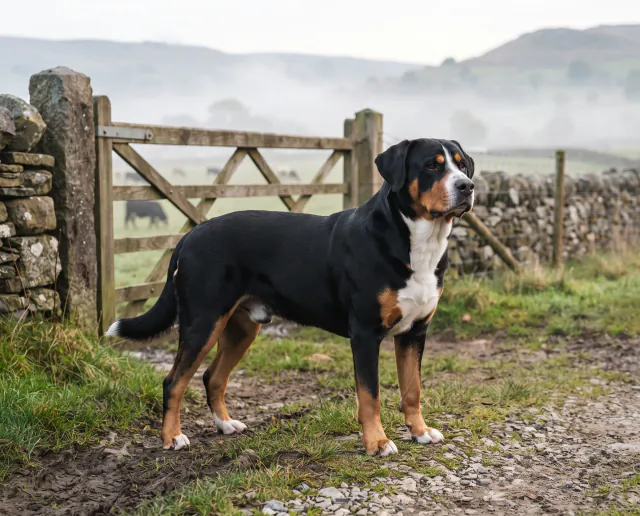
Of the four tricolour Swiss mountain breeds, the Greater Swiss Mountain Dog is the largest and, oddly, one of the more recently recognised, having come close to disappearing entirely before Swiss breeders rebuilt numbers from farm stock in the early twentieth century. It worked Alpine farms as a draught dog pulling carts of milk and cheese, as a drover moving cattle, and as a general farmyard guardian, and the modern dog still carries the broad chest and solid bone that job required.
Despite the size, the temperament is notably placid for a working breed. Most Greater Swiss Mountain Dogs are steady around the house, good with children, and slower to mature both physically and mentally than their imposing frame suggests, often not settling fully until three years old or more.
Suitability
The breed’s good nature with children is genuinely one of its strongest points, and most individuals are patient, tolerant and unbothered by the noise and chaos a family produces. The size itself remains the main practical consideration, since a boisterous adolescent weighing well over 40 kilograms can knock a small child over without any aggression involved. Strangers are usually met with calm reserve rather than suspicion, though the breed will bark to announce visitors. Separation is tolerated reasonably well compared with more clingy breeds, though no dog of this size and social nature should be left for a full working day as routine. First time owners can succeed with the breed’s temperament but should go in aware of the practical demands that come with any giant dog, from car size to the cost of everything that scales with weight.
Exercise
An hour of steady exercise a day suits most adults well, and the breed has no great appetite for speed or distance, preferring a purposeful walk to a run. Puppies need considerably more caution, since rapid growth toward an adult weight that can exceed 55 kilograms places real strain on developing joints, and controlled, limited exercise through the first eighteen months protects the dog’s future soundness. Cart pulling and weight pulling sport, done properly and under guidance, suits the breed’s working history well for owners who want a structured outlet, though plenty of dogs live perfectly content lives on walks alone.
Grooming
The dense double coat sheds heavily, particularly during the spring and autumn coat blow, and a weekly brush becomes closer to a daily job during those periods to keep hair under control. Outside the seasonal shed, grooming is straightforward and the coat needs no trimming or stripping. Nails need regular attention given the weight they carry, and drooling, while not constant, increases noticeably after drinking or in warm weather.
Health
Life expectancy is short for the effort involved in raising the dog, typically eight to ten years, and this is worth accepting honestly before committing to a puppy. Hip and elbow dysplasia are well documented in the breed, and scoring under the BVA and Kennel Club scheme is a reasonable and important question to put to any breeder. Gastric dilatation and torsion is a genuine emergency risk in a deep chested giant breed, and owners should know the signs, avoid vigorous exercise around meal times, and identify the nearest emergency vet in advance. Epilepsy has been reported in the breed, and general giant breed cancer risk applies here as it does across the group, so unexplained lumps or lethargy deserve prompt attention rather than a wait and see approach.
Choosing and training
The breed remains uncommon outside Switzerland, with a small number of dedicated breeders producing occasional litters, so a wait is normal and the national breed club is the sensible starting point for anyone serious about the breed. Training benefits from an early, patient, reward based approach, since the dog is capable but can be slow to mature out of puppyish behaviour, meaning basic manners need reinforcing well past the age when a smaller breed would have them settled. Priorities include calm behaviour on the lead, not pulling given the strength involved, and steady manners with visitors and other dogs.
Size and lifespan
Males typically stand 65 to 72 cm (25.5 to 28.5 in) at the shoulder and weigh 48 to 64 kg (105 to 140 lb). Females are smaller but still substantial, usually 60 to 68 cm (23.5 to 27 in) and 36 to 48 kg (80 to 105 lb). It is one of the largest of the Swiss mountain dog breeds, built for pulling and droving rather than speed.
A typical lifespan is 8 to 10 years, shorter than many medium-sized breeds but broadly in line with other giant breeds of similar mass. Keeping a growing puppy lean and limiting hard exercise until the growth plates close gives the best chance of a sound, comfortable adult.
Verdict
The Greater Swiss Mountain Dog suits a household with space, a realistic budget for a giant breed, and genuine patience for a dog that stays puppyish in outlook well into its physical adulthood. Families wanting a calm, dependable giant with an easier temperament than many working breeds often find the breed a good match once the practicalities are accounted for.
Anyone unable to accept a short life expectancy, unwilling to manage heavy seasonal shedding, or without the space and budget a giant breed demands should consider a smaller alternative from the same working background instead.