At a glance
Key facts
The essentials to compare before deciding whether this breed fits your home and routine.
- Size
- Medium
- Lifespan
- 12 to 15 years
- Energy
- Very high
- Temperament
- Outgoing, sturdy, pack minded and endlessly nose led
- Good with children
- Often good with children, but boisterous and best with older ones
- Exercise
- About 2 hours a day with serious running for a fit adult
- Trainability
- Experienced handler
- Grooming
- Weekly brushing with steady shedding of a short coat
- Estimated monthly cost, GBP
- £85 to £150 per month
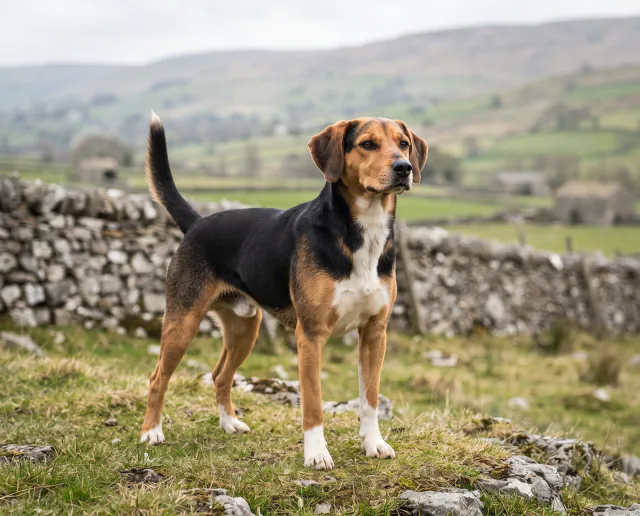
Put a Beagle, a Harrier and a Foxhound in a row and the family resemblance is obvious, with the Harrier the middle brother at about 48 to 55cm and 20 to 27kg. It is one of the oldest English pack hounds, kept for hunting hare on foot and later on horseback, with packs recorded in Yorkshire and the West Country for seven centuries. Since the Hunting Act 2004 the packs that remain follow laid trails. Hounds are recorded in the stud book kept by the Association of Masters of Harriers and Beagles, and a Harrier bred for the pet market is close to nonexistent. Most that reach a home are adults rehomed from a hunt or through hound welfare charities.
Suitability
Harriers are outgoing, sturdy, good-humoured dogs with no guarding instinct and a pack animal’s need for company. A hound raised in kennels arrives without house training, without lead manners and without any experience of being alone, and it is the last of those that causes most difficulty, since a dog bred to sleep in a heap of thirty finds an empty house frightening and howls. They are usually excellent with other dogs and settle fastest in a home where one already lives. Children are generally safe, although a boisterous 25kg hound at full speed suits older children better than toddlers. Cats are a risk and small pets are out of the question. The voice is loud, tuneful and used, which rules out flats and close terraces. Kitchen surfaces will be raided.
Exercise
An adult in hunting condition covers many miles in a day, and a pet Harrier needs around two hours of real exercise, with a good part of it running. A hired field or a large fenced garden is the only safe place for free running, because a hound that picks up a hare line will follow it across roads and railways without a backward glance. Long lines and harnesses are the compromise for open country. Puppies, on the rare occasions one is available, need short outings and no forced running or jumping until the joints mature. Fencing needs to be 1.8 metres and secure at the base, since Harriers dig and climb.
Grooming
The short, dense coat comes in tricolour and other hound colours and wants a quick weekly going over with a bristle brush, and it sheds steadily throughout the year. The drop ears want a look inside once a week and cleaning only when they need it. Nails wear naturally on a dog doing serious mileage but need trimming on a pet, and feet should be checked after runs across stubble or stony ground. A bath is seldom necessary, though a faint hound scent is part of the package.
Health
Harriers are generally sound, having been bred for stamina and work for generations, and twelve to fifteen years is typical. Hip dysplasia is the main condition to be aware of, though no hound from a hunt will come with a hip score, and asking for one marks a buyer out as new to hounds. Ear infections are the most common reason for a vet visit. Weight is the other issue, since a hound fed for a hunting season and then living as a pet grows fat quickly, and a lean Harrier stays sound far longer.
Choosing and training
The honest route is through the hunts themselves, some of which rehome retired or unentered hounds to suitable homes, and through hound welfare organisations that assess and place ex-hunt hounds. Expect a careful conversation about fencing, other dogs and time at home. A kennel-raised adult needs house training from scratch, a crate or quiet room to learn to settle, and gradual, short absences built up over weeks. Food-based reward training works well, since these dogs are food driven, but recall in open country will never be reliable, and a farmer has a legal defence for shooting a dog caught worrying sheep. Scent work is the obvious outlet, whether tracking classes or laid trails in a field, and a Harrier with a trail to work is a calmer house dog. Around £85 to £150 a month is a fair working figure; food is the main item, there is no grooming bill, and insurance for an ex-hunt adult of uncertain age can be higher than for a puppy.
Verdict
The Harrier suits a rural or edge-of-village household with land or a large secure garden, an existing dog, someone about for most of the day and prior experience of hounds. Retired hounds placed with such homes do settle and make cheerful, affectionate pets.
It is unsuitable for a flat, a single-dog home, a family out at work all day, or anyone wanting a dog that returns when called. Anyone attracted to the look but without that setup would do better with a Beagle, which is easy to find and has lived in houses for generations.