
At a glance
Key facts
The essentials to compare before deciding whether this breed fits your home and routine.
- Size
- Medium
- Lifespan
- 10 to 13 years
- Energy
- Low to medium
- Temperament
- Placid, stubborn, sociable and scent-obsessed
- Good with children
- Usually very good with children who accept drool and a slow pace
- Exercise
- About an hour a day at a hound's pace, split into two walks
- Trainability
- Moderate
- Grooming
- Weekly brushing with heavy shedding, plus daily ear and fold checks
- Estimated monthly cost, GBP
- £95 to £175 per month
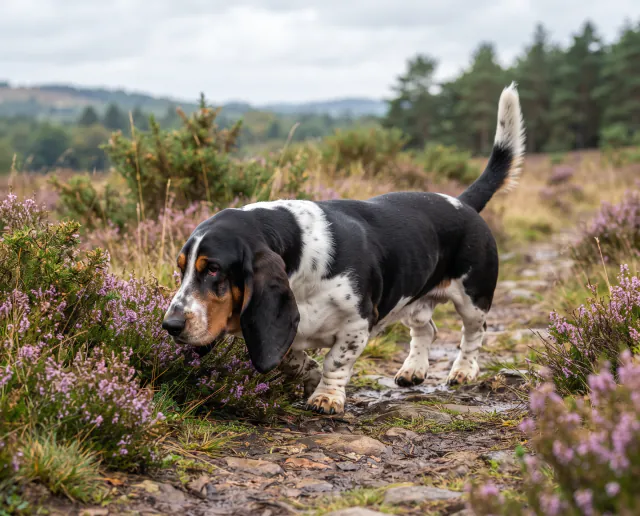
Lift a Basset Hound into the car and the first surprise is the weight. Under the loose skin and short legs is the bone of a much bigger dog, and an adult male commonly weighs 25 to 30kg, about the same as a Springer with far less leg to carry it. The breed was developed in France to hunt hare and rabbit at a pace a foot follower could match, and every part of the shape serves that purpose. The nose stays close to the ground, the long ears stir up scent, and the heavy frame gives the endurance to push through cover all day.
That origin explains most of the breed’s habits. Bassets are placid and sociable indoors, obstinate whenever the nose is engaged, and inclined to follow a line of scent across a road without a backward glance. They also drool, shed, snore and bay, and the shape carries health baggage a buyer needs to understand.
Suitability
Few breeds are as easy-going with people. Bassets tend to like everyone, tolerate children well and get on with other dogs. Guarding is not in them, and the deep voice is used for greeting or protest rather than warning. Long stretches alone suit them poorly, and a bored Basset will bay, a sound that carries across a terrace of houses in a way a bark does not. Drool is constant and ends up on walls, trouser legs and the inside of the car. Stairs are the practical problem. A long back on short legs is vulnerable, and a dog that needs carrying when injured or elderly weighs as much as a full suitcase. A stair gate and a car ramp are sensible early purchases.
Exercise
An adult needs about an hour a day, best split into two outings, and it will cover the ground at its own speed with the nose down for most of it. A fit adult will manage a long day on the Downs in cool weather, but should never jump from a tailgate. Puppies grow slowly under a heavy frame, so keep outings short and on soft ground until the dog is at least a year old, and avoid stairs and jumping altogether. Recall fails with most Bassets once a scent is found, so a long line is the standard approach in open country. A hound with its head down will not notice sheep until it is among them, and fields with livestock are lead-only anyway. Summer walks belong in the early morning, because a heavy dog low to the ground overheats quickly.
Grooming
The short coat sheds heavily all year and a weekly session with a hound glove pulls out a surprising quantity. The real work is the ears and skin. Those long ears trail through food, puddles and mud, and they seal the canal so that moisture and wax build up, so a weekly clean with a product the vet approves and a daily look for redness or smell prevent most infections. Skin folds on the face, neck and legs collect moisture and need keeping dry, particularly through a wet British winter. Nails wear slowly on a dog that moves so little of the way at speed and need regular clipping, because overgrown nails change how a heavy dog stands.
Health
The Basset Hound appears on the Kennel Club’s Breed Watch scheme, which flags points of concern including excessive skin, loose eyelids and body weight. Choosing a breeder who produces moderate dogs, with tighter skin, sound eyelids and enough leg to keep the chest clear of the ground, is the most useful decision a buyer makes. Intervertebral disc disease is the serious structural risk. Bassets carry the same dwarfing gene as Dachshunds, and a ruptured disc can mean pain or paralysis, so weight control and a ban on jumping are not optional. A DNA test exists for a hereditary form of glaucoma in the breed, and another for Basset Hound thrombopathia, a bleeding disorder, so ask for both parents’ results. Ear infections, elbow trouble in the crooked front legs and bloat in a deep chest are all recognised. An extra five kilograms on that spine is trouble waiting to happen. Ten to thirteen years is reasonable for a lean, well-bred dog.
Choosing and training
Bassets are not hard to find in most countries. The breed is well established, the breed clubs list breeders, and rescues regularly rehome adults whose owners underestimated the drool or the obstinacy. Meet the parents, look at the amount of skin, the eyes and the length of leg, and be wary of any breeder who treats heaviness as a virtue. Training works when the reward is food and the session is short. The breed is clever but sees no reason to comply with instructions that do not serve its interests, and harsh handling produces a dog that simply sits down. Teach the puppy early to accept ear cleaning, nail clipping and being lifted, since all three will be regular events for life.
Verdict
A Basset suits a patient household that enjoys a slow, sociable dog, walks at a hound’s pace in all weather and treats drool and shedding as part of the arrangement. It works for families with children and for people who are home for much of the day.
It is a poor fit for a house with several flights of stairs, for anyone who wants reliable off-lead freedom, or for an owner who cannot keep a dog lean. Buying a moderate puppy from tested parents avoids much of what the breed is criticised for.