
At a glance
Key facts
The essentials to compare before deciding whether this breed fits your home and routine.
- Size
- Medium
- Lifespan
- 12 to 15 years
- Energy
- High
- Temperament
- Confident, strong willed and combative with other dogs
- Good with children
- Can be good with older children in a settled home
- Exercise
- Around 90 minutes a day with structured off lead time
- Trainability
- Experienced handler
- Grooming
- Clipping every six weeks plus daily brushing
- Estimated monthly cost, GBP
- £90 to £150 per month
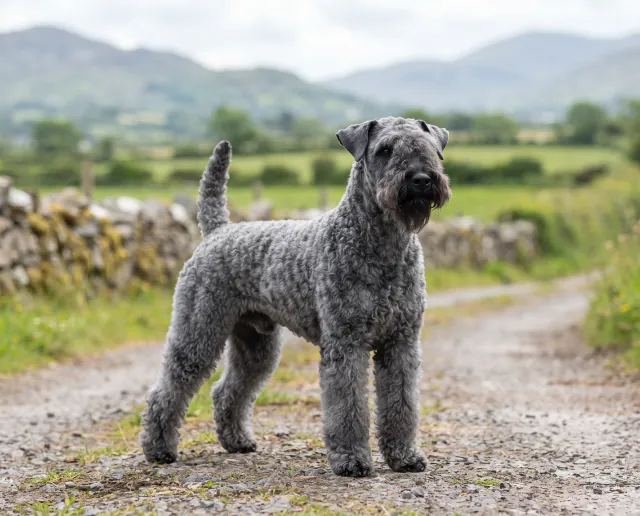
Puppies of this breed are born black and only turn the distinctive blue grey shade that gives the breed its name over the first eighteen months to two years of life. Watching a Kerry Blue Terrier change colour is one of the more unusual aspects of owning one, and it is not the only surprise. Developed as a versatile farm dog around County Kerry to hunt, herd and guard in equal measure, the breed carries a genuinely tough, all purpose terrier temperament under a coat that looks almost soft enough for a lap dog.
That contrast between appearance and character catches people out. The curled, silky textured coat sheds very little and can look almost woolly when it grows out, yet the dog beneath it is muscular, athletic and often willing to test any boundary an owner fails to set early. Kerry Blues were bred to work independently and to hold their ground against other animals, and neither trait has faded with decades of showing and companionship.
Temperament in the home
A Kerry Blue tends to bond closely with its own family and can be genuinely affectionate once it trusts the people around it, but the breed rarely arrives soft or biddable. Dog aggression is a well documented issue, particularly toward dogs of the same sex, and many owners manage their Kerry Blue as a dog that does not mix freely at the park rather than hoping the problem resolves with age. Small pets are unsuitable companions given the breed’s terrier and vermin working background. Older children who understand calm, confident handling generally do well with the breed, though a Kerry Blue that senses uncertainty or inconsistency in a household member may test that person specifically. Left alone for reasonable periods most cope, but the breed is happiest with company and a clear routine.
Exercise and training
Roughly ninety minutes of exercise a day suits an adult, ideally split between purposeful walking and off lead time in a secure area where recall has been proven reliable. This is not a breed that tires easily, and an under exercised Kerry Blue often becomes the pushy, opinionated dog described in less flattering accounts of the breed. Training demands real consistency and confidence from the handler, since the breed responds badly to nervous or contradictory instructions and will happily fill any leadership vacuum it finds. Reward based methods work, but sessions need to be led with quiet authority rather than force, and early, ongoing management of dog to dog interactions matters more here than in most terrier breeds.
Coat and grooming
The dense, wavy to curly coat does not shed in the way most dogs do, shedding being replaced instead by continuous, slow hair growth that must be clipped or scissored roughly every six weeks to keep the dog comfortable and clean. Daily brushing prevents the coat matting close to the skin, particularly behind the ears, under the legs and around the beard, and a matted Kerry Blue coat is uncomfortable and can hide skin problems underneath. Many owners use a professional groomer for the six weekly trim and manage brushing themselves between visits. The trade off for this workload is a coat that produces very little loose hair around the house, which suits allergy conscious households better than most medium sized breeds.
Health and lifespan
A well kept Kerry Blue Terrier commonly lives twelve to fifteen years. Hip dysplasia occurs in the breed, and hip scoring under the BVA and Kennel Club scheme is a reasonable question for any breeder. Eye conditions including progressive retinal atrophy and cataracts have been recorded, and the BVA and Kennel Club eye scheme covers regular screening of breeding stock. Kerry Blue puppies can also suffer from a rare inherited neurological condition affecting nerve function in the first weeks of life, and breeders active in the breed club should be able to discuss what testing or pedigree research they use to reduce the risk. Cysts and skin tumours are reported more often in this breed than in many others, so lumps deserve prompt veterinary attention rather than a wait and see approach.
Costs and space
Grooming is the dominant cost for a Kerry Blue owner, and a six weekly clip from a professional adds up over a year in a way that owners of shorter coated breeds do not experience. Total monthly costs including food, insurance and routine care commonly run toward the higher end for a medium sized dog once coat care is included. Space requirements are moderate, and the breed manages well in a house with a secure garden rather than needing acreage, provided daily exercise happens properly and the garden fencing accounts for a determined, athletic dog.
Verdict
The Kerry Blue Terrier suits a confident, experienced owner who wants a striking, low shedding, genuinely capable dog and who will commit to both the grooming routine and the careful management of its attitude toward other dogs. It works well in a settled household without small pets or a rotating cast of visiting dogs.
It is a poor fit for first time owners, households wanting a dog that mixes freely with others, or anyone unwilling to budget seriously for regular professional grooming. Handled with consistency from puppyhood, it becomes a loyal and genuinely distinctive companion.