At a glance
Key facts
The essentials to compare before deciding whether this breed fits your home and routine.
- Size
- Small
- Lifespan
- 13 to 15 years
- Energy
- High
- Temperament
- Curious, vocal and fiercely independent minded
- Good with children
- Often good with children who play fairly and calmly
- Exercise
- About an hour a day of varied, engaging activity
- Trainability
- Moderate
- Grooming
- Weekly brushing with heavier daily care during seasonal coat loss
- Estimated monthly cost, GBP
- £70 to £130 per month
On the barges and quaysides of Flanders, a small black dog with a fox like face was kept less for company than for the very practical job of controlling rats and announcing anyone approaching the boat. The Schipperke, a name popularly read as little captain though its exact origin is debated, was the working dog of tradesmen and bargemen rather than a court favourite, and that background shows in a breed that is busy, watchful and entirely convinced of its own competence regardless of its size.
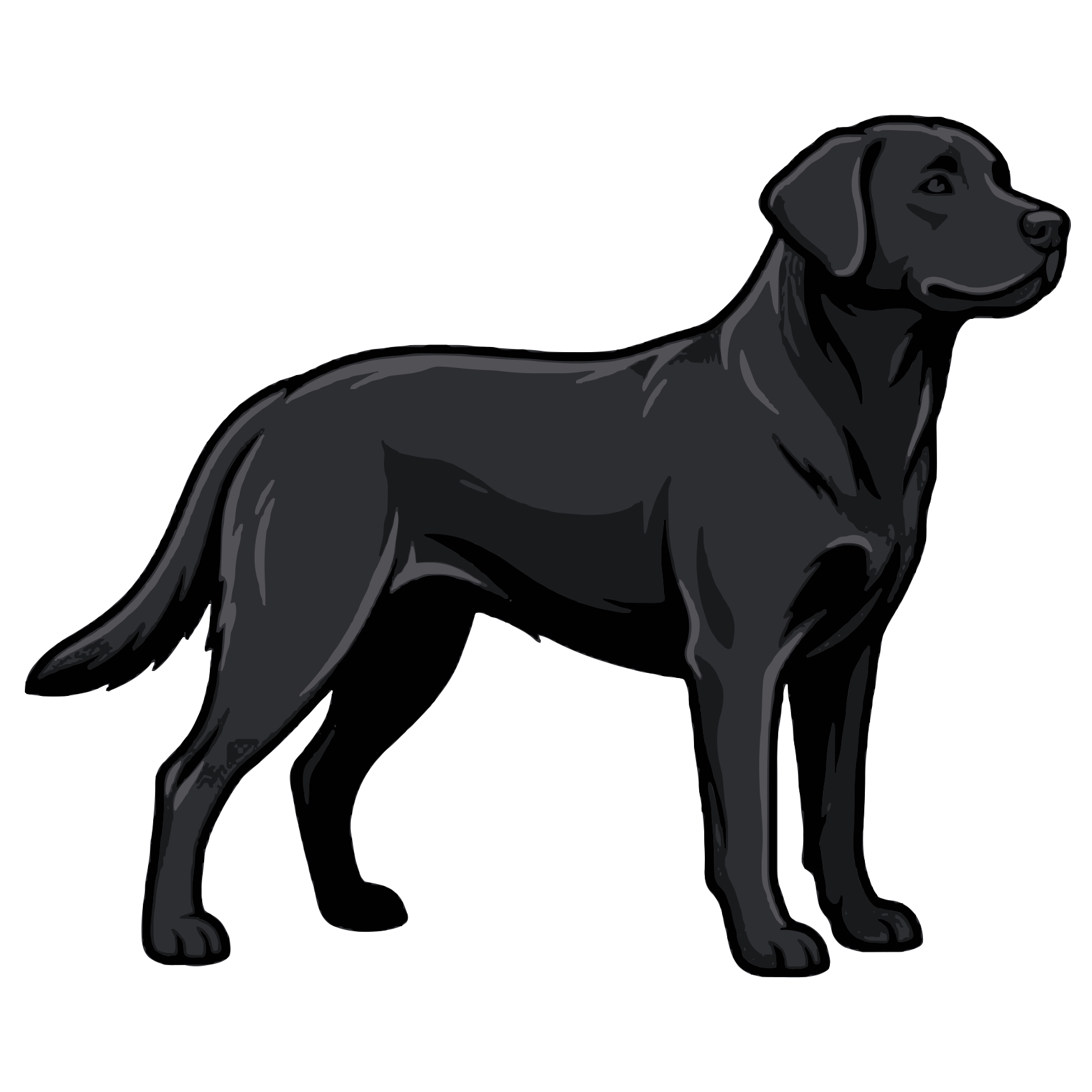
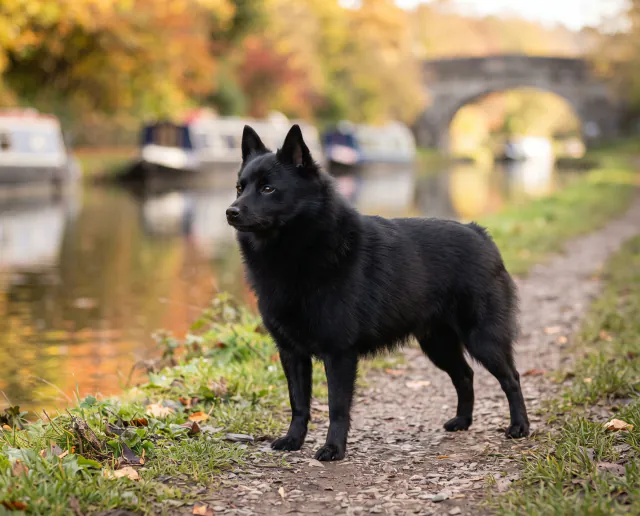
Standing around thirty centimetres and weighing under seven kilograms, the Schipperke is small enough to fit almost any home yet behaves like a considerably larger dog in both confidence and volume. Solid black is the traditional and still most common colouring, set off by a thick ruff around the neck and culottes at the back of the thighs that give the breed its distinctive silhouette.
Temperament in the home
Curiosity defines the breed more than any other single trait. A Schipperke investigates new objects, new smells and new arrivals with real enthusiasm, and a household without secure bins, closed cupboards and a tidy garden will find out quickly what that means in practice. Vocal by instinct, the breed announces visitors, passing traffic and anything unusual with a sharp, carrying bark that suits its watchdog history but tests the patience of close neighbours in a terraced house. Children who play fairly and do not tease a dog that dislikes being cornered generally get on well with a Schipperke, though the breed can be possessive over toys and food if that tendency is not addressed early. Left alone for reasonable periods most adults cope well, drawing on the same independent streak that made them useful working dogs rather than constant companions.
Exercise and training
About an hour a day of genuinely varied activity suits the breed far better than a sedate stroll, since a Schipperke under stimulated becomes a determined escape artist and an enthusiastic digger. Scent work, flyball style games and simply being allowed to investigate a walk at its own pace all use the breed’s natural curiosity productively. Training responds well to food rewards and short, engaging sessions, though the same independence that makes the breed entertaining can produce a selective approach to recall around interesting smells. Early, consistent boundary setting around jumping up, barking on cue and greeting visitors calmly pays off, since an untrained adult Schipperke can become a genuinely difficult small dog to live with, all noise and no manners.
Coat and grooming
The double coat is harsh over a dense undercoat and sheds a considerable amount for a dog this size, particularly during the two seasonal blowouts each year when brushing needs to become close to daily. Outside those periods, a thorough weekly brush through the ruff, culottes and body coat keeps shedding under control and prevents the undercoat matting near the skin. No clipping or stripping is required, since the coat is left to grow and shed naturally, which makes upkeep simpler than many small breeds even if the volume of loose hair surprises new owners. Routine nail, ear and dental care complete the grooming picture, and none of it demands a professional groomer as standard practice.
Health and lifespan
Many Schipperkes live comfortably into their mid teens, a genuinely long innings for a small breed. Mucopolysaccharidosis IIIB, a metabolic storage disorder affecting young dogs, is recognised in the breed, and a DNA test exists that responsible breeders should be using to avoid producing affected puppies. Patellar luxation and hip problems occur as they do across small and medium breeds, and are worth asking a breeder about. The breed has a hearty appetite that outpaces its modest size, and weight creeps on easily if feeding is not measured properly, with knock on effects for joints and general fitness. Regular, unhurried exercise and a measured diet do more for a long, active old age here than any specific health test.
Costs and space
Running costs are modest and typically fall between £70 and £130 a month, covering food, insurance and routine veterinary care, though the exact figure depends heavily on which insurer and vet practice a household uses. Grooming costs stay low since the coat needs no professional clipping. Space is rarely a constraint, and a Schipperke lives happily in a flat or small house provided secure fencing and a properly closed bin are in place, since the breed’s curiosity and terrier like tenacity make short work of anything left accessible. Neighbours in shared or terraced housing are the main consideration, given how readily the breed vocalises.
Verdict
The Schipperke suits an owner who wants a small, busy, genuinely characterful watchdog and who will provide real daily engagement rather than a short walk around the block. Households prepared to manage barking sensibly and to keep temptingly interesting objects out of reach tend to do well with the breed.
It is a poor fit for anyone wanting a quiet dog, a home with thin walls and easily disturbed neighbours, or an owner hoping a small size will mean a low energy, low maintenance pet.