At a glance
Key facts
The essentials to compare before deciding whether this breed fits your home and routine.
- Size
- Large
- Lifespan
- 11 to 14 years
- Energy
- Medium to high
- Temperament
- Clever, sensitive and quietly comic
- Good with children
- Usually very good with children who are taught to be calm indoors
- Exercise
- About 90 minutes a day with training built into it
- Trainability
- Beginner friendly
- Grooming
- Brush several times weekly with professional clipping every six to eight weeks
- Estimated monthly cost, GBP
- £95 to £175 per month
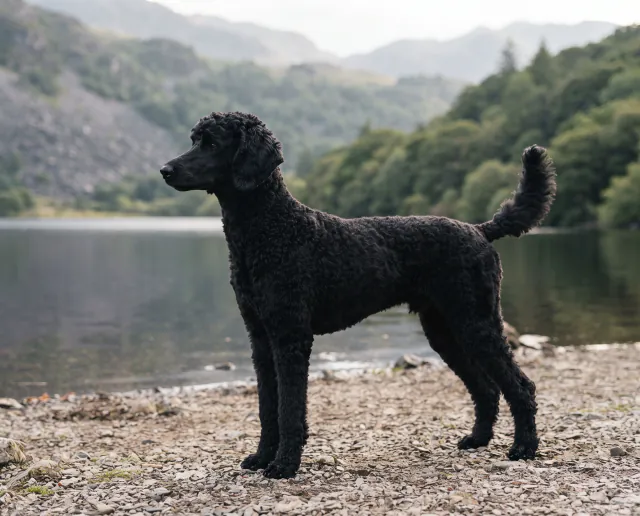
The clip is what gets the breed misjudged. A Standard Poodle in full show trim reads as an ornament, and plenty of buyers write off the breed on that evidence. The pattern had a job. Poodles worked as water retrievers across northern Europe, fetching shot duck out of cold lakes, and the coat was cut back over the loins and legs to reduce drag while thickness stayed over the chest and the major joints. The German word behind the name refers to splashing about in water.
Standards are the original size, with Miniatures and Toys bred down from them later. An adult stands above 55cm at the shoulder and weighs twenty to thirty kilograms, so this is a large dog that happens to be lightly built, and most live eleven to fourteen years. Buyers who arrive with the ornamental picture in mind find an athletic gundog with a strong sense of humour and no tolerance for boredom.
Living with the breed
These dogs attach to the whole household rather than to one person, and most are reliable with children, though a young Poodle at full speed indoors weighs enough to flatten a toddler. Sensitivity is the trait new owners underestimate. Raised voices and rough handling both register, and a frightened Poodle remembers the circumstances long afterwards. Company matters as much, since these were dogs bred to work in partnership and empty days produce chewing and noise. A first-time owner can manage a Standard provided the grooming commitment is understood before any deposit is paid. Space is less of an obstacle than the height suggests, though the dog needs room to stretch out and a car that can carry it.
Daily exercise
Around ninety minutes a day suits a healthy adult, and a fit Standard keeps going for a good deal longer. Water is the obvious outlet, since most take to swimming readily, though rivers need checking for current and for blue-green algae in warm weather. Retrieving, long line work and free running on safe ground beat repetitive pavement mileage. Growth is slow in a dog this size, so puppies want short controlled outings, with high jumps and hard turns left alone until the skeleton has finished. Recall is among the easier things to teach here, which tempts owners into off-lead freedom before the dog is dependable around deer or livestock.
Training and mental work
Few breeds learn as fast. Standards pick up a cue in a handful of repetitions and enjoy the process enough to invent variations on it, which is why so many turn up in obedience, agility and scent competition. Speed carries a catch, because unwanted habits are acquired just as quickly, and a Poodle accidentally rewarded for barking at the window will keep the routine going for years. Sessions should be short, cheerful and reward-based, since heavy-handed correction makes a sensitive dog switch off entirely. Mental work needs timetabling rather than leaving to chance, and scent games, trick sequences and food puzzles all give a busy mind somewhere useful to go.
Grooming and shedding
The coat is single, dense and curled, and it grows continuously in the way human hair does. Loose hair is caught in the curl instead of dropping onto the furniture, which is why the breed is called low shedding, though that is no promise of comfort for an allergy sufferer. What the dog loses stays in the coat and felts there unless somebody removes it. Working through the full depth of the hair in sections, several times a week, with a slicker and then a comb, is the only approach that prevents matting. Puppy coat changes somewhere between about nine and eighteen months, and the tangling through that period catches owners out badly. A professional groom every six to eight weeks is normal, and a shorter trim saves time at home. Ear hair needs keeping clear, and feet and face want tidying between visits.
Health and costs
Breeders should be testing for the conditions the breed is watched for, which include hip dysplasia and inherited eye disease, with a DNA test available for progressive retinal atrophy. Sebaceous adenitis, a skin condition affecting the hair follicles, is screened for in Standard Poodles, and Addison’s disease is recognised in the breed and can look vaguely like lethargy, poor appetite or repeated stomach upsets before anyone identifies it. Certificates should be produced in writing, with the registered names matching the dogs on the premises. Deep-chested dogs carry a bloat risk, so sudden restlessness, a swollen abdomen or unproductive retching needs an immediate veterinary call. Running costs of roughly £95 to £175 a month are indicative only, because feeding a large dog, insuring it, grooming it and treating it cost different amounts in different places and at different ages. Grooming is the item people forget to budget for, and it continues for the dog’s life.
Verdict
A Standard Poodle suits an active household that wants a large, clever dog to train and can commit to a grooming bill for the next decade. Families with school-age children, dog sport competitors and people who walk in poor weather generally find the breed straightforward and rewarding company.
The breed is a poor choice for anyone hoping the coat will look after itself, for a home standing empty from morning to evening, or for an owner who wants a placid dog satisfied by a short stroll. Watch an adult being groomed before buying, since that hour describes the commitment more honestly than a morning with a litter.