
At a glance
Key facts
The essentials to compare before deciding whether this breed fits your home and routine.
- Size
- Small
- Lifespan
- 12 to 15 years
- Energy
- High
- Temperament
- Game, confident and quick to think for itself
- Good with children
- Often good with children who are taught to respect the dog
- Exercise
- About 1 to 2 hours a day across varied terrain
- Trainability
- Moderate
- Grooming
- Hand stripping two or three times a year plus weekly brushing
- Estimated monthly cost, GBP
- £80 to £145 per month
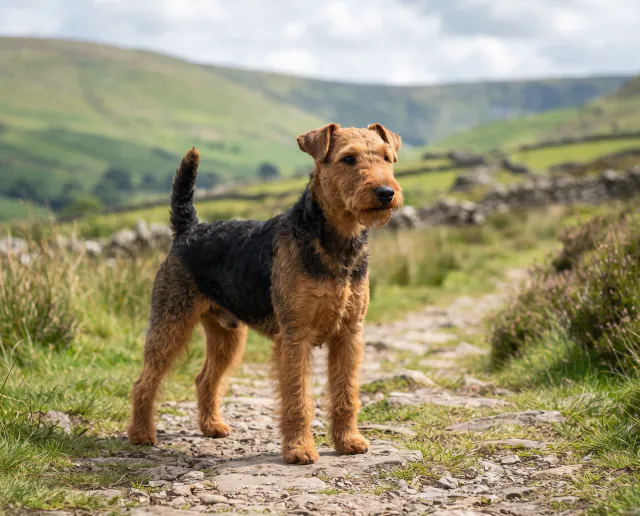
Set a Welsh Terrier photograph next to one of an Airedale and the family resemblance is obvious, right down to the black saddle over a tan body and legs. The Welsh Terrier is the older of the two, developed in the hill country of Wales to go to ground on fox, otter and badger, and the Airedale’s ancestors drew heavily on similar working terrier stock. Where the Airedale grew larger to take on tougher quarry with less need to fit down a hole, the Welsh Terrier stayed compact, at roughly fifteen kilograms, retaining the size and shape a working terrier of this type always needed.
The breed sits, somewhat improbably given its history and its useful, adaptable temperament, on the Kennel Club’s list of vulnerable native breeds, with annual UK registrations well below what the Airedale or the Border Terrier see in a typical year. Anyone drawn to the breed should expect a longer search than for a more fashionable terrier, a possible wait for a litter, and the Welsh Terrier Club as a sensible first point of contact rather than a general online search.
Living with the breed
Welsh Terriers tend to be confident and outgoing without the sharper, more reactive edge found in some terrier breeds, and many owners describe the temperament as steadier than its working background might suggest. The breed is affectionate with its own family and generally polite with visitors once introductions are made, though a watchful bark at the door is typical. Other dogs are usually accepted well, particularly of the same sex, and early socialisation smooths out most rough edges. Digging and a strong interest in anything that runs remain part of the package, so garden fencing needs checking at ground level and small pets are best kept elsewhere. Children who are taught not to tease or corner the dog generally get on well with a Welsh Terrier, and the breed’s patience is better than its terrier reputation suggests, though supervision with younger children remains sensible.
Daily exercise
An hour to two hours a day suits most adults, and the breed has genuine stamina behind its compact frame, having been built to work all day over rough Welsh hill country. Straight lead walking satisfies the legal requirement without satisfying the dog, so varied terrain, off-lead exploration where safe, and games that involve scent or retrieving all help use up the energy properly. Recall around wildlife needs real investment and testing before it can be trusted, since the instinct to chase has not been bred out along with the size. Puppies should build up gradually, since the same enthusiasm that makes an adult so capable can lead a young dog to do more than its joints are ready for.
Training and mental work
The breed is intelligent and generally willing to work with a handler who keeps things interesting, though a Welsh Terrier bored by repetition will start improvising its own entertainment. Short, varied, reward-based sessions covering recall, a solid leave and calm greetings tend to produce better results than long drilling of a single exercise. Scent games and puzzle feeding give the breed an outlet for a strong nose and a working mind that a walk alone does not fully satisfy. Consistency matters more than intensity, since the breed responds poorly to harsh handling and considerably better to a handler who is clear, patient and slightly amusing.
Grooming and shedding
The dense, wiry coat needs hand stripping two or three times a year to keep its harsh texture and sharp black and tan colouring, and clipping is a workable alternative for a pet dog, though it softens the coat and blurs the colour contrast over repeated clips. Weekly brushing between strips keeps the beard, legs and skirt free of tangles and picks up any grass seeds or debris from a day outdoors. Shedding is minimal when the coat is properly maintained, which is one of the breed’s more convenient traits for a house with allergies or a preference for clean floors. Ears, nails and teeth need the usual routine care, and the beard benefits from a wipe after meals.
Health and costs
Twelve to fifteen years is a realistic span for a well-kept Welsh Terrier. The breed is generally considered a robust one, though hereditary eye conditions covered by the BVA and Kennel Club eye scheme, hip health and patellar soundness are all reasonable subjects to raise with a breeder. Idiopathic epilepsy has been reported in the breed and is worth asking about in terms of family history, since seizures with no other identifiable cause can appear in early adulthood and need ongoing veterinary management once diagnosed. Keeping the dog lean supports joints and general fitness across a long working-bred life. Because litters are scarce, a monthly running cost in the region of £80 to £145 for food, insurance and coat care is typical, though the wait for a puppy from a health-tested litter can be the more significant practical hurdle than any of the ongoing costs.
Verdict
The Welsh Terrier suits an active owner who wants a capable, characterful small dog with a steadier temperament than many terriers, and who is willing to search patiently through the breed club for a well-bred puppy. It fits households with a secure garden and time for proper daily exercise.
It is not the right choice for anyone wanting an instantly available puppy, a low-exercise lapdog, or a home with small pets it might mistake for quarry. Owners who put in the search and the exercise generally find a loyal, adaptable companion at the end of it.