
By day two or three, the rawness of arrival day usually starts to soften. The puppy has slept in the house a couple of times, found the toilet spot at least once, and stopped flinching at the sound of the kettle. This is the week where a household moves from simply surviving the arrival to starting to build the habits that will carry through the following months, without yet expecting anything close to a finished routine.
The temptation in week one is to either do too much, cramming in training, socialising and a full walking schedule, or to do too little, treating the whole week as recovery time and waiting for things to click into place on their own. Neither serves the puppy well. What follows is a rough shape for the week: what to start, what to watch, and what can wait.
Start very short, calm training moments
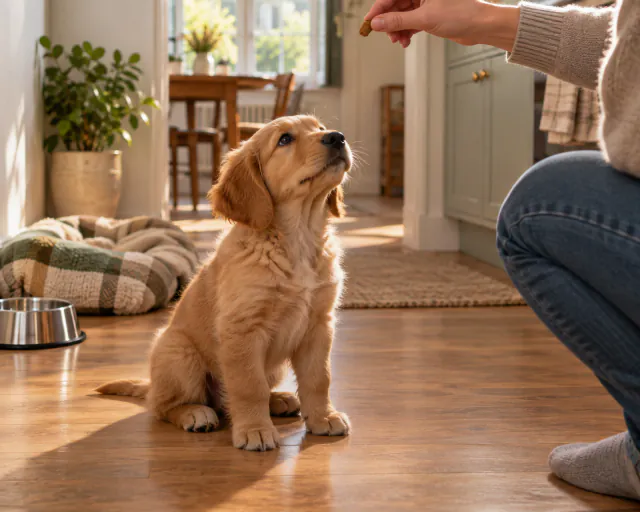
Once the first couple of days have passed and the puppy is eating and settling reasonably, it is a good time to introduce the smallest building blocks of training rather than waiting for a set start date. A marker word that tells the puppy exactly when they have done something right, and a puppy who reliably turns towards their name, are the two most useful early foundations and both are covered in full in marker word foundations and name response. Sessions at this stage should be measured in seconds rather than minutes, worked into everyday moments such as before a meal or during a lull in play, not run as a formal daily class.
Let the day settle into a loose rhythm
By the middle of the week, most households can see a rough shape emerging: roughly when the puppy tends to wake, when they seem hungriest, when a nap becomes unavoidable. Notice this rhythm rather than imposing a strict timetable on top of it. A young puppy’s needs shift quickly from week to week, so a rigid schedule copied from a book or app is often already out of date by the time it is written down. Following the puppy’s own pattern, and gently nudging mealtimes and toilet trips to fit around it, tends to work better in week one than forcing a fixed clock.
Expect the first vet visit in this window
Most new owners book the puppy’s first veterinary appointment for sometime in the first week, whether that is a general health check, the next stage of a vaccination course, or simply registering with a local practice. This visit is worth treating as routine rather than stressful: a chance for a vet to check general health, discuss parasite control and vaccination timing, and answer any questions about feeding or development. What typically happens at these appointments, and which signs in the early weeks are worth a call before the next booked visit, is covered in puppy health checks.
Watch the three basics
Rather than judging the week by how much has been achieved, judge it by three simple signals: is the puppy eating something at most meals, is toileting reasonably regular even if accidents are still happening, and is sleep happening in reasonable amounts without constant distress. A puppy who is eating, toileting and sleeping close to what is expected for their age is coping. A puppy who is refusing food for more than a day, toileting with diarrhoea, or barely sleeping and constantly distressed needs a call to the vet rather than a wait-and-see approach.
Start the socialisation clock, carefully
The weeks in which a puppy most readily accepts new experiences as normal do not last long, so week one is a reasonable point to start gentle, low-key socialisation rather than waiting for vaccination courses to finish completely. This does not mean trips to busy places or meeting unfamiliar dogs. It means calm exposure to everyday household sounds, safe handling, different textures underfoot, and short, controlled sightings of the outside world from a safe distance, such as a doorway or a carried trip to a quiet street. The full approach, paced properly across the coming weeks, is set out in the puppy socialisation checklist. In week one specifically, keep sessions brief and stop well before the puppy shows any sign of worry or exhaustion, since a single overwhelming experience can do more harm than several missed opportunities.
Balance new experiences with rest
It is easy for a first week to fill up with visitors, trial walks, new toys and training attempts, all well-intentioned and all individually reasonable. Added together, they can leave a puppy permanently short of sleep, which tends to show up as bitiness, restlessness or sudden crying rather than obvious tiredness. Build deliberate gaps of quiet, undisturbed rest into every day, and treat those gaps as being just as important as anything more active. A puppy who finishes the week eating reasonably, toileting with fewer accidents than day one, sleeping properly, and showing curiosity rather than fear about new things has had a genuinely successful first week, whatever the training log looks like.