- Session length
- 1 to 3 minutes, once a day
- Skill
- Cooperative care
- Suits
- Any age
What you need
- A soft-bristled dog toothbrush or a finger brush sized for the dog's mouth
- Toothpaste made for dogs, never human toothpaste
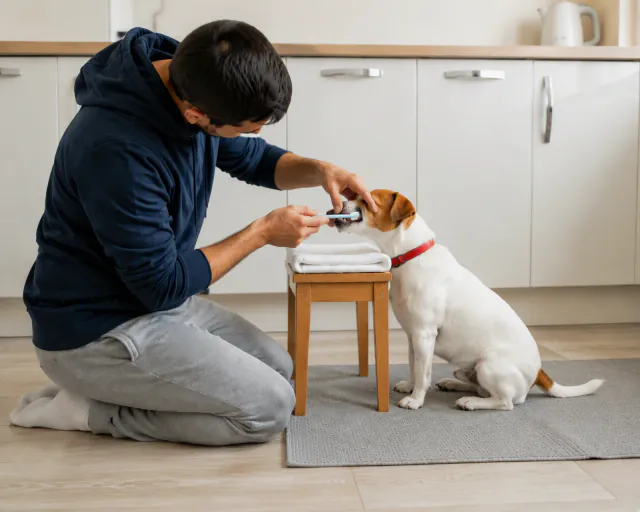
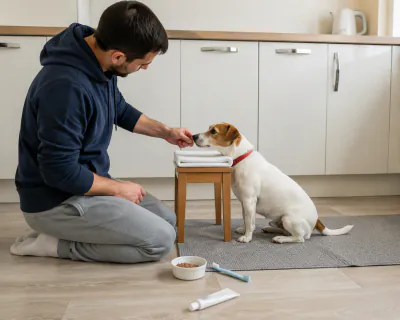
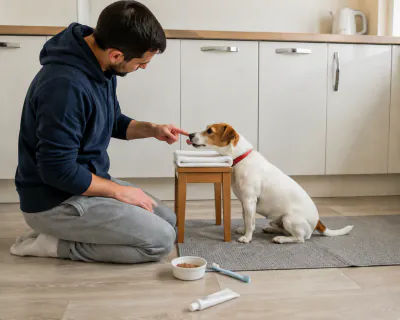
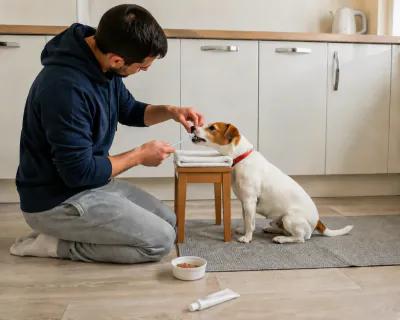
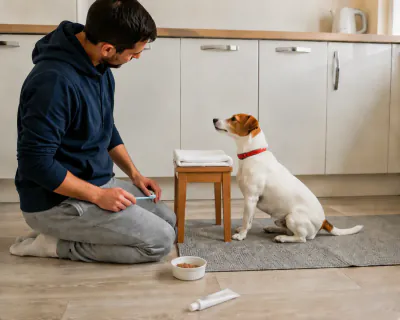
- A folded towel on a low footstool, used only as a chin rest
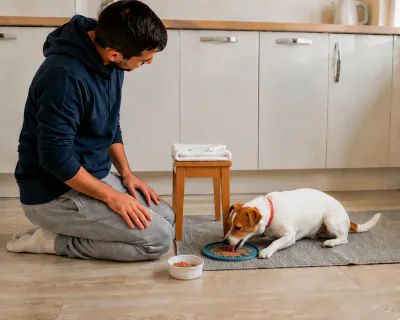
- A lick mat spread with soft food for the end of the session
- A few small, soft food rewards in a pot within reach
Most owners who give up on toothbrushing do so in the first week, after trying to brush a whole mouth on a dog who has never had a brush near their teeth. The dog clamps shut, turns away, and the brush ends up in a drawer. Brushing only helps as a daily habit, and daily habits only survive when both parties find them easy. This lesson builds the routine in small pieces the dog can say yes to, using the same chin rest start button as the nail trim lesson, so the brush becomes a short, predictable part of the day rather than a wrestle.
Purpose
By the end of the lesson the dog should rest their chin on a towel and keep it there for about thirty seconds of brushing across the outer surfaces of the teeth on both sides, most days of the week. Daily brushing is the most useful thing an owner can do at home for a dog’s teeth, and no chew, powder or diet replaces it or a veterinary dental check. The guide to dental care routines covers what brushing can and cannot achieve and the signs that need a vet. This lesson is about getting a willing dog to the point where that routine can happen at all.
Prerequisites
- The dog is comfortable with a brief lip lift and a look at the teeth, as practised in preparing for veterinary handling.
- The dog knows a chin rest start button. If not, teach it first over several short sessions, exactly as the first step of the method describes.
- The mouth looks comfortable. Brushing a sore mouth teaches the dog to avoid the brush, so any sign of pain means a vet visit first.
Equipment
A soft brush that fits the mouth matters more than any particular design. A long-handled brush reaches the back teeth more easily, and a finger brush gives some owners better control on a small dog; the comparison of dog toothbrushes sets out the differences. Use toothpaste made for dogs, which is designed to be swallowed. Set a folded towel on a low footstool or step so the chin rest sits at a height where the dog can sit comfortably with their head level. A lick mat spread with a little soft food makes a good final reward, because it gives the session a pleasant ending that lasts longer than a single piece of food. Count anything spread on it as part of the day’s food.
Method
- Teach the chin rest on its own. Kneel beside the footstool with the folded towel on top. When the dog rests their chin on the towel, mark calmly and feed. Build to ten seconds of chin rest over a few sessions.
- Put a pea-sized smear of dog toothpaste on a fingertip and let the dog lick it off while the chin is down. Repeat on several days until the dog leans in for it.
- With the chin down, lift the upper lip with a thumb for one second to see the front teeth, let go, then feed. Work round to the side teeth on both sides.
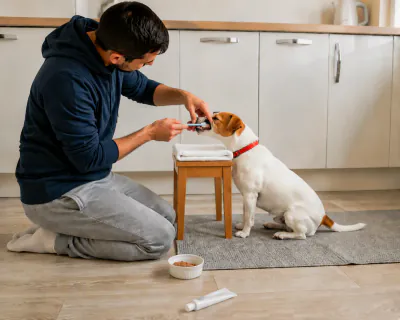
- Show the brush with a little toothpaste on it and let the dog lick the paste off the bristles. The brush now predicts the taste.
- Lift the lip and touch the brush against the outer surface of one canine for a second. Take the brush away, then feed. Repeat on the other side.
- Treat a lifted chin as a pause. Take the brush away, rest your hands and wait. If the chin comes back within about ten seconds, carry on at an easier step. If it does not, end calmly.
- Move to the back teeth, where plaque and tartar build up fastest. Angle the bristles at the line where tooth meets gum and make three small circular strokes, then take the brush away and feed.
- Extend by teeth, not by force: one tooth, then three, then one whole side, then both sides, over one to two weeks. Keep the chin rest as the start of every repetition.
- When both sides are comfortable, link the strokes into one continuous brush of about thirty seconds, with food only at the end.
- Finish every session by putting the brush away and setting down the lick mat.
- Attach the routine to something that already happens every day, such as the evening walk, so it is easy to remember.
Session length
One to three minutes, once a day. Early sessions are mostly chin rests and tastes of toothpaste, with only a second or two of brush contact. Short daily sessions build the habit faster than longer ones every few days, and daily is also the frequency that does the teeth most good once the routine is running.
Progression criteria
Move on when the dog offers the chin rest as soon as the footstool appears, keeps it through about thirty seconds of brushing on both sides, and stays relaxed throughout, on five days out of seven for two weeks. Relaxed means a loose jaw, soft eyes and no attempt to turn the head away. A dog who clamps their mouth and holds rigidly still is putting up with it, so go back a stage and build more slowly.
Common mistakes
Starting with the brush before the toothpaste taste is welcome makes the brush feel like an intrusion. Chasing the mouth with the brush when the dog turns away teaches them to turn further and faster. Brushing only the front teeth feels productive, because they are easy to reach, but the outer surfaces of the back teeth are where most tartar builds. Dropping the rewards once brushing is going well is the usual reason the habit fades after a month, so keep paying at the end of every session.
Troubleshooting
If the dog accepts a finger but not a brush, use a finger brush for a week and then switch back, or shrink the step to a brush resting against the lip without touching a tooth. If the dog dislikes one toothpaste flavour, try another dog toothpaste rather than going without, since the taste does much of the work in the early stages. If the dog backs away when the footstool comes out, the sessions have been running too long; cut them to thirty seconds of chin rest and toothpaste taste, and end on a success. Small and flat-faced breeds often have crowded teeth that are harder to reach, so expect slower progress on the back teeth and use a smaller brush head.
Safety and when to stop
Stop if the dog growls, snaps, yelps or pulls away sharply when a particular tooth is touched. Mouth pain is common and often hidden, so book a vet check before brushing continues, and ask about a qualified behaviourist if the fear of handling persists after that. Red or bleeding gums, a loose, broken or discoloured tooth, breath that has become noticeably worse, drooling, pawing at the mouth or dropping food all need a veterinary dental check. Brushing cannot remove tartar that has already hardened, and scraping at it at home risks damaging the tooth. Never use human toothpaste, and never hold the muzzle or force the mouth open to finish.
Next lesson
This closes the intermediate pathway. Return to the training hub to choose what to revisit, and keep proofing the everyday skills in new places, starting with recall around distractions, the skill that fades fastest when it stops being practised.
Related reading
The cooperative nail trims lesson uses the same chin rest, so a dog who knows it from one routine usually picks up the other faster.