- Session length
- 2 to 3 minutes, two or three times a day
- Skill
- Impulse control
- Suits
- Puppy
What you need
- A soft toy or chew the puppy finds mildly interesting, not their favourite
- A second item that is clearly more valuable, such as a piece of chicken or a squeaky toy
- A quiet room with the door shut and nothing else on the floor to compete for attention
Leave it stops a puppy taking something in the first place. Drop asks for something different and, for many owners, something more useful: releasing an item that is already in the mouth. Puppies pick things up constantly while they explore the world with their teeth, and a puppy who has never practised a fair trade will guard, gulp or bolt with whatever they find rather than hand it over. This lesson builds a release that the puppy offers willingly, because it has only ever led to something good.
Purpose
To teach your puppy that opening their mouth around an item, on request, reliably produces a better outcome than keeping hold of it. The finished behaviour is a puppy who, on hearing the release word, lets go of whatever they are holding and looks up for the trade, without you needing to reach into their mouth or pull the item away.
Prerequisites
Your puppy has started leave it and understands that ignoring something can pay off. They also need to be a puppy who will pick up and mouth an object, since there is nothing to release without that first. If your puppy shows any stiffening, freezing or growling when you approach something in their mouth, stop this lesson and speak to a qualified behaviourist before continuing, since that response needs a different approach to the one described here.
Equipment
Start with an item of only middling interest to the puppy, such as a plain rope toy or a chew they like but do not treasure. Keep something clearly more valuable close at hand, ready to appear the instant it is needed; a piece of chicken, cheese or a squeaky toy all work well. Train in a quiet room with the door shut, so the puppy has nowhere to retreat with the item and no competing distractions.
Method
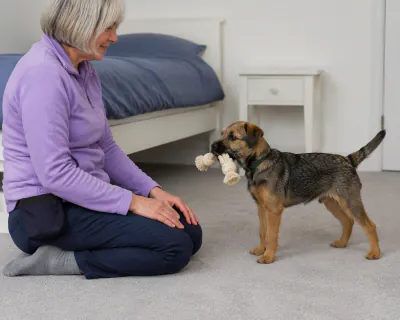
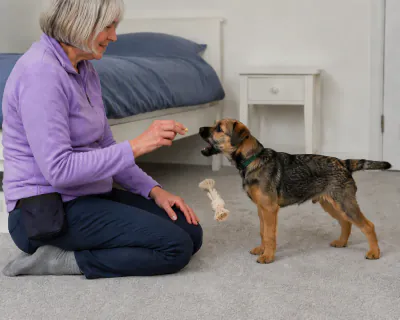
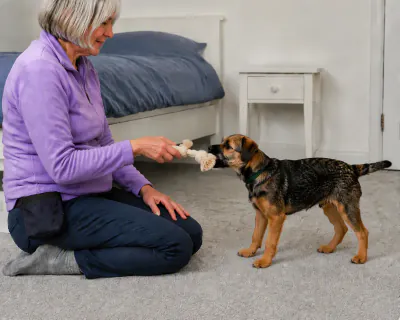
- Let the puppy pick up the lower-value item on their own, or hand it to them, and let them hold it for a moment.
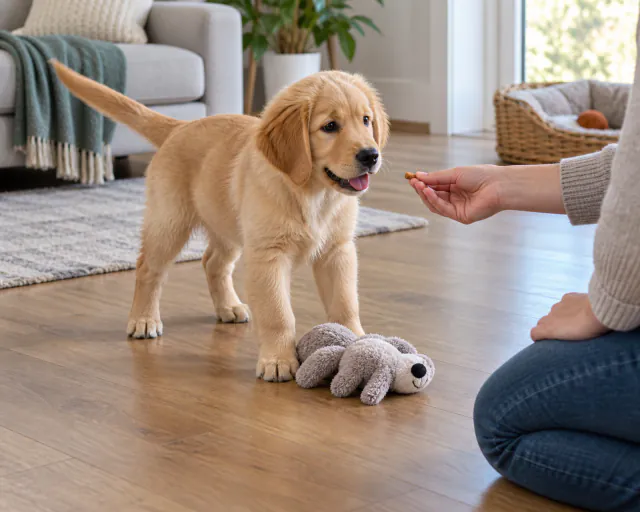
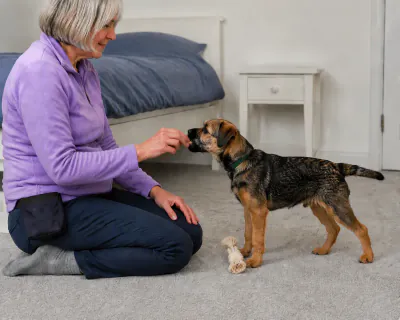
- Show the higher-value item at nose height without waving it around, then hold it still near the puppy’s mouth.
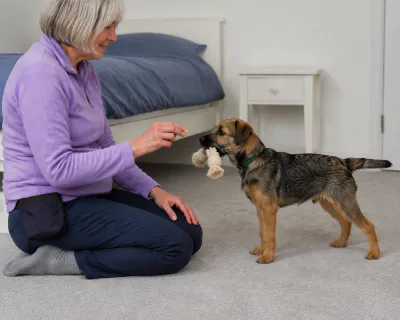
- As the puppy opens their mouth to take the new item, say your release word, such as drop or out, at the exact moment the first item falls.
- Let the puppy take the traded item and enjoy it fully before starting again.
- Repeat five or six times, always trading up, never trading down or taking the item away with nothing offered in return.
- Once the puppy releases readily for the trade, start saying the release word a half second before you present the new item, so the word begins to predict the trade rather than simply describing it.
- Gradually extend how long the puppy has been holding the first item before you ask, going from an instant to a few seconds, so the puppy is not just dropping the moment you appear.
- Occasionally give the traded item back to the original object afterwards, so releasing something does not always mean losing it permanently.
Session length
Two to three minutes, two or three times a day, with four to six trades in a session. Stop while the puppy is still keen to play the game, well before they lose interest in the lower-value item altogether.
Progression criteria
Move on when your puppy releases an item within two seconds of the release word, on eight out of ten attempts across three separate sessions on different days, having held the item for at least three seconds beforehand. Then raise difficulty one variable at a time: extend how long the puppy holds the item before you ask, then practise with a slightly more interesting item, and only later ask for a release with a family member nearby as mild distraction.
Common mistakes
Reaching for the item before offering the trade teaches a puppy that a hand coming towards their mouth means losing something for nothing, which builds exactly the guarding response this lesson is meant to prevent. Only ever practising with low-value items leaves the behaviour untested for the moments it actually matters, such as a chewed sock or a dropped tablet. Trading down, where the item offered in exchange is worse than what the puppy is holding, teaches the puppy to hold on tighter next time. Chasing a puppy who has grabbed something and run off is the single most common way owners accidentally train the opposite of this lesson, since it makes running away with things exciting.
Troubleshooting
If the puppy will not let go even for a good trade, the traded item probably is not valuable enough yet, or the puppy has learned that giving things up ends the fun rather than starting a new round. Slow down and use higher value food to begin with. If the puppy drops the item and then grabs it back before you can pick it up, add a second person to collect the dropped item while you deliver the treat, or place the treat further from the dropped item so the puppy has to choose. If your puppy growls, stiffens or snaps when you approach an item, stop working on this exercise immediately and speak to a qualified behaviourist working alongside your vet, since this is a resource guarding pattern that needs individual assessment rather than a general lesson.
Safety and when to stop
Check any chew or toy regularly for damage, and remove anything that has started to break into pieces small enough to swallow. Never force a puppy’s jaws open, grip the muzzle, or hold a puppy down to take an item; all of these teach a puppy that hands near the mouth are threatening, which makes future handling and veterinary examinations harder. Stop the session if the puppy seems frustrated rather than eager, since a puppy who is snatching at the trade item or barking at you has moved past the pace this lesson is meant to keep. If your puppy ever shows guarding behaviour around food, toys or found objects, involve a vet and a qualified behaviourist promptly rather than trying to train through it alone.
Next lesson
With a reliable drop in place, move on to waiting briefly at doors, which asks for the same kind of self-control in a different everyday situation.
Useful tool
A puppy who mouths and grabs items constantly is often simply short of appropriate outlets for chewing and exploring, so the dog exercise planner is worth checking to make sure physical and mental activity are matched to your puppy’s age before you assume the behaviour itself is the problem.