At a glance
Key facts
The essentials to compare before deciding whether this breed fits your home and routine.
- Size
- Large
- Lifespan
- 12 to 14 years
- Energy
- Medium to high
- Temperament
- Dignified, aloof with strangers, playful with family
- Good with children
- Can be good with older children who respect a dignified dog
- Exercise
- An hour or more daily including a secure off-lead gallop
- Trainability
- Experienced handler
- Grooming
- Brushing several times weekly at full length, with professional bathing and drying
- Estimated monthly cost, GBP
- £120 to £220 per month
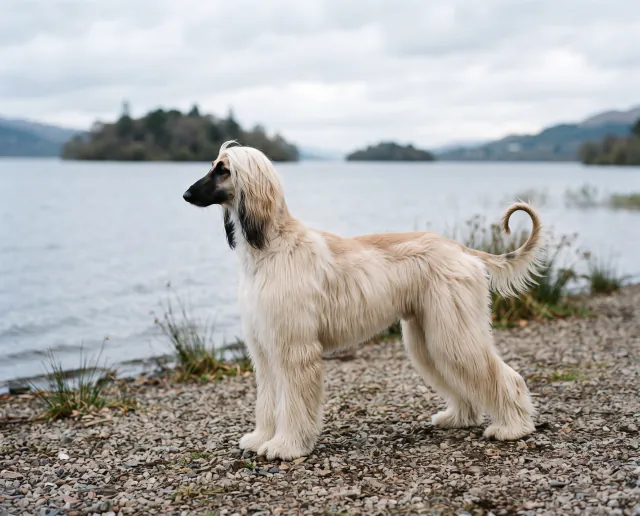
The coat is the reason most people want an Afghan Hound and the reason a fair number of them end up in rescue. Under the hair is a coursing hound bred by the peoples of Afghanistan to run down hare, gazelle and other game across mountain terrain, hunting by sight at speeds a Labrador cannot approach. The long coat kept the dog warm on cold nights at altitude. British officers brought the first examples home in the early twentieth century, and the breed has been a show ring fixture in this country ever since, which tends to obscure what it was built to do.
The result is a dog that looks like an ornament and behaves like a hunter.
Living with the breed
Indoors an adult Afghan is usually quiet, clean and undemanding, happy to drape itself across the best sofa for most of the day. Affection is offered on the dog’s terms. Family members get genuine warmth and moments of pure clowning, while visitors are generally ignored with a politeness that borders on disdain. That reserve is normal for the breed and should not be mistaken for nervousness, though a poorly socialised puppy can tip from aloof into worried. Rough handling is resented, so children need to be old enough to leave the dog alone when it walks away. Cats and small pets are a poor mix; the chase instinct is strong and switches on without warning. Barking is rare, but the breed can clear a fence with ease, and gardens need boundaries of six feet or more.
Daily exercise
A steady walk does not tire a sighthound. Adults need about an hour a day on the lead plus a proper gallop several times a week in a securely fenced area, and hireable dog fields make that easier than it once was. Recall is unreliable once the dog has locked onto movement, so open moorland, farmland and roadside footpaths are lead-only places for most owners. Near sheep that is a legal matter as well as a practical one. Puppies should have short, free play rather than mileage until the growth plates have closed at around a year, and jumping in and out of cars should wait.
Training and mental work
Independence is built into a dog that had to make decisions at forty miles an hour without a handler in sight, and training has to work with that rather than against it. Reward-based sessions kept short and interesting produce a well-mannered hound; repetition and correction produce one that switches off entirely. The essentials are a rock-solid stand for grooming, calm lead walking, a wait at doors and a whistle recall practised in enclosed spaces with high value food. Lure coursing days run by sighthound clubs offer an outlet that nothing else quite matches. At home, scent games and food puzzles fill the gap.
Grooming and shedding
The coat is a single layer of fine silky hair that grows continuously on the legs, sides, ears and topknot, with a short saddle developing along the back in adulthood. It mats quickly, particularly behind the ears, under the front legs and between the toes, and a mat left for a week becomes a felted pad that has to be cut out. Brushing dry hair breaks it, so the coat is misted with water or a conditioning spray and worked through in layers with a pin brush several times a week. A full bath and blow dry every one to two weeks keeps the coat manageable, and that is a two to three hour job at home or a substantial bill from a groomer who knows the breed. The coat change between about twelve and eighteen months is the hardest phase, when soft puppy hair and adult coat tangle together. Shedding is light, but the hair that does come out is long and noticeable. Pet owners who clip the coat short lose the look but gain their weekends back.
Health and costs
Twelve to fourteen years is a reasonable expectation. Hip dysplasia occurs, so ask for BVA and Kennel Club hip scores on both parents, and eye testing under the BVA and Kennel Club scheme is sensible given cataracts in the breed. Hypothyroidism is recognised and shows as weight gain, lethargy and coat loss in a middle-aged dog. Like other sighthounds, Afghans carry little body fat and can react differently to some anaesthetic agents, so tell the vet before any procedure. The deep chest brings a risk of gastric torsion, so feed two meals a day and avoid hard exercise around food. Ribs should be easy to feel under the coat, and the hair hides weight gain very effectively. Monthly costs run from around £120 to £220, with professional grooming the main driver, followed by insurance for a large breed. The breed is not hard to find in most countries, with a handful of established breeders and an active breed club, but good litters are planned well in advance and a wait of several months is normal. Adult Afghans come through breed rescue with some regularity.
Verdict
The breed suits a calm, patient household that enjoys grooming as a pastime rather than a chore, has access to safe running space, and takes pleasure in a dog that is affectionate without being needy. Experienced sighthound owners, and people who have already lived with a long-coated breed, tend to do well.
Anyone who wants an obedient dog, a reliable off-lead walker, a low-maintenance coat or a pet for a busy family with young children should look at other breeds. The Afghan repays commitment handsomely and punishes neglect of the coat within days.