At a glance
Key facts
The essentials to compare before deciding whether this breed fits your home and routine.
- Size
- Large
- Lifespan
- 12 to 15 years
- Energy
- Medium to high
- Temperament
- Reserved, watchful, deeply attached to its own people
- Good with children
- Better suited to homes with older children who understand a reserved dog
- Exercise
- Daily walks plus a regular sprint in a secure field
- Trainability
- Experienced handler
- Grooming
- Weekly rub down with a mitt and light shedding
- Estimated monthly cost, GBP
- £90 to £170 per month
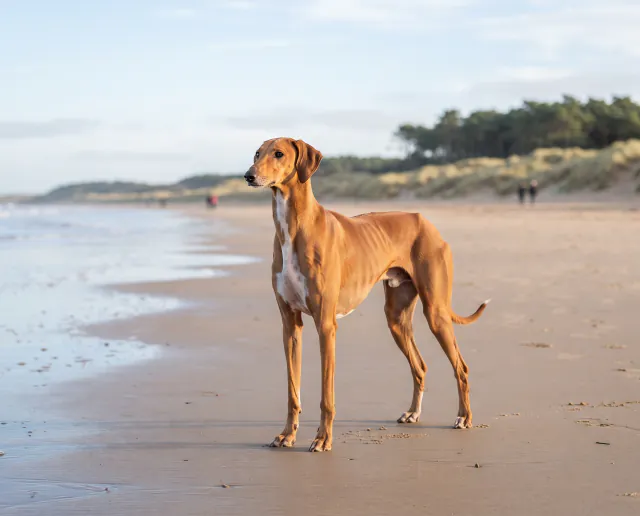
Most people who meet an Azawakh for the first time see a thin Greyhound and say so. The comparison misses almost everything that matters. This is a hound of the Sahel, from the dry country of Mali, Niger and Burkina Faso, where the Tuareg and neighbouring peoples kept it to guard camps and livestock at night and to course hare and gazelle by day. Both jobs shaped a dog that is far more watchful and territorial than any racing Greyhound, with a bond to its own people that borders on the exclusive.
The frame is tall, narrow and lightly muscled, with hip bones and ribs visible in a healthy adult. Vets unfamiliar with the breed sometimes raise an eyebrow, and strangers in the park occasionally say something worse. Owners learn to explain.
Suitability
The breed is a poor fit for a household with people coming and going all day. An Azawakh does not want to be greeted by strangers, does not want to be patted by them and, if pushed, will move away or give a warning. Guests are tolerated once the dog has decided they belong, which can take several visits. Inside the family circle the picture is different: these dogs are affectionate, quiet, often clingy, and inclined to sleep touching someone. They bark to announce arrivals, as camp guards were meant to, and that habit is hard to switch off in a terraced street. Prey drive is high and cats are a risk unless the dog is raised with them from puppyhood. Older children who understand a dog that needs space do well; toddlers and visiting friends who grab and shriek do not. The thin coat and lack of body fat make British winters uncomfortable, and a fleece or waterproof coat is standard equipment from October to April.
Exercise
An adult needs an hour or so of walking each day and, more than that, the chance to run flat out. A secure field hired for half an hour a few times a week meets the need better than any amount of pavement. In open country the dog should be on a lead, because recall from a moving hare is not a realistic expectation and a hound crossing fields near sheep is a hound in legal danger. A long line on quiet beaches works well in winter. Puppies grow fast and finish late, so hold back on long walks and repetitive jumping until around eighteen months, allowing free play instead. In the house the breed is lazy to the point of immobility once exercised, and a warm bed away from draughts matters more than floor space.
Grooming
The short, fine coat sits close to thin skin and needs little beyond a weekly going over with a rubber mitt, which lifts the modest amount of loose hair shed through the year. Bathing is rarely needed. The skin tears easily on wire and brambles, and small wounds on a dog with so little fat beneath the surface can need stitches where a thicker-coated breed would shrug them off, so check the dog over after any run in rough cover. Nails grow fast on a dog that spends much of its time on soft bedding and need regular trimming. Teeth and ears are straightforward.
Health
The Azawakh is generally a sound breed with a lifespan of twelve to fifteen years. There is no large body of UK health data because so few dogs exist here, and the sensible route is to ask the breeder what has appeared in their lines and to contact the breed club for current advice. Enthusiasts abroad have reported seizure disorders and low thyroid function in some families, and a buyer can reasonably ask about both. Hip scoring under the BVA and Kennel Club scheme is available and some breeders use it. As with all sighthounds, low body fat affects how anaesthetic drugs are handled, and the vet should be told before any procedure. Cold, damp weather is the everyday health hazard; a dog shivering in the garden should be brought in. Weight is rarely a problem, though a bored Azawakh in a warm house can be tempted to eat more than it burns.
Choosing and training
The breed is listed on the UK Kennel Club’s Imported Breed Register. Numbers are small, litters are few and far between, and buyers typically wait a year or more. A proportion of the dogs here were imported from continental Europe, where the breed is better established, and that adds travel, paperwork and cost. The breed club is the first port of call and will know which breeders have plans. Meeting adults before committing is essential, because a dog this reserved has to be seen in the flesh to be understood. Training rewards patience and a light touch. Azawakhs are sensitive to tone, shut down under pressure and learn quickly when the lesson is short and the reward is real. Socialisation in the first months should be broad but never forced, letting the puppy watch strangers from a distance rather than pushing it into their hands.
Verdict
The Azawakh suits a quiet adult household or a family with older children, ideally with sighthound experience, secure running space, a warm house and a genuine liking for a dog that reserves its affection for its own people.
It is the wrong choice for a busy social home, for anyone who wants a dog that greets the world, for first-time owners or for a cold, draughty property. Those who take it on for its looks alone rarely keep it.