At a glance
Key facts
The essentials to compare before deciding whether this breed fits your home and routine.
- Size
- Large
- Lifespan
- 12 to 14 years
- Energy
- Medium to high
- Temperament
- Reserved, sensitive and quietly devoted
- Good with children
- Can be good with quiet older children
- Exercise
- About an hour a day with a secure gallop two or three times a week
- Trainability
- Experienced handler
- Grooming
- Weekly wipe over, with regular brushing of the feathering
- Estimated monthly cost, GBP
- £90 to £160 per month
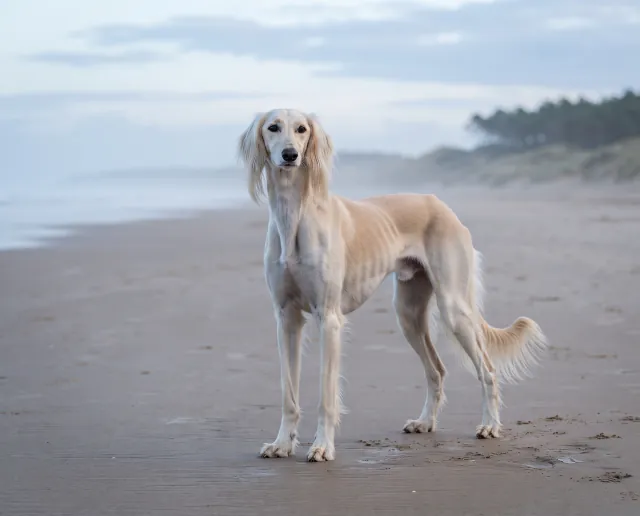
Put a Saluki beside a Greyhound and the Greyhound looks like the sprinter it is, all muscle and bulk. The Saluki looks like something built for a different distance. This is the sighthound of the Middle East, bred over thousands of years by Bedouin tribes to run down gazelle and hare across desert and scrub, often at distance and for far longer than a Greyhound could sustain. The dogs were valued as tribal property rather than sold, and something of that self-possession has survived in the modern breed.
Salukis stand 58 to 71cm at the shoulder and weigh anywhere from 18 to 27kg, on a frame that looks underfed to anyone used to Labradors. They come in a feathered coat, with silky fringes on the ears, tail and backs of the legs, and a smooth coat with none, in colours from cream and gold through red and grizzle to black and tan and tricolour.
Living with the breed
The word owners reach for is aloof, and it is fair with strangers, but with their own people Salukis are quietly devoted, often attached to one person in particular, and prone to following that person from room to room. They are sensitive, dislike noise and rough handling, and shut down under pressure. Guarding is not in them; a visitor is more likely to be ignored than challenged. Indoors they are clean, quiet and sedentary to the point of comedy, taking over the softest furniture in the house and staying there for hours. Long periods alone suit them badly and some develop real separation distress. Children who are calm and respectful are usually accepted; boisterous ones are avoided rather than tolerated. Cats can be lived with if introduced as a puppy and never chased, but anything that runs outside will be pursued. A thin coat and no fat mean a Saluki feels the cold sharply, so coats for walks and a warm bed away from draughts are essential kit in a British winter.
Daily exercise
An adult Saluki needs about an hour a day, but the shape of it matters more than the length. A steady lead walk plus a proper gallop in a secure field two or three times a week keeps the breed fit and content. On a lead they are elegant and undemanding; off a lead in open country they are gone, sometimes for miles, because a distant deer or hare is a stronger pull than any voice. Recall training is worth doing thoroughly and still not worth trusting near roads or livestock. Secure fields, lure coursing and racing clubs give the dog its outlet safely. Puppies need short outings and no repetitive jumping until the growth plates close. Wet, cold walks are cut short by the dog’s own preference.
Training and mental work
Salukis learn quickly and comply selectively. They are not stubborn so much as unconvinced, and training built on reward, calm handling and a light touch works far better than repetition or correction. Lead manners, a settle, standing for the vet and a recall in enclosed spaces are the priorities. Sessions should be short. A soft, sensitive dog benefits from early, gentle, wide socialisation, because the breed’s reserve can become fearfulness without it. Mental work can be modest; sniffing walks, food puzzles and the occasional new place satisfy most.
Grooming and shedding
The body coat is short and smooth in both varieties and needs a weekly wipe over. The feathered variety carries fringes on the ears, tail and legs that tangle if ignored, so a comb through once or twice a week and a check behind the ears after walks in cover keeps them right. Shedding is light. Ears with long feathering trap food and water and should be lifted clear at mealtimes or checked afterwards. Nails need regular trimming. The breed has almost no doggy smell and rarely needs a bath.
Health and costs
Twelve to fourteen years is a fair expectation and many go beyond it. Salukis are broadly healthy, but heart disease, including cardiomyopathy, is recognised in the breed, and asking whether the parents have had a heart examination is reasonable. Some breeders also test eyes and score hips, and a buyer can ask about all three. Like other sighthounds, Salukis have low body fat and can be sensitive to certain anaesthetic drugs, which a vet should be told about before any surgery. A visible last rib or two is normal; a plump Saluki is an unhealthy one. Skin is thin and tears easily in cover. Running costs of about £90 to £160 a month cover food, insurance, routine care and the winter wardrobe. The breed is established in most countries with regular litters, though not in large numbers, and the Saluki or Gazelle Hound Club and breed rescue are the practical first contacts. Rescue Salukis and Saluki crosses, often from lurcher backgrounds, are frequently available through sighthound rescues.
Verdict
The Saluki suits a calm, quiet household with an adult who is home much of the day, access to secure running space, warm rooms and comfortable furniture, and an appreciation of a dog that offers affection on its own terms. Sighthound enthusiasts and lure coursing people tend to be its natural owners.
Busy, noisy homes, long working days, free-roaming cats and open-country off-lead ambitions all count against it. The breed’s independence is not something training removes, and owners who want a dog that lives to please should choose one bred to.