Also known as: Arabian Greyhound.
At a glance
Key facts
The essentials to compare before deciding whether this breed fits your home and routine.
- Size
- Large
- Lifespan
- 12 to 15 years
- Energy
- Medium to high
- Temperament
- Aloof with strangers, gentle and attached at home
- Good with children
- Better suited to homes with calm older children
- Exercise
- Around an hour a day plus enclosed free running
- Trainability
- Experienced handler
- Grooming
- Weekly wipe with a hound glove, with very light shedding
- Estimated monthly cost, GBP
- £95 to £165 per month
Across the Maghreb, from Morocco through Algeria and Tunisia into Libya, the Sloughi has been the hunting hound of nomadic and rural people for centuries, coursing hare, fox, jackal and gazelle over stony ground. It has never been a fashionable dog anywhere and is rare outside North Africa, with only a small number of litters bred and a proportion of dogs imported from continental Europe. The Kennel Club recognises the breed and it appears at shows, but most people who see one still ask whether it is a Greyhound cross.
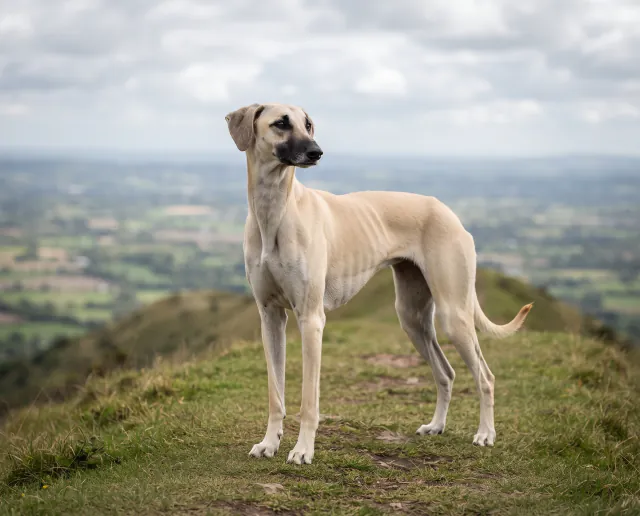
It is not. The Sloughi is a smooth-coated sighthound with a distinctive look of its own, 61 to 72cm at the shoulder, lean and dry-muscled, with a long flat skull, slightly drooping triangular ears, a dark almond eye and a low-carried tail. Colours run from pale sand to deep red fawn, with or without a black mask, black overlay or brindle.
Suitability
The breed is reserved with strangers and deeply attached to its own people, a combination that is easy to admire and harder to live with than a generally friendly dog. Sloughis do not seek attention from visitors and can be unsettled by intrusive handling from people they do not know. Within the household they are affectionate in a quiet way, sensitive to mood and tone, and inclined to attach strongly to one person. Alone for long periods they can become anxious. Children who are calm are generally accepted, and older children who can read a dog’s body language do well with the breed, but a noisy young family is not a natural fit. Cats and small pets are prey, and even with early introduction the outdoor rules are never fully reliable. Sloughis are quiet in the house, rarely bark and do not smell, and they need soft, warm bedding because they have no padding of their own.
Exercise
An adult needs around an hour a day with the chance to run at full speed in an enclosed space several times a week. The breed has stamina as well as pace and was bred to course over long distances in heat, so a fit Sloughi can cover a great deal of ground. Off a lead in open country the outcome is decided by the first hare, and recall will not overrule it. Secure dog fields are a practical necessity, and lure coursing through a sighthound club gives the dog the sport it was made for. On lead, Sloughis are easy, light walkers. The thin coat and lack of fat mean winter walks on the Malvern Hills or along an east coast beach call for a proper coat, and wet, cold weather is tolerated for as long as the walk lasts and not a minute more. Puppies should be exercised gently, without forced running, until they are grown.
Grooming
Grooming is almost nothing. The coat is short, fine and tight, and a weekly wipe with a rubber mitt or a hound glove removes dead hair and keeps the shine. Shedding is light and mostly unnoticed. Nails need regular trimming because a sighthound with long nails alters its foot placement. Teeth, ears and a check for cuts and thorn damage after runs through cover complete the routine. Baths are rare, since the coat sheds dirt and carries no odour.
Health
Twelve to fifteen years is a fair expectation and the breed is generally sound. The best documented inherited condition is progressive retinal atrophy, and a DNA test for the form found in the Sloughi is available; any responsible breeder will show results for both parents, and an eye examination under the BVA and Kennel Club scheme is a reasonable addition. As a deep-chested sighthound the Sloughi carries some risk of bloat and torsion, so two meals a day and rest after eating is sensible practice. Sighthound sensitivity to some anaesthetic drugs applies, and a vet needs to know the breed before any procedure. Skin tears, split tails and toe injuries are the routine mishaps of a fast dog run in cover. Weight should be kept low; a Sloughi in correct condition shows the outline of its last ribs and the hip bones, and owners are sometimes challenged in the park for keeping a dog that is simply in shape.
Choosing and training
Sloughis are intelligent and quick to learn but see no purpose in repetition and withdraw from harsh handling. Reward-based training, short sessions and a calm handler produce a well-mannered dog; drill does not. Wide, gentle socialisation from puppyhood is the single most important thing an owner can do, because the breed’s natural reserve tips towards fearfulness in a dog that has met too little of the world. Finding a puppy takes time. Litters are few, buyers usually wait, some dogs are imported, and the breed club is the sensible first contact for breeder details and an honest account of what the wait looks like. Costs of about £95 to £165 a month cover food, insurance, routine care and winter coats; insurance for a rare breed may need a little shopping around.
Verdict
The Sloughi suits a quiet, adult household with someone at home much of the day, a secure garden, access to enclosed running space, and an owner who values a reserved, elegant, undemanding dog over an outgoing one. Experienced sighthound people are its natural market.
Anyone wanting a sociable dog for a busy family home, a reliable off-lead walking partner, or a puppy available within a few weeks should look elsewhere. Rarity, reserve and prey drive define the breed, and none of them are faults to be trained out.