At a glance
Key facts
The essentials to compare before deciding whether this breed fits your home and routine.
- Size
- Toy
- Lifespan
- 12 to 15 years
- Energy
- Medium to high
- Temperament
- Alert, feisty, affectionate and quick to bark
- Good with children
- Often good with children who treat a small dog gently
- Exercise
- About an hour a day including a proper sniff and explore
- Trainability
- Moderate
- Grooming
- Daily brushing of the silky coat plus regular trims
- Estimated monthly cost, GBP
- £70 to £130 per month
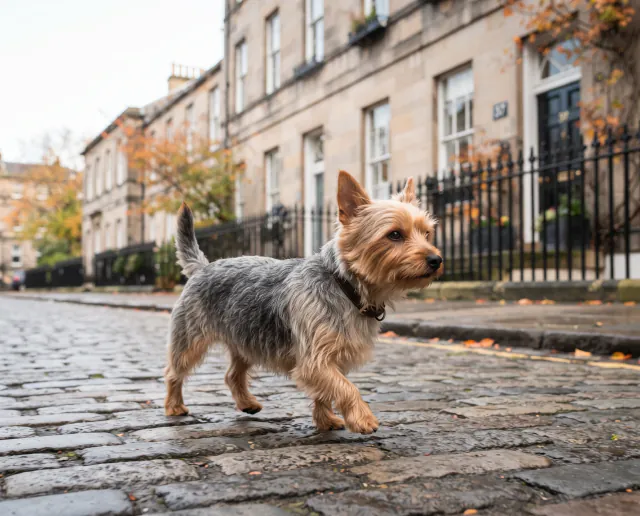
Visitors who mistake an Australian Silky Terrier for a small Yorkshire Terrier are not far wrong about the family tree, though the two breeds took different paths after crossing in nineteenth century Australia. Yorkshire Terriers, Skye Terriers and native Australian terrier stock all went into the mix that produced a sturdier, more terrier like dog with a slightly shorter, less profuse coat and a temperament that leans firmly toward the working end of the toy group.
The breed remains genuinely uncommon in most countries. Litters are occasional rather than routine, and a buyer serious about the breed usually ends up speaking to the same small handful of dedicated breeders, sometimes waiting a year or more or considering a dog bred abroad once health testing is satisfactory. What that patience buys is a compact, glossy coated terrier with real working instincts and a personality considerably bigger than its frame.
Living with the breed
Indoors an Australian Silky Terrier behaves like a terrier that happens to be small rather than a lapdog with attitude. It is alert to every sound at the door, quick to bark a warning and generally wary of unfamiliar visitors until introductions are properly made. Bonds with its own family run deep, and many individuals choose one person as a particular favourite while staying sociable with the rest of the household. Small pet mammals are at genuine risk around this breed, since the terrier instinct behind the coat is entirely intact. Children who understand that this is a feisty dog rather than a soft toy tend to do well with a Silky, though boisterous handling from very young children is better supervised closely. The breed adapts readily to flat living, provided its considerable energy and curiosity are given a proper outlet each day.
Daily exercise
An hour of exercise a day, ideally split into two outings, keeps most adults settled and pleasant to live with. The breed enjoys investigating hedgerows and undergrowth as much as covering distance, so a walk allowing proper sniffing earns its keep more than a brisk route march. Recall around squirrels, rats and other small quarry needs real proofing, since generations of vermin work have left the instinct well intact, and a long line is sensible in any unfenced space. Silkies are more athletic than their glossy coat suggests and can clear surprisingly high garden fencing when something interesting appears on the other side, so boundaries need checking at height as well as at ground level. A dog left under exercised tends to channel the surplus energy into barking and general restlessness.
Training and mental work
Training suits an owner with patience and a sense of humour rather than one expecting instant obedience. The breed is genuinely intelligent and learns quickly when it sees a reason to cooperate, but a Silky that judges a request pointless will simply decline, politely but firmly. Food rewards and short, varied sessions work far better than repetition, and many individuals excel at tricks and agility given the chance. Barking is the main behaviour worth addressing early, since an unmanaged watchdog instinct can become a running commentary on daily life. Teaching a reliable quiet cue from puppyhood, alongside broad socialisation with people, dogs and everyday noises, produces a far more relaxed adult than one left to develop habits alone.
Grooming and shedding
The coat is fine, glossy and genuinely silky in texture, parted along the back and falling flat rather than curling. Left to grow to full length it mats readily behind the ears, under the legs and around the collar, so daily brushing is the realistic minimum for anyone keeping the natural coat. Many pet owners opt for a shorter, easily managed trim from a groomer familiar with terrier coats, which reduces the daily workload considerably without losing the breed’s character. Shedding is genuinely low either way, which suits owners who dislike hair around the house. As with most small breeds, the mouth is crowded and prone to dental disease, so brushing teeth from puppyhood is worth the early investment. Regular nail trims matter too, since a terrier this active can still wear its nails unevenly on soft ground.
Health and costs
A well kept Australian Silky Terrier commonly lives twelve to fifteen years. Patellar luxation is worth asking a breeder about, as it is across most small terrier types, and a vet can assess knee stability during a routine check. The breed has a documented tendency toward diabetes in some lines, and owners should know the early signs, increased thirst, weight loss despite a normal appetite and lethargy, and seek veterinary advice promptly if any appear. Dental disease follows from the small, crowded mouth typical of toy breeds and responds well to a consistent brushing routine started young. Keeping the dog at a lean weight helps manage both joint stress and the metabolic conditions the breed can be prone to. Monthly costs typically run from about £70 to £130, covering food, insurance, veterinary care and coat maintenance, with the top of that range more likely where a full show coat is kept professionally trimmed.
Verdict
The Australian Silky Terrier suits an owner who wants a genuinely terrier tempered dog in a small, elegant package, has time for daily coat care or budget for a groomer, and does not mind a vocal watchdog around the house.
Households with small pet mammals, anyone wanting a quiet flat companion, or a first time owner unwilling to commit to firm, consistent training should look elsewhere. Finding a puppy takes patience, and the breed club is a far more reliable route than a chance online advert.