At a glance
Key facts
The essentials to compare before deciding whether this breed fits your home and routine.
- Size
- Toy
- Lifespan
- 12 to 16 years
- Energy
- Medium
- Temperament
- Bold, busy and closely bonded to its own household
- Good with children
- Can be good with older children who handle a very small dog carefully
- Exercise
- 30 to 45 minutes a day plus training games indoors
- Trainability
- Moderate
- Grooming
- Brush several times weekly, or a professional pet trim every few months
- Estimated monthly cost, GBP
- £55 to £105 per month
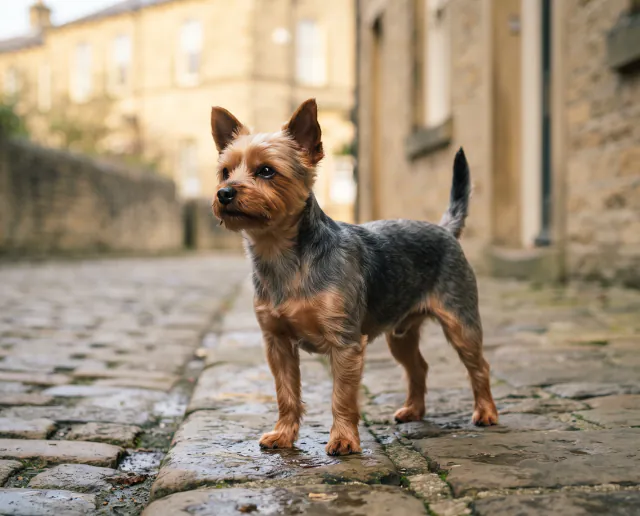
Yorkshire Terriers were working dogs within a few generations of the breed standard being written. Scottish weavers moving south into the mills of Yorkshire and Lancashire brought small rough terriers with them in the middle of the nineteenth century, and those dogs earned their keep killing rats in mills, mines and coal yards. Show fanciers then bred the type down in size and up in coat quality until the same animal was carried into Victorian drawing rooms with hair sweeping the floor. Almost nothing about the temperament came down with the weight.
The modern Yorkie usually weighs around three kilograms and lives twelve to sixteen years, which makes it one of the smaller and longer-lived dogs commonly kept as pets. Buyers expecting a decorative lapdog meet something different, because the breed is opinionated, physically brave, alert to every sound in the building and perfectly prepared to argue with a labrador.
Temperament in the home
Attachment tends to be intense and narrow, with most Yorkies fixing on one or two people, following them constantly and staying reserved with visitors until they decide otherwise. Alertness shapes daily life, since a Yorkie will report a bin lorry from three rooms away and keep doing it if the noise summons attention. Rewarding a calm return to the owner works better than shouting over the top of the noise. Older children who understand that a three kilogram dog can be badly injured by a dropped cushion or a misjudged step generally get on well, and toddlers do not. The breed is not designed for long solitary days, and separation should be built up gradually from the first week. Small pets are a poor choice of housemate, because the ratting instinct is intact.
Exercise and training
About forty minutes of walking spread across the day covers a healthy adult, with something at home that makes the dog think. Owners who treat a Yorkie as luggage end up with an animal that finds the pavement frightening and has no stamina. A fit one will manage a proper country walk, which means putting it down and letting it use its nose. A harness is the sensible fitting, since a collar concentrates every pull on a windpipe the width of a pencil. House training deserves particular patience, as small bladders and cold wet gardens make it slower in toy breeds than first-time owners expect. Scheduled trips outside, generous reward and thorough cleaning of indoor accidents are what shorten it. Beyond that, work on recall, a settle and quiet after an alert, using small soft treats and short sessions.
Coat and grooming
The adult coat is a single layer of fine, straight, silky hair that grows continuously and sheds very little, which is the breed’s main practical advantage in a house. It is also why grooming cannot be skipped. Hair that keeps growing keeps tangling, particularly behind the ears and under the harness, and a neglected coat mats into a solid sheet against the skin. Owners keeping the coat long must comb it through most days and tie the hair out of the eyes. Most Yorkies live in a short pet trim from a groomer every eight to twelve weeks, with a comb through twice a week between visits. Puppies are born black and tan, and the colour shifts gradually towards steel blue and gold over a year or more. Keep the hair around the eyes and mouth clean and check the ear canals regularly.
Health and lifespan
Dental disease is the most predictable problem. Teeth crowded into a very small jaw collect plaque quickly, puppy teeth are often retained beside the adult ones, and anaesthetic dentistry later in life is a realistic expectation. Daily brushing started in puppyhood changes that outcome. Kneecap instability is common, showing as a hop of two or three strides before the dog carries on as though nothing happened. A weak windpipe is also seen and announces itself as a dry, goose-like cough under excitement. Yorkies are among the breeds watched for a liver blood vessel abnormality present from birth, which can show in a puppy as poor growth or dullness after meals and needs veterinary investigation rather than a change of food. Ask breeders what screening and DNA testing they used and request written results. Treat teacup or miniature advertising as a warning, because deliberately undersized dogs are more fragile and more often ill.
Costs and space
Roughly £55 to £105 a month is a sensible figure to plan around and indicative only, since food prices, insurance, grooming and veterinary fees all move. Food costs almost nothing at this size, so the budget is dominated by grooming every couple of months and by dental care that grows dearer with age. A flat is perfectly workable, and walks matter far more than a garden. The greater risk in a small home is human traffic, since a three kilogram dog underfoot in a kitchen or beside a reclining chair is easily injured, and a raised bed in a quiet corner keeps it clear of all that.
Verdict
A Yorkshire Terrier suits someone who wants a small, portable and characterful dog, has company to offer during the day and will commit to coat care and daily tooth brushing for a decade or more. Households of adults, homes with older children and anyone in a small flat generally get on well with one.
It is a poor choice for a home with very young children, for anyone unwilling to train the barking, or for a buyer hoping that a small dog means small effort. Take the breed seriously as a terrier and it repays the trouble; treated as an ornament, it simply gets louder.