At a glance
Key facts
The essentials to compare before deciding whether this breed fits your home and routine.
- Size
- Medium
- Lifespan
- 12 to 14 years
- Energy
- Medium to high
- Temperament
- Friendly, playful, water-obsessed and people-focused
- Good with children
- Usually very good with children who enjoy a muddy, outdoor dog
- Exercise
- 1 to 1.5 hours a day, ideally including a swim
- Trainability
- Beginner friendly
- Grooming
- Regular brushing to the skin every few days, with professional clipping several times a year
- Estimated monthly cost, GBP
- £90 to £160 per month
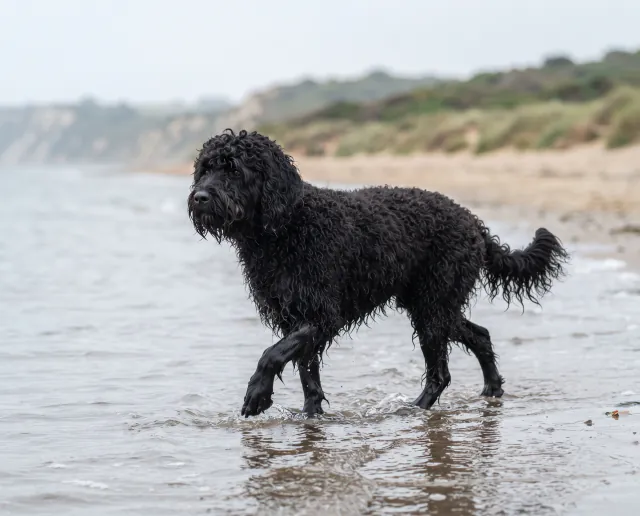
Most people who meet a Barbet on a British beach assume it is a scruffy Poodle cross or an oversized Cockapoo, and the owner then spends ten minutes explaining. The breed is in fact an old French water dog, recorded for centuries in the marshes of the Atlantic coast and the Camargue, where it retrieved shot waterfowl and flushed birds from reed beds. The name comes from barbe, the French word for beard, and the dense woolly coat that made it useful in cold water is the same coat that now dominates its care.
The Barbet almost vanished after the Second World War and has been rebuilt slowly from a small population, which explains why it remains uncommon everywhere outside France. In the UK it sits on the Kennel Club’s Imported Breed Register, litters are counted in single figures most years, and a good proportion of the dogs here arrived from continental breeders.
Temperament in the home
Barbets are sociable, even-tempered and strongly attached to their people, with a playful streak that lasts well into middle age. Most are friendly towards visitors after a moment’s assessment and settle quickly once a walk has been had. The breed has little guarding instinct, though many will announce the postman. Separation is the weak point, since a dog selected for close work with a hunter does not thrive on long empty days, and owners who work full-time away from home should think hard. Water is a fixation; a Barbet will find the one puddle on a dry walk and lie in it, and a garden pond becomes a daily swimming pool whatever the season. Cats and other dogs are usually accepted without fuss when introduced sensibly. Children who enjoy an outdoor, muddy, affectionate dog get on well with the breed, and a Barbet is generally patient with handling, though its enthusiasm can bowl over a toddler.
Exercise and training
An adult needs an hour to ninety minutes a day, ideally with a swim in it, and mental work matters as much as mileage. Retrieving is instinctive, so dummy work, water retrieves and scent games satisfy the dog and build recall at the same time. Puppies should have shorter, varied outings on soft ground until the growth plates close, and repeated ball throwing for a young dog is a false economy that shows up in the joints later. Training goes smoothly because the breed is quick, food-motivated and keen to work with a handler. The main faults are excitability and a tendency to leap up in greeting, both of which respond to consistent early boundaries. Harsh methods are counterproductive with a soft, people-oriented dog.
Coat and grooming
The coat is the deciding factor for most prospective owners. It is long, woolly and curly, grows continuously and does not shed in the usual sense, but it mats with enthusiasm, particularly behind the ears, in the armpits and wherever a harness rubs. Brushing to the skin with a slicker and a wide comb every two or three days is realistic; a surface tidy leaves felt forming underneath. Most pet owners have the coat clipped or scissored down to a few centimetres every couple of months, either at a groomer or at home after a lesson, because a full-length coat in a wet British winter carries mud, burrs and half the beach indoors. Ears need weekly checks and plucking or trimming to keep air moving, since a hairy ear canal on a dog that swims is a recipe for infection. Some allergy sufferers tolerate Barbets better than shedding breeds, but that is individual and should be tested with the actual dog before buying.
Health and lifespan
Twelve to fourteen years is a reasonable expectation, and the breed is generally sound. Hip dysplasia is the recognised structural concern and both parents should have hip scores under the BVA and Kennel Club scheme. Ask for current eye certificates under the BVA and Kennel Club eye scheme as well, since hereditary eye conditions are monitored in the breed. Epilepsy has been reported in some lines, and a reputable breeder will be open about it rather than dismissive. Ear infections are the everyday problem and are largely preventable with care. Weight tends to creep on under a thick coat where it is not obvious, so run a hand over the ribs monthly rather than trusting the eye.
Costs and space
A budget of around £90 to £160 a month covers food for a dog of twenty to thirty kilograms, insurance, routine veterinary care and grooming, with professional clipping the largest predictable extra if it is not done at home. Space is less critical than access to walking and water; a Barbet will live in a town house with a small garden if it is out properly every day, though a muddy dog and a cream carpet are a poor combination. Finding a puppy takes patience. Contact the UK breed club, expect a wait, be prepared to travel across the country, and treat any advert offering Barbet puppies at short notice with caution.
Verdict
The Barbet suits an active household that walks in all weather, enjoys water, has the time for real coat care and wants a friendly, trainable, medium-sized dog that is not seen on every street.
It is a poor fit for anyone who is out all day, wants a low-maintenance coat, or hopes to buy quickly. People who cannot commit to brushing every few days should choose a breed with a shorter coat, because a neglected Barbet coat is miserable for the dog and expensive to sort out.