At a glance
Key facts
The essentials to compare before deciding whether this breed fits your home and routine.
- Size
- Large
- Lifespan
- 10 to 13 years
- Energy
- Medium to high
- Temperament
- Gentle, sensitive, affectionate and prone to drool
- Good with children
- Usually very good with children, though a large drooling dog needs supervision
- Exercise
- About 1.5 hours a day with free running and nose work
- Trainability
- Beginner friendly
- Grooming
- Weekly brushing with a rubber mitt, moderate shedding and daily ear and lip care
- Estimated monthly cost, GBP
- £110 to £190 per month
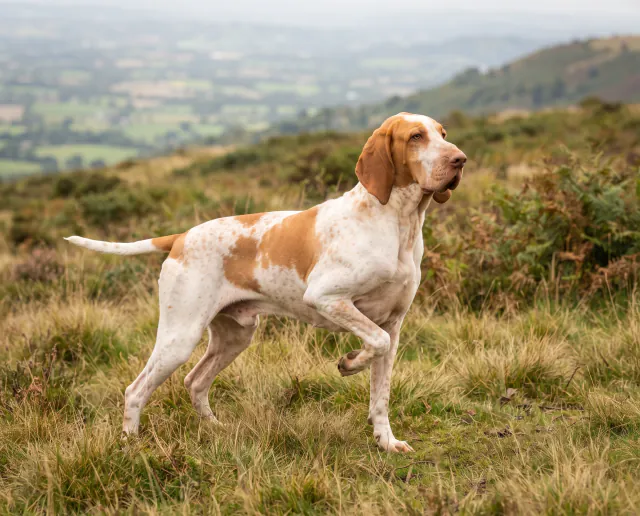
Watch a Bracco Italiano cross a field and the first thing most people notice is the gait, a long reaching trot with the head held high that looks closer to a horse than to a spaniel. The second thing is usually a string of drool. This is one of the oldest of the continental pointing breeds, developed in northern Italy to find and point game and later to retrieve it, and the loose skin, heavy jowls and long pendulous ears are working equipment rather than decoration.
In Britain the breed is recognised by the Kennel Club in the Gundog group and has a small, committed following, but numbers remain low. Most puppies go to homes that have waited some time and often travelled a long way, and the UK breed clubs are the sensible starting point for anyone serious about finding one.
Living with the breed
Braccos are gentle, affectionate and unusually soft-natured for a dog of their size, with adult males standing up to 67cm at the shoulder and weighing as much as 40kg. They want to be with their people, lean on them, sit on them where allowed and follow them from room to room. Guarding instinct is minimal, though the deep bark carries. The breed is patient with children and generally tolerant of other dogs, and a Bracco raised with a cat will usually accept it, though small animals in the garden are fair game. Drool is constant and increases with heat, excitement and the sight of food, so towels by the door and a tolerance for marks on walls at hip height come with the dog. Long days alone suit the breed badly and separation distress is a known problem. A Bracco’s ears trail through water bowls and its tail clears low tables, so the house needs a little thought.
Daily exercise
An adult Bracco needs a good ninety minutes a day, with a proportion of that off the lead in a safe place where it can range and use its nose. The breed was made to cover ground at a steady trot for hours and does not settle well on pavement walks alone. Puppies grow fast and heavy and should have short, frequent outings on soft ground rather than long hikes until well past a year, since joints under that much developing weight are easily damaged. Recall is trainable but scent competes hard for attention, and a Bracco locked on point will ignore the world. Near livestock the dog belongs on a lead, and a long line in unfenced country is a reasonable precaution while recall is being proved.
Training and mental work
The breed learns quickly and remembers, and it responds badly to harsh handling, which produces a sulking, shut-down dog rather than a compliant one. Reward-based training, kept upbeat and short, gets far more from a Bracco than pressure. Gundog work, formal or for fun, is the natural outlet; hunting, pointing and retrieving are all hard-wired and a dog given a job is calmer at home. Scent work, tracking and retrieving games fill the gap on non-shooting days. Adolescence can bring a stubborn, distracted spell that tests patience, and the breed matures slowly, with many not fully sensible before three. Teach lead manners early, because a strong dog that pulls towards every interesting smell is hard work for anyone.
Grooming and shedding
The short, dense coat needs a weekly going over with a rubber mitt or hound glove, and it sheds moderately all year with a heavier turnover in spring. The real maintenance sits at the front end. Long ears need checking and cleaning weekly because they trap moisture and debris and are prone to infection. Jowls and lip folds collect food and saliva and should be wiped daily to prevent sore, smelly skin. Eyes with loose lower lids gather dust and grass seeds and need a daily look. A Bracco is easy to keep clean in general, but the ears, lips and eyes require a routine that many owners underestimate.
Health and costs
Ten to thirteen years is typical. Hip and elbow dysplasia are the main structural concerns, and both parents should be scored under the BVA and Kennel Club scheme. Eyelid problems, both inward and outward turning lids, occur in a breed with this much loose skin, and the BVA and Kennel Club eye scheme and a look at the parents’ eyes are both worthwhile. A hereditary kidney condition, renal amyloidosis, has been identified in the breed and is a subject that any serious UK breeder will discuss without prompting. Ear infections are common and largely a management issue. Deep-chested dogs carry a bloat risk, so know the signs and feed in two or more meals. Keeping weight down protects the joints of a dog that is naturally heavy. Monthly costs of around £110 to £190 reflect a large appetite, higher insurance and veterinary charges scaled by weight; the figure is indicative and varies with insurer, region and the individual dog.
Verdict
The Bracco Italiano suits an active countryside home, or a town home with easy access to open ground, where someone is present much of the day and the dog can be given real work for its nose. Owners who accept drool, mud and a large sensitive dog on the sofa tend to be devoted.
It is a poor match for a fastidious house, for owners out at work all day, or for anyone wanting quick results from training a young dog. A slow, kind approach and a long wait for a well-bred puppy are both part of the deal.