
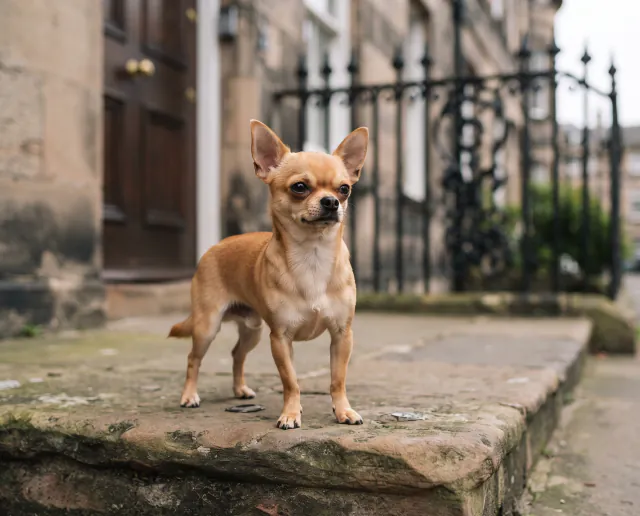
At a glance
Key facts
The essentials to compare before deciding whether this breed fits your home and routine.
- Size
- Toy
- Lifespan
- 12 to 16 years
- Energy
- Medium
- Temperament
- Bold, devoted and constantly observant
- Good with children
- Better suited to older children and calm, careful households
- Exercise
- 30 to 45 minutes a day plus indoor play and training
- Trainability
- Moderate
- Grooming
- Weekly brushing, more for long coats, with steady shedding
- Estimated monthly cost, GBP
- £50 to £100 per month
The most common mistake made with Chihuahuas is treating them as portable objects. A dog carried everywhere, lifted away from anything it finds worrying and never asked to learn much has few ways of dealing with the world other than complaining about it. Much of the breed’s reputation for snapping comes from that pattern rather than from the dog underneath it.
Raised like any other breed, a Chihuahua is usually confident, funny and intensely attached to one or two people. It comes from Mexico, takes its name from the northern state of Chihuahua, and is the smallest dog the Kennel Club recognises, with adults commonly weighing one and a half to three kilograms. Smooth and long coated varieties exist and can appear in the same litter.
Temperament in the home
Chihuahuas notice everything. A key in a door, a bag set down in an unusual place or a stranger passing the window will all be reported. Much of that alertness is useful, though it becomes wearing if barking earns attention. Teaching a quiet return to the owner works better than trying to stop the noise once it has started.
Devotion tends to focus narrowly. Many bond hard to one person and remain reserved with everyone else, which is manageable so long as the dog is not allowed to guard a lap. Households with older children who understand that a two kilogram animal can be badly hurt by a dropped toy usually work well. Toddlers are a poor combination, not because of temperament but because of physics. Many are less predictable with large, boisterous dogs, so introductions in a park need care. Lifespans of twelve to sixteen years are usual.
Exercise and training
Thirty to forty-five minutes of walking a day suits most healthy adults, split into short outings, with indoor games filling the gaps. The breed is fully capable of longer country walks when fit, and a Chihuahua that gets out properly is a far calmer housemate than one carried from room to room. Cold and wet weather is a real limitation on a small, lean dog, so a well fitted coat is practical rather than decorative.
Training deserves the same seriousness it would get for a large breed. Use small, soft treats and short sessions, and work at floor level rather than constantly picking the dog up. Priorities are recall, walking on a harness rather than a collar, accepting handling by a vet or groomer, and settling calmly when visitors arrive. Socialisation should be gradual and controlled, since being surrounded by strangers reaching down is genuinely frightening at that size.
Coat and grooming
Smooth coated Chihuahuas need brushing once a week with a soft brush or rubber mitt, which lifts a surprising quantity of loose hair. Long coated dogs have feathering on the ears, legs and tail and benefit from two or three sessions a week, with particular attention behind the ears and around the trousers. Tidying the hair between the pads helps grip on hard floors.
Teeth are the real grooming priority. A full set of teeth in a very small jaw means crowding, plaque and early dental disease are common concerns in the breed. Daily brushing introduced in puppyhood, with veterinary dental checks at routine appointments, saves considerable trouble later. Keep nails short and check the eyes for debris after windy walks.
Health and lifespan
Chihuahuas are often long lived, and the areas the type is commonly watched for include the kneecaps, the teeth, the windpipe, the heart in older age, and the eyes, which sit prominently and can be injured. Puppies are vulnerable to low blood sugar in the first weeks, so a breeder should explain feeding frequency clearly before one goes home. Ask a breeder what screening was carried out on the parents and request written results rather than verbal assurances. Persistent coughing, a skipping gait, difficulty with steps or any change in breathing are reasons to see a vet rather than to search online. Weight control matters more than the small numbers suggest, since even a few hundred extra grams affect the joints of a dog this size.
Costs and space
Monthly costs in the region of £50 to £100 are indicative and will move with circumstances. Food is cheap at this size, but insurance, dental treatment, grooming and veterinary care vary considerably by region and rise as a dog ages. Dentistry under anaesthetic is a realistic expense for the breed and worth planning for.
Space is rarely the constraint. Flats and small houses suit Chihuahuas well, and the garden matters less than the walks. Hazards need more thought. Gaps under gates, steep staircases, reclining chairs and sofas all present risks. A quiet retreat the dog can use uninterrupted goes a long way.
Verdict
A Chihuahua suits someone who wants a genuinely small dog with a large personality and is prepared to train, socialise and protect it properly. Adult-only homes, households with older children and owners in flats often find the breed an excellent fit, particularly given the long lifespan.
It is not a good match for families with very young children, for anyone wanting an outdoor companion in all weather, or for an owner who plans to carry the dog rather than teach it. Treated as a dog rather than an accessory, a Chihuahua is confident, entertaining and remarkably easy to live with.