
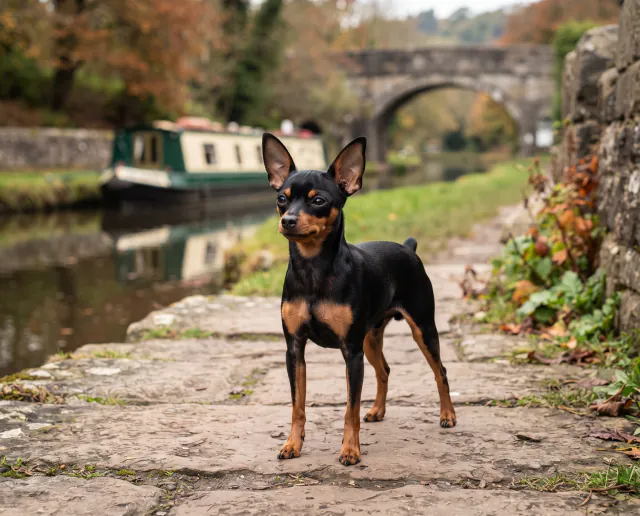
Also known as: Russian Toy Terrier.
At a glance
Key facts
The essentials to compare before deciding whether this breed fits your home and routine.
- Size
- Toy
- Lifespan
- 12 to 14 years
- Energy
- Medium
- Temperament
- Alert, affectionate and lively despite its tiny frame
- Good with children
- Better suited to older children due to its delicate size
- Exercise
- Short gentle walks and indoor play, kept brief
- Trainability
- Moderate
- Grooming
- Minimal brushing for the smooth coat, weekly for the long
- Estimated monthly cost, GBP
- £70 to £130 per month
A Russian Toy weighs about as much as a bag of sugar and stands lower than most dogs’ knees, yet the breed carries itself with an alertness that has nothing timid about it. Developed in Russia from small English Toy Terriers, the breed nearly disappeared before Soviet breeders rebuilt it from a handful of surviving dogs, producing both a smooth coated variety and a longer coated version with feathering on the ears and legs. Both coat types can appear from the same litters and both are recognised as the same breed.
In Britain the Russian Toy remains genuinely rare, and the Kennel Club lists it on the Imported Breed Register rather than granting full breed status, which affects how litters are registered and how easily a puppy can be found. Anyone drawn to the breed should expect a wait, should accept that some available dogs may have come from abroad, and should treat the UK breed club as the first and most useful point of contact rather than a general search for puppies for sale.
Suitability
The Russian Toy suits owners who want a genuinely portable companion dog and who understand what a one to three kilogram animal actually means day to day. This is not a dog for households with toddlers, since a fall, a slammed door or an enthusiastic hug can cause real injury to bones this fine. It tends to bond closely with its own family, stays alert to visitors without being consistently noisy, and generally gets on with other small dogs it has been raised alongside. Cats are usually manageable, though the size difference calls for sensible introductions. First time owners can do well with the breed provided they respect its physical limits and do not treat it as a durable toy for children.
Exercise
Short, gentle walks suit the breed far better than any attempt at distance, and many Russian Toys are content with a modest amount of outdoor time plus play indoors. Cold, wet weather is unkind to a dog this small with so little body fat, and a coat in winter is a practical necessity rather than an affectation. Care around larger dogs matters more than with most small breeds, since an exuberant greeting from something many times its size carries a real risk of injury. Off lead exercise should happen only in secure, quiet spaces, since the breed’s light frame and quick reflexes make it easy to lose track of in long grass or undergrowth.
Grooming
The smooth coated variety needs almost nothing beyond an occasional wipe down and a weekly check over, while the longer coated variety carries fine feathering that benefits from a gentle brush once or twice a week to prevent tangling behind the ears and along the legs. Neither variety carries a thick undercoat, so shedding stays light for both types compared with most double coated breeds. Nails need regular trimming, since a dog this light rarely wears them down through normal activity, and overgrown nails change how the foot sits. Teeth deserve early attention, since small jaws crowd easily and dental disease develops young in many toy breeds. Bathing needs are minimal and can be done as required rather than to a fixed schedule.
Health
Documented health information on the Russian Toy is limited simply because so few dogs exist outside Russia, and prospective owners should treat any claim of a health guarantee with some caution given the small gene pool involved. Patellar luxation, a common issue across small and toy breeds generally, is worth asking a breeder about, along with any history of fractures in the line, since fine limb bones in very small dogs are genuinely vulnerable to breaks from falls or catches in furniture. Open fontanelles can occur in toy breeds and are usually monitored rather than treated. Beyond these general small breed considerations, buyers are better served by direct conversation with the UK breed club and with breeders who can speak to their own dogs’ histories than by searching for statistics that do not yet exist here in meaningful numbers.
Choosing and training
Contacting the breed club before searching classified adverts is the sensible route, since numbers are small enough that reputable breeders often know of each other’s litters. Expect a longer wait than for a mainstream toy breed, and be prepared for the possibility of a puppy coming from an imported litter with the paperwork that involves. Training responds well to short, positive sessions, since the breed is alert and quick to learn despite occasional stubbornness. House training can take a little longer than with some breeds, partly due to a small bladder, and consistency matters more than volume of repetition. Early, careful socialisation with calm people and other dogs helps offset the breed’s tendency toward wariness with strangers.
Verdict
The Russian Toy suits a patient, careful owner without small children, who is drawn to a rare and genuinely tiny companion breed and prepared for the realities of sourcing one. Households wanting an easily replaced or readily available puppy should look toward a more established toy breed instead.
Anyone considering the breed should approach the search through the breed club rather than convenience, and should be honest about managing a dog this fragile around a busy family life.