
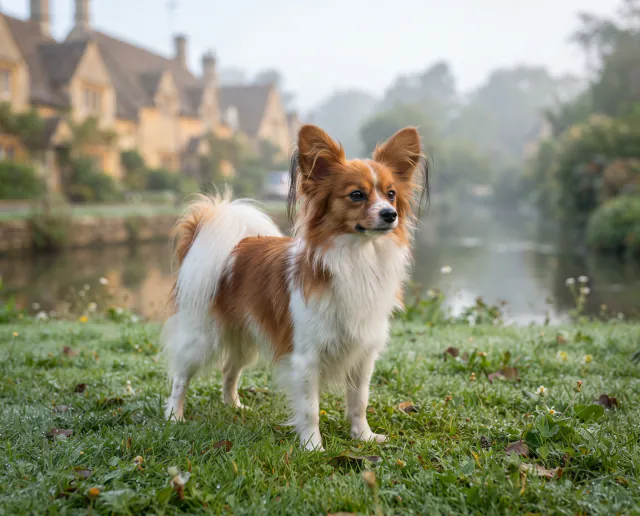
Also known as: Continental Toy Spaniel.
At a glance
Key facts
The essentials to compare before deciding whether this breed fits your home and routine.
- Size
- Toy
- Lifespan
- 14 to 16 years
- Energy
- High
- Temperament
- Bright, alert and remarkably agile for a toy dog
- Good with children
- Better suited to older children who handle small dogs carefully
- Exercise
- About 45 minutes to an hour a day, split into short walks and games
- Trainability
- Beginner friendly
- Grooming
- Twice weekly combing to prevent fringing tangling, with moderate shedding
- Estimated monthly cost, GBP
- £65 to £115 per month
Butterfly ears look ornamental in a show ring, but watch a Papillon swivel its head to track a rustle in the hedge and the design starts to make functional sense. The wide, fringed ears sit like satellite dishes either side of a fine domed skull, and the breed uses them constantly, turning toward footsteps, dropped keys and distant dogs long before a person notices anything at all. Bred as a court companion in Renaissance France and Belgium, refined from small spaniels kept on the laps of the wealthy, the Papillon has spent centuries being watched rather than worked, and it shows in a dog that expects to be included in everything.
What sets it apart from most toy breeds is athleticism. A Papillon is light on its feet, quick to learn and genuinely capable in agility and obedience rings against dogs many times its size. That combination of brains, speed and a coat that looks fragile but sheds surprisingly little makes the breed easy to underestimate. It is not a cushion ornament, and owners who treat it as one usually end up with a bored, restless dog rather than the sharp companion the breed can be.
Temperament in the home
Indoors the Papillon is alert, affectionate and often quite bold for its size, happy to challenge a much larger dog over a toy or a favourite spot on the sofa. Most attach strongly to one or two people and follow them from room to room, which makes long stretches alone difficult for many individuals. Early, gradual practice at being left pays off far more than waiting for a problem to appear. The breed tends to be reserved with strangers rather than outright shy, warming up once introductions happen on its own terms. A boisterous toddler can injure a dog this light without meaning to, and a startled Papillon can nip in self defence, so calm, older children who understand how to handle a small dog are the safer match. Watchfulness at the window or door can tip into a fair amount of barking if it is not shaped early.
Exercise and training
The Papillon needs less territory than energy, and most adults do well on around forty five minutes to an hour of activity split across the day, mixed with short training sessions and games that use its problem solving ability. Fetch down a hallway, hide and seek with treats, and simple trick training all give the breed useful outlets between walks. Puppies should be kept off high furniture and stairs where practical, since delicate limbs and joints are easily jarred in a dog this small. Training tends to be one of the breed’s genuine pleasures for an owner, since Papillons associate cues with rewards quickly and enjoy the challenge of shaping and clicker work. Recall is generally reliable once established, though the dog’s size means a busy park or a road nearby still calls for a lead rather than confidence alone.
Coat and grooming
The long, silky coat lacks a woolly undercoat, which keeps matting reasonable compared with many long haired breeds, but the feathering on the ears, chest and hind legs still needs a comb through two or three times a week to stop it tangling behind the ears and around the tail. Bathing every few weeks with a gentle shampoo keeps the coat glossy without stripping its natural oils. Nails need regular attention, since a dog this light rarely wears them down on soft ground, and overgrown nails alter how the foot sits on the floor. The Papillon’s upright, open ear carriage generally keeps air moving well and reduces the problems many drop eared breeds face. Dental care matters more than owners expect in small breeds, where crowded jaws make tartar build up quickly.
Health and lifespan
Well bred Papillons commonly live into their mid teens, and fourteen to sixteen years is a realistic span for a dog kept lean and free of major disease. Patellar luxation, where the kneecap slips out of its groove, is the condition most worth asking a breeder about, and many responsible breeders have their stock checked by a vet before mating. Progressive retinal atrophy has a DNA test available, and buyers should ask whether the parents have been tested clear. Open fontanelles, a soft spot in the skull that some toy breeds retain into adulthood, occur occasionally and are worth a vet mentioning at check ups rather than something to search for alone. Dental crowding and early tartar are common enough that a home cleaning routine started young pays off for years afterward.
Costs and space
Running a Papillon costs relatively little in food, and the main variable is insurance, veterinary care and any professional grooming an owner chooses not to do themselves. A figure of around sixty five to one hundred and fifteen pounds a month covers most ordinary months, though a dental procedure or an unexpected injury will exceed that easily. Space is rarely a limiting factor, since the breed is entirely happy in a flat provided its exercise and company needs are met, and a garden is a bonus rather than a requirement. Furniture height matters more than floor area, and steps or a ramp to a sofa reduce the jumping strain on small joints.
Verdict
The Papillon suits owners who want a trainable, alert companion in a small package, and who can offer daily company rather than long hours alone. It works well for people interested in dog sports, since few toy breeds match its enthusiasm for agility and obedience work.
Households with very young children, or anyone wanting a placid lap dog with no interest in learning, are better served by a different small breed. Given proper handling, a Papillon rewards its owner with engagement that belies its size.