
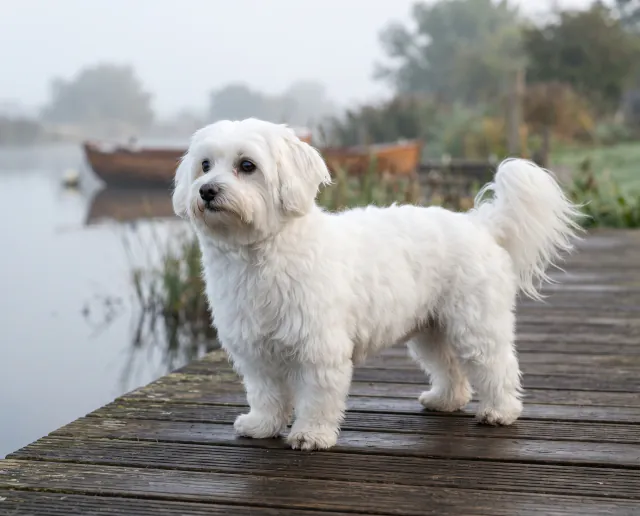
At a glance
Key facts
The essentials to compare before deciding whether this breed fits your home and routine.
- Size
- Toy
- Lifespan
- 14 to 16 years
- Energy
- Medium
- Temperament
- Affectionate, sociable, clownish and eager to please
- Good with children
- Usually very good with children who are taught to be gentle
- Exercise
- About 45 minutes a day plus regular indoor playtime
- Trainability
- Beginner friendly
- Grooming
- Daily brushing of the long cotton textured coat
- Estimated monthly cost, GBP
- £90 to £150 per month
Legend places the breed’s ancestors on ships wrecked off the coast of Madagascar, their survivors mixing with local dogs around the port of Tulear until a small, cotton coated companion emerged that Malagasy nobility eventually kept as an exclusive symbol of rank. Whatever the precise truth, the name has stuck, taken directly from the raw cotton once traded through that same port, and it describes the coat with striking accuracy.
The breed remains a minority choice in most countries, though numbers have grown steadily as its reputation for a good natured, adaptable temperament has spread beyond specialist circles. What buyers are choosing is a dog built almost entirely for companionship, cheerful with strangers, gentle with children and remarkably undemanding once its considerable coat is properly managed.
Suitability
Coton de Tulear temperament is one of the most consistently easygoing among toy breeds. Most are genuinely pleased to meet strangers, sociable with other dogs and generally tolerant of cats raised alongside them, and outright aggression is rare enough to be considered unusual for the breed. Children tend to get on well with a Coton, and the breed’s patient, playful nature makes it a reasonable choice for families, provided the usual supervision around a small dog and boisterous play applies. Barking is notably low for a toy breed, which suits flats and terraced housing well. The breed copes better than many small companion dogs with sensible periods alone, though it still prefers company and should not be treated as an animal happy to spend entire working days unattended. First time owners often find the breed a forgiving introduction to dog ownership, given its biddable nature and modest exercise needs.
Exercise
About 45 minutes of exercise a day, split across two outings, suits most adults well, and the breed is equally happy pottering around a garden or covering more ground on a proper walk. Indoor play, fetch, hide and seek with treats and general games with the family account for a genuine share of daily activity, particularly on days when weather keeps outdoor time short. Agility and trick training suit the breed’s playful, food motivated nature, and many Cotons take to a home obstacle course with obvious enthusiasm. As with any small breed, puppies benefit from exercise kept short and frequent rather than long or repetitive, since growing joints do better without excessive jumping or stair use in the first year.
Grooming
The coat is the breed’s signature feature and its main daily commitment. Long, white and genuinely cotton like in texture, it lacks the oily undercoat found in many double coated breeds, which helps it stay relatively free of the doggy smell some owners associate with long haired dogs. Daily brushing down to the skin, not just a surface pass, prevents the mats that develop quickly behind the ears, under the legs and around the collar. Some owners keep the coat at full length for its striking appearance, while others opt for a shorter, more practical trim from a groomer, which reduces but does not eliminate the daily brushing requirement. Bathing every few weeks keeps the white coat looking clean rather than dull. Eyes and ears need a routine check given the amount of hair around them, and nails should be trimmed on a regular schedule.
Health
Cotons are among the longer lived toy breeds, with fourteen to sixteen years a realistic expectation for a well kept dog. Patellar luxation occurs across small breeds generally, and a vet can assess knee stability during a routine appointment. Eye health is worth discussing with a breeder, and asking whether breeding dogs have had an eye examination through the BVA and Kennel Club scheme is a reasonable question. The breed is generally considered robust for its type, without the long list of well documented hereditary conditions attached to some longer established toy breeds, though this partly reflects a smaller gene pool and shorter breeding history rather than guaranteed good health in every line. Keeping the dog at a lean weight throughout its life supports joints and reduces strain as it ages.
Choosing and training
Training tends to go smoothly, since the breed is food motivated, keen to please and generally quick to learn basic manners, house training and simple tricks. Reward based methods suit the Coton far better than any firm handed approach, and most individuals respond enthusiastically to short, upbeat sessions. Growing popularity has brought more breeders into the picture, which makes it worth being selective rather than accepting the first available puppy. A breeder who screens for patellas and eyes, who raises puppies in a home environment with early handling, and who is happy to discuss the coat commitment honestly is a far safer choice than one advertising immediate availability. The UK breed club is a useful resource for locating registered breeders and for realistic guidance on what daily coat care actually involves before committing to a puppy.
Verdict
The Coton de Tulear suits a family or individual wanting a genuinely sociable, adaptable small dog, who can commit to daily brushing and accepts that the coat is the main ongoing cost of ownership.
Anyone unwilling to groom daily or pay for regular professional trims, or hoping for a dog that manages long days entirely alone, should consider a lower maintenance breed instead. Properly cared for, the Coton rewards its owner with an unusually long, good natured companionship.