At a glance
Key facts
The essentials to compare before deciding whether this breed fits your home and routine.
- Size
- Medium
- Lifespan
- 12 to 14 years
- Energy
- Medium
- Temperament
- Watchful, calm and deeply attached to its family
- Good with children
- Usually very good within its own settled household
- Exercise
- About 45 minutes a day plus free running when possible
- Trainability
- Moderate
- Grooming
- Weekly brushing, with two heavy seasonal blow outs
- Estimated monthly cost, GBP
- £80 to £150 per month
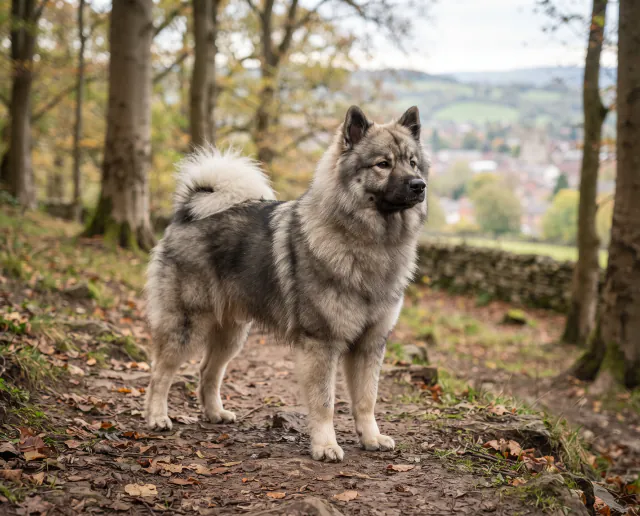
The Eurasier is a designed breed rather than an old landrace, put together in Germany in the 1960s from Chow Chow, Wolfspitz and Samoyed stock with a single goal in mind, a spitz-type dog with the looks and independence of its ancestors but a temperament suited to living in a house. That plan mostly succeeded. The breed keeps the dense double coat, curled tail and watchful expression of its northern relatives while dropping most of the guarding instinct and aloofness that make some spitz breeds hard work for ordinary owners.
It remains rare in most countries, and anyone drawn to the breed after seeing photographs online should expect a longer search than for a mainstream registered breed. Litters are occasional, waiting lists are normal, and the UK breed club is the sensible starting point rather than a general search for puppies for sale.
Living with the breed
A Eurasier bonds tightly to its household and tends to treat everyone outside it with polite reserve rather than warmth. Visitors are usually tolerated calmly once introduced, but the breed is not a dog that greets strangers at the gate like a spaniel. Early and continued socialisation matters, because a poorly exposed puppy can grow into an adult that is genuinely nervous of new people and situations rather than simply cool towards them. Within the family the breed is affectionate, steady and often described as thoughtful, watching a room before joining in. Children are usually well tolerated, particularly when the dog has grown up alongside them, though any dog with strong attachment to its own people benefits from adults managing introductions to visiting children. Long absences do not suit the breed, which was bred for closeness rather than independence, and a Eurasier left alone for long working days can become anxious.
Daily exercise
Around 45 minutes of walking a day covers most adults, with free running in a safe area adding real value because the breed enjoys exploring at its own pace more than pounding out miles on a lead. Puppies should have exercise kept proportionate to age, since a dog of this size is still developing its joints through the first year. Off lead reliability depends heavily on early recall training, since the breed can be independent minded once something interesting has caught its attention, and open countryside with livestock calls for a lead regardless of how well trained the dog is. Once mature, most Eurasiers settle into a moderate routine happily and do not demand the relentless activity that some spitz cousins need.
Training and mental work
Trainability sits in the middle of the scale. The breed is intelligent and capable of learning quickly, but it can also be quietly stubborn about repeating something it considers pointless, and heavy handed correction tends to produce a shut down dog rather than a cooperative one. Reward based methods, patience and short, varied sessions get further than repetition. Because the breed thinks its way through problems, food puzzles, scent games and simple tricks help fill the mental side of the exercise equation, particularly on days when weather limits time outdoors. Socialisation classes are worth prioritising over obedience drilling in the first year, since the temperament that needs the most careful shaping is the dog’s attitude to unfamiliar people and situations, not its ability to sit and stay.
Grooming and shedding
The coat is a proper double layer, with a soft dense undercoat beneath a longer harsher outer coat, and it produces two significant moults a year during which the undercoat comes out in real quantity. A slicker brush and undercoat rake through those periods, ideally daily, keep the house and the dog considerably more comfortable. Outside the moults, a thorough weekly brush prevents matting behind the ears, in the trousers and around the tail. The coat is naturally clean and largely odourless, and bathing is needed only occasionally, which offsets some of the shedding workload. Nails, ears and teeth need the routine checks any dog requires, and feathering around the feet benefits from a trim to stop it picking up mud and grit on walks.
Health and costs
The breed is comparatively long lived for a medium sized dog, and most reach into their early or mid teens with reasonable care. Hip dysplasia occurs in the breed, and buyers should ask whether both parents have hip scores, from the BVA and Kennel Club scheme or its local equivalent, alongside patella checks for the knees. Eye conditions and thyroid problems have been reported often enough that a breeder should be able to discuss health testing on their lines rather than dismiss the questions. Distichiasis, an eyelash condition that can irritate the eye, is also worth asking about. Because the breed is uncommon, expect to pay for a puppy from a considered litter rather than an impulse purchase, and budget for insurance and food in the region of £80 to £150 a month, a figure that will move with the individual dog, the insurer and the region. A medium home with a secure garden suits the breed better than a small flat, mainly because of the coat and the value of some outdoor space rather than any lack of adaptability.
Verdict
The Eurasier suits a settled household that wants a calm, undemanding companion, is prepared to put real effort into early socialisation, and does not need a dog that adores every visitor on sight. It works well for people who are home for a good part of the day and who value quiet loyalty over showy friendliness.
Anyone wanting a highly sociable dog for a busy household with constant visitors, or unwilling to commit time to a proper puppy socialisation programme, should look at a different breed. A poorly socialised Eurasier can become genuinely difficult, and that outcome sits with the owner far more than with the dog.