At a glance
Key facts
The essentials to compare before deciding whether this breed fits your home and routine.
- Size
- Medium
- Lifespan
- 12 to 14 years
- Energy
- High
- Temperament
- Friendly, sociable and famous for talking back
- Good with children
- Usually very good with family children
- Exercise
- Over an hour a day, ideally off lead somewhere safe
- Trainability
- Moderate
- Grooming
- Brushing several times a week, with a heavy seasonal blowout
- Estimated monthly cost, GBP
- £95 to £165 per month
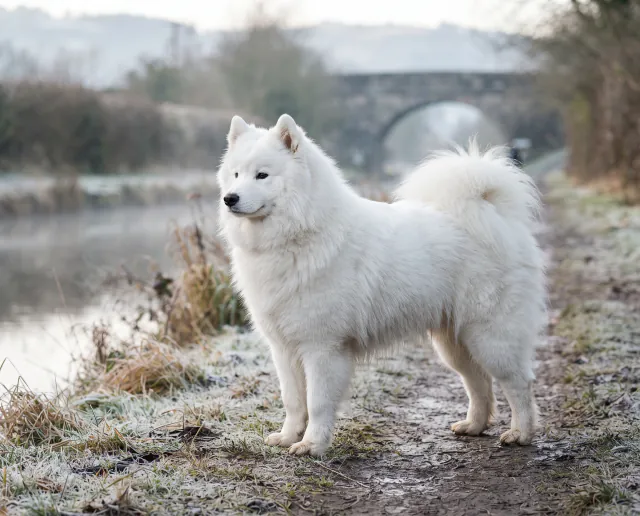
The Samoyed’s expression is not an accident of grooming. The upward curve at the corners of the mouth, often called the Sammy smile, stops saliva from freezing into icicles on the fur during long hours out on the Siberian tundra, and it happens to make the breed look permanently pleased with itself. The people it was bred to work for, the Samoyede people of northern Russia, used the dogs to herd reindeer, guard camps and pull loaded sledges, and in many households the dogs slept alongside children for warmth. That closeness with people has never left the breed.
A Samoyed kept purely as a companion still carries that working history in its build and its voice. The coat that kept a working dog warm through Siberian winters needs real commitment indoors, and a dog bred to herd, pull and howl across open ground does not settle for a short lead walk and a quiet afternoon.
Living with the breed
Samoyeds are outgoing, affectionate and generally poor guard dogs, since most greet a stranger with the same enthusiasm reserved for the family. They dislike being left for long periods and can become destructive or extremely vocal when bored or isolated, a trait that surprises owners who only saw the smiling photographs before buying. The breed is known for a distinctive range of vocal sounds, from a full howl to a chattering talk back that some owners find charming and neighbours in terraced housing may not. Children usually get on well with a Samoyed, and the breed’s patience and playfulness make it a popular family choice, though its size and enthusiasm can knock over a toddler without any bad intent behind it.
Daily exercise
An hour or more of proper activity suits an adult Samoyed, and the breed does best with a genuine off lead run somewhere secure rather than a plodding walk on a lead. Cold, damp conditions barely register with a dog built for the arctic, but hot weather is a real risk, and exercise should move to the cooler parts of the day once temperatures climb. Puppies need shorter, more frequent outings while joints and growth plates develop. Given the breed’s sledge dog ancestry, some Samoyeds pull hard on the lead unless trained early, and a well fitted harness spreads the load better than a collar on a dog with this much drive.
Training and mental work
Independence is baked into the breed’s history, since a working sledge or herding dog often had to make its own decisions at a distance from any handler, and that same trait can look like stubbornness at home. Reward based training, kept short, varied and interesting, works far better than repetition or correction, which tends to produce a Samoyed that disengages rather than one that complies. Mental stimulation matters as much as physical exercise, and scent games, simple obstacle work and puzzle feeders help absorb some of the breed’s considerable energy without adding to the daily walking total. Socialising a Samoyed puppy widely and early pays off, since the breed’s default friendliness is a trait to preserve rather than something that develops automatically.
Grooming and shedding
The dense double coat sheds heavily, and most owners describe living with a Samoyed as a permanent low level snowfall of white hair around the house. Brushing three or four times a week with a slicker and an undercoat rake through the ruff, trousers and tail keeps mats from forming, and during the twice yearly coat blow that routine becomes close to daily for several weeks. The coat is naturally dirt resistant and largely self cleaning, so frequent bathing is unnecessary and can strip the protective oils the fur relies on. Nails, ears and the feathering between the toes all need regular attention, and a thorough drying after a wet walk prevents the undercoat from staying damp against the skin.
Health and costs
Twelve to fourteen years is a realistic range for the breed, and Samoyeds are generally considered a robust spitz type without extreme conformation. Hip dysplasia is documented in the breed, and screening under the BVA and Kennel Club hip scheme is worth asking a breeder about, alongside an inherited kidney condition called Samoyed hereditary glomerulopathy, for which a DNA test exists and responsible breeders test their stock. Eye conditions including progressive retinal atrophy occur at a low level, and the Kennel Club eye scheme covers relevant checks. Diabetes has also been reported in the breed more often than average, which makes keeping the dog lean a genuinely protective habit rather than a cosmetic preference. Monthly costs typically fall between £95 and £165, covering food, insurance and routine care, though grooming time rather than grooming expense is the bigger commitment for most owners.
Verdict
A Samoyed suits an active household with time for daily exercise, patience for a talkative and occasionally stubborn dog, and a genuine willingness to groom several times a week without fail. Families who want an affectionate, sociable dog and are not troubled by a house full of white hair generally find the breed rewarding.
It is a poor match for anyone wanting a quiet dog, a low maintenance coat, or long stretches left alone during the working day. The smile that makes the breed so recognisable comes with a considerable amount of noise and fur attached to it.