At a glance
Key facts
The essentials to compare before deciding whether this breed fits your home and routine.
- Size
- Large
- Lifespan
- 12 to 14 years
- Energy
- High
- Temperament
- Steady, affectionate, versatile and keen to work
- Good with children
- Usually very good with children, though boisterous when young
- Exercise
- About 2 hours a day with free running and nose work
- Trainability
- Beginner friendly
- Grooming
- Brush several times weekly, with moderate shedding and feathering that collects mud
- Estimated monthly cost, GBP
- £100 to £170 per month
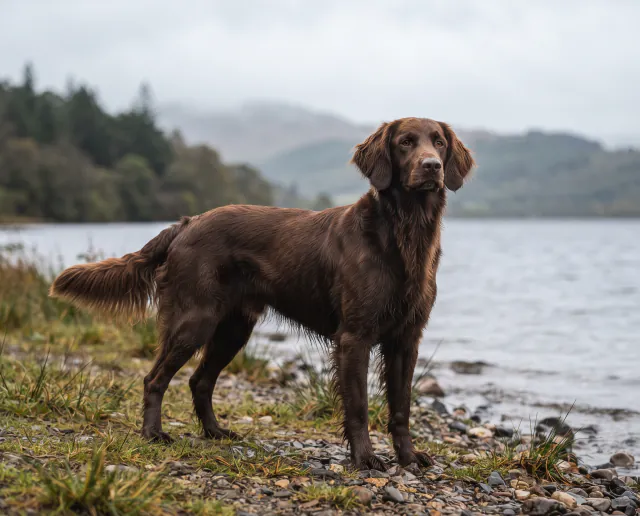
Say German Pointer and almost everyone pictures the shorthaired version. The German Longhaired Pointer is the oldest of the three German pointing breeds and the least known here, a substantial brown or brown and white dog with a flat, feathered coat that looks at first glance like a large, dark spaniel or a setter crossed with something more solid. It was developed in the nineteenth century as an all-round hunter’s dog for use before and after the shot, finding and pointing game, retrieving from land and water and tracking wounded deer and boar.
The breed is rare outside Germany. Litters are few and irregular, buyers usually wait, and a good proportion of the dogs here have been imported from Germany, the Netherlands or Scandinavia, where it remains firmly a working breed. The UK breed club is the first port of call, and anyone approaching it should expect questions about what they intend to do with the dog.
Suitability
Longhaired Pointers are affectionate, steady and close to their people, calmer in the house than many hunt, point and retrieve breeds once mature, and generally good with children and other dogs. They are slower to warm to strangers than a Labrador, without being suspicious, and most will bark at an arrival and then settle. Cats can work with a dog raised alongside them; anything smaller, or anything that runs, will be hunted. The breed bonds strongly and does not do well alone for long days, and a bored young dog of this type is capable of a great deal of destruction. This is a dog for people who want to train and work it in some form, such as shooting, gundog tests, tracking or scent work, and it is a demanding choice for a first-time owner who has not already got a taste for that kind of activity.
Exercise
Adults need around two hours a day, much of it free running and nose work over open ground. Puppies grow into a large, heavy-boned dog and should be restricted to short, frequent, varied outings until the joints have finished forming, which for this breed is closer to eighteen months than twelve. Ranging is instinctive and a Longhair hunts wide when allowed, so recall has to be reliable before the dog is trusted off lead in unfamiliar country, and a long line is the safer tool while it is learned. Sheep and deer are everywhere a pointer wants to be, so the lead and a sound recall matter for the dog’s safety as well as for the law.
Grooming
The coat is medium length, flat or slightly wavy, with a dense undercoat and feathering on the ears, chest, legs, belly and tail. It needs brushing several times a week, and a comb through the feathering after any walk through cover, because burrs, seeds and mud gather there and mats form quickly behind the ears and under the front legs. Shedding is moderate and heavier in spring and autumn. A trim of the feet, the inside of the ears and the belly line a few times a year keeps the dog tidy and reduces mud, and no professional styling is needed. Ears are long and heavy and need a weekly check. A wet Longhair takes a while to dry and carries a fair amount of the countryside indoors, so a drying coat and a boot room, or at least a large towel by the door, are practical.
Health
Twelve to fourteen years is typical and the breed is regarded as sound, helped by the fact that it has stayed in working hands. Hip dysplasia is the main structural concern and both parents should be hip scored under the BVA and Kennel Club scheme, or the equivalent scheme in the country of origin for imported dogs; ask to see the paperwork rather than take a description. Elbow scoring is sensible in a heavy, fast breed. BVA and Kennel Club eye scheme results are worth requesting. Ear infections and grass seeds are the everyday reasons for a veterinary visit. Deep-chested breeds carry a bloat risk and owners should know the signs. Weight control is straightforward in a dog that is worked and less so in one that is not. Because UK numbers are small, a buyer should ask each breeder what conditions they have seen and judge the answer.
Choosing and training
Register interest with the breed club, be honest about the home and activity on offer, and be prepared to wait a year or more for a puppy or to arrange an import with a breeder’s help. The cost of an imported dog includes travel, health certificates and rabies vaccination. Training suits reward-based methods and clear, consistent handling; the breed is intelligent, keen and tractable but can be sensitive, and it responds to fairness rather than force. Start recall, steadiness and lead manners in the first weeks. Formal gundog training or working tests give the dog the purpose it was bred for and produce a calmer house dog than any amount of road walking.
Verdict
The German Longhaired Pointer suits an experienced, active home, ideally rural or with easy access to open ground, that wants a versatile working gundog with a handsome coat and is prepared to train it seriously.
It is the wrong choice for a busy household with nobody home during the day, for owners who want an easy off-lead pet, or for anyone unwilling to wait and possibly import. The far more common German Shorthaired Pointer is a more practical option for most people who are simply drawn to the type.