At a glance
Key facts
The essentials to compare before deciding whether this breed fits your home and routine.
- Size
- Large
- Lifespan
- 12 to 14 years
- Energy
- Very high
- Temperament
- Loyal, clever, strong-willed and watchful with strangers
- Good with children
- Often good with older children who respect a strong, busy dog
- Exercise
- 2 hours or more a day including swimming and nose work
- Trainability
- Experienced handler
- Grooming
- Weekly brushing with hand stripping of the harsh coat a few times a year, and low shedding
- Estimated monthly cost, GBP
- £100 to £175 per month
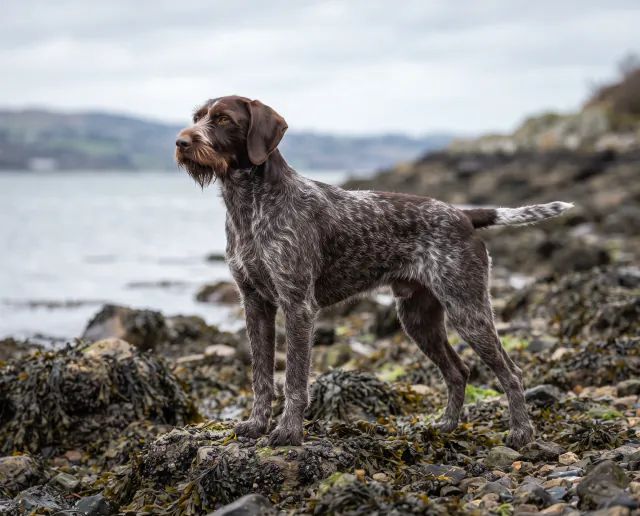
A German Wirehaired Pointer on a foreshore in January, chest deep in the Solway with a duck in its mouth and no apparent interest in the temperature, is the breed doing exactly what it was made for. It was developed in Germany in the late nineteenth century as a rugged all-purpose hunting dog, combining pointer, Pudelpointer, Griffon and other blood to produce a dog that would hunt, point, retrieve from icy water, track wounded game and cope with thick cover, with a harsh weatherproof coat to protect it through all of that.
The Wirehair is established in most countries, mostly among the shooting and falconry communities, and puppies can be found without the long waits attached to rarer hunt, point and retrieve breeds, though a well-bred litter still needs booking ahead. The breed club runs working tests and is a reliable route to breeders who health test and place dogs carefully.
Temperament in the home
Wirehairs are loyal, intelligent and strongly attached to their family, and rather more reserved with everyone else. A protective streak is part of the breed; most are watchful with strangers, quick to announce visitors and slow to make friends with people who arrive unexpectedly. That is manageable with thorough socialisation from puppyhood, and it is not aggression, but it means the dog needs an owner who takes early social experience seriously and does not expect a Labrador temperament in a beard. They can be pushy with other dogs, particularly males, and the prey drive is high enough that cats and small pets are a risk. With children in the family the breed is generally affectionate and patient, though it is a strong, busy dog that does better with older children who respect it than with toddlers. Separation is a problem; a Wirehair bonded to its people does not tolerate long hours alone.
Exercise and training
Two hours a day is a reasonable minimum, and a Wirehair that is not worked and exercised hard becomes restless, vocal and inventive. Much of that time should involve free running, swimming, retrieving and nose work over open ground, not lead walks. Puppies should have short and frequent outings on soft ground until growth is complete, and they still need plenty of mental work in the meantime. Training is where the breed rewards a competent handler and frustrates an inexperienced one. Wirehairs are quick, capable and biddable in the right hands, but they are also strong-willed, slow to mature and inclined to test whether a rule still applies. Reward-based methods with clear, consistent boundaries produce a superb working dog; nagging and inconsistency produce one that runs the household. Recall around game must be built carefully and proofed, and the lead goes on near livestock. Gundog training, working tests, tracking and falconry work are the breed’s natural outlets.
Coat and grooming
The correct coat is harsh, wiry, dense and close, with a water-repellent undercoat, bushy eyebrows and a beard, and it varies a good deal between individuals. Some dogs carry a short, tight jacket that needs little more than a weekly brush; others grow a softer, longer coat that needs hand stripping two or three times a year to keep it harsh and functional. Clipping softens the coat and reduces its weatherproofing, so stripping, by a groomer familiar with wire coats or an owner with a stripping knife, is the better route for a working dog. Shedding is low with a well-maintained coat. The beard holds water and mud and needs wiping after drinks and walks. Ears should be checked weekly and hair inside the canal thinned if it blocks airflow. Feet gather seeds and should be trimmed and checked in summer.
Health and lifespan
Most live for twelve to fourteen years. Hip dysplasia is the main structural concern and both parents should be hip scored under the BVA and Kennel Club scheme. Von Willebrand’s disease, an inherited bleeding disorder, is recognised in the breed and a DNA test is available, so ask for the parents’ results and expect a breeder to explain them. Eye conditions including entropion and cataracts occur, and BVA and Kennel Club eye scheme certificates for both parents are worth requesting. Hypothyroidism is reported in the breed. Deep-chested dogs carry a bloat risk. A working Wirehair rarely carries excess weight; a pet on the same rations does, and a lean dog is a sounder one.
Costs and space
Monthly costs of around £100 to £175 cover food for a dog of twenty-five to thirty-five kilograms, insurance, routine veterinary care and coat work, with stripping the main extra unless it is learned at home; the figure is indicative and varies by insurer and region. A secure garden is essential, and fencing needs to be higher and stronger than most people first install, since a Wirehair can jump and will go after anything on the other side. The breed lives best in a rural or edge-of-town home with open ground close by. A flat with a park nearby is unrealistic.
Verdict
The German Wirehaired Pointer suits experienced, active owners who will work the dog in some form, take socialisation seriously and enjoy a clever, loyal dog with an independent streak. Shooting, falconry and working test homes get the best out of the breed.
It is a poor match for first-time owners, for households with cats or small pets, for anyone out all day, and for people who want an easy-going dog that loves every visitor. A Wirehair in the wrong home is a lot of dog to have got wrong.