At a glance
Key facts
The essentials to compare before deciding whether this breed fits your home and routine.
- Size
- Large
- Lifespan
- 12 to 14 years
- Energy
- Very high
- Temperament
- Driven, affectionate and permanently busy
- Good with children
- Often good with older, sensible children
- Exercise
- Two hours or more a day plus scent and training work
- Trainability
- Beginner friendly
- Grooming
- Weekly brushing, with noticeable shedding all year
- Estimated monthly cost, GBP
- £90 to £160 per month
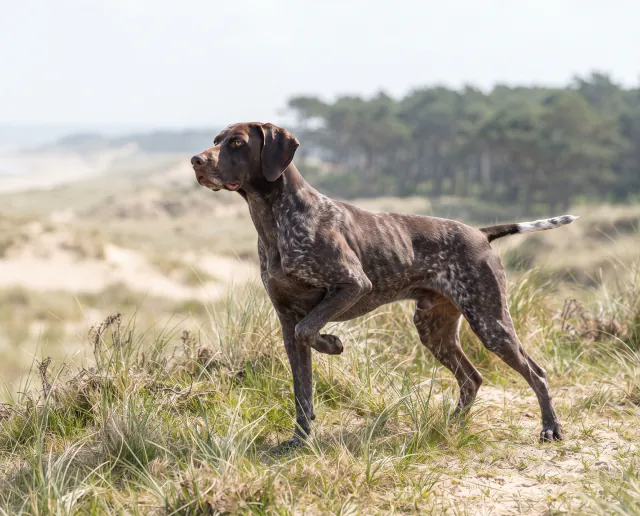
The German Shorthaired Pointer was assembled in the late nineteenth century to do an entire job rather than one part of it. Breeders wanted a single dog that could quarter a field, hold a point, follow a trail and retrieve from water, and they built the athlete required. The result has a deep chest, long legs, webbed feet and a short liver or liver and white ticked coat that dries within minutes of coming out of a river. Nothing about that specification was aimed at a suburban routine of two short walks and a quiet day at home.
Most owners now meet the breed as a pet, and many manage it well. The dog still arrives with a job description and expects it to be filled. A GSP given enough physical work and enough to think about is affectionate, comic and genuinely easy company. One that is under-occupied becomes fast, strong and relentlessly inventive, and rehoming charities take in the results of that mismatch every year.
Suitability
The right home is an outdoor one. Runners, riders, hill walkers, shooting people and dog sport competitors all suit the breed, and rural or semi-rural access to open ground helps considerably. Adults typically stand around 58 to 64cm and carry hard muscle rather than bulk, so a bouncing GSP can flatten a small child without meaning any harm. Families with children over about seven often do well once the dog has learned not to jump. Company matters as much as exercise, and long working days alone tend to produce chewing, digging or a dog that patrols the windows. First-time owners are not excluded, but only if the household is honest about having several hours a day to give for the next decade.
Exercise
Two hours is a working minimum for a healthy adult, and quality counts more than distance. Free running on safe ground, long line work in fields, swimming and structured retrieving all suit the build. Simply walking a GSP further rarely settles it, because a fit hunting dog adapts to whatever mileage is offered and then asks for more. Scent work is the useful lever, since ten minutes of searching tires the dog in a way that half an hour of ball throwing does not. Puppies need restraint instead, with short outings and no forced running while growth plates close. Recall around game birds, hares and livestock must be genuinely reliable before the lead comes off.
Grooming
Coat care takes minutes. A rubber mitt or short-bristled brush once a week lifts the dead hair, and the short stiff coat sheds steadily throughout the year rather than in obvious seasonal bursts. Those hairs weave into upholstery and jumpers, which surprises people who choose a shorthaired breed expecting a clean house. The skin underneath is thin, so check for thorn scratches, grass seeds and ticks after work in cover, particularly between the toes and inside the ears. Nails wear down on hard ground but still need checking. A GSP feels the cold more than its energy suggests, and a coat for standing about in winter is a reasonable purchase.
Health
The breed is generally robust and often reaches twelve to fourteen years. Hip dysplasia is the main screening concern, so ask for hip scores on both parents and compare them with the current breed average rather than accepting a general assurance. Eyelid conditions, an inherited bleeding disorder and epilepsy are all recognised in the type, and reputable breeders will discuss what has appeared in their lines. Deep-chested dogs carry a risk of gastric dilatation and torsion, which is a genuine emergency; sudden restlessness, unproductive retching or a swollen abdomen warrants an immediate veterinary call. Any lameness, seizure or unusual bleeding needs a vet rather than a forum. Monthly running costs in the region of £90 to £160 are indicative, since food, insurance, grooming and veterinary care all vary by area and by dog.
Choosing and training
Ask whether the litter comes from working or show lines, and be wary of anyone who says the difference does not matter. Working-bred GSPs carry more drive than most pet homes can absorb. Meet the mother, watch how she settles when nothing is happening, and ask what the breeder does with her adult dogs each day. Rescue offers a clearer picture, because an adolescent’s energy and recall are already visible. Training should be reward-based and started early. Steadiness, a stop whistle, loose-lead walking and an off switch at home all take months rather than weeks, and the breed responds badly to shouting.
Verdict
A German Shorthaired Pointer suits an experienced, physically active household that wants a dog involved in everything it does outdoors. Given real work, the breed is affectionate, biddable and remarkably good company indoors, dozing on a sofa after a hard morning.
It is the wrong dog for a first walk after work and a nap until tomorrow. Anyone with limited time, a small enclosed garden as the main outlet, or a preference for a hair-free house should choose something else. The breed rarely improves through waiting; it improves through work.