
At a glance
Key facts
The essentials to compare before deciding whether this breed fits your home and routine.
- Size
- Small
- Lifespan
- 10 to 14 years
- Energy
- Medium
- Temperament
- Quiet, steady and doggedly determined underneath
- Good with children
- Often good with children who respect a working terrier
- Exercise
- About 45 minutes a day plus digging and scent play
- Trainability
- Moderate
- Grooming
- Hand stripping twice a year with weekly combing between
- Estimated monthly cost, GBP
- £75 to £130 per month
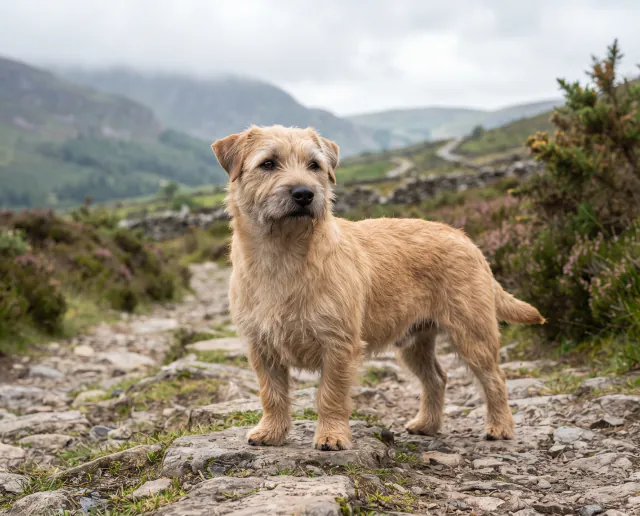
Tucked into a remote glen in County Wicklow, this terrier developed away from the show ring pressures that shaped many of its relatives. Farmers there wanted a dog low enough to bolt a fox or badger from a sett, strong enough to work a turnspit wheel, and sound enough to earn its keep on land that gave nothing away for free. The result is a bandy legged, barrel chested little dog built more like a small Dandie Dinmont than a typical wire terrier, with a bite of muscle that surprises people meeting one for the first time.
What sets the Glen apart from the rest of the Irish terrier group is temperament rather than shape. Where many earth dogs are wired for constant activity and noise, the Glen tends toward a calmer, more watchful disposition indoors, saving its intensity for genuine provocation. That combination of substance and composure has kept it a working farm dog for generations while never becoming common outside Ireland.
Living with the breed
Inside the house the Glen is often described by owners as surprisingly placid, content to lie by a chair for long stretches and reserve real excitement for a walk or a visitor at the gate. It is not a yappy breed, and barking tends to be purposeful rather than habitual, which suits a terraced street better than many small terriers manage. That calm exterior sits over a genuinely tenacious character. A Glen that decides a fox scent or a rival dog matters will commit fully, and the breed’s history of quarry work means small mammals are never entirely safe around it. Children who understand that a settled dog should be left to rest generally get on well with a Glen, and the breed is loyal to its own household without being clingy or anxious about short absences.
Daily exercise
Roughly three quarters of an hour a day covers most adults, split across a couple of outings rather than one long march. The short bowed legs are not built for distance running or repetitive jumping, so games that involve sprinting, twisting and searching suit the breed’s natural movement better than road work. A securely fenced garden gets used properly, since digging is close to instinctive and a Glen left to its own devices will excavate with real dedication. Recall around rabbits, squirrels or another dog’s cat needs to be trained early and tested cautiously, because the drive that once sent this terrier underground after a fox has not been bred out of it.
Training and mental work
Training rewards patience more than repetition. The Glen thinks for itself, a trait useful in a dog once expected to make its own decisions underground, and blunt correction tends to produce a dog that simply disengages. Short sessions built around food and a genuine game work far better than drilling. Early socialising with other dogs matters, since some individuals can be selective about canine company, particularly dogs of the same sex. Scent work, a supervised digging pit and puzzle feeders give the breed a legitimate outlet for instincts that will otherwise be turned on the flowerbeds.
Grooming and shedding
The correct coat is medium length, harsh in texture and slightly wavy, and like most working terriers it should be hand stripped rather than clipped if the wiry texture and pale colouring are to be kept. Stripping twice a year, either learned at home or booked with a terrier groomer, removes the dead coat and encourages a weatherproof jacket to regrow. A weekly comb through the furnishings on the legs and face keeps mats from forming between strips. Shedding is genuinely light for a dog of this build, which suits owners who dislike hair on furniture, though the beard collects mud and food with enthusiasm and needs regular attention.
Health and costs
The Glen of Imaal Terrier is recognised by the Kennel Club as a vulnerable native breed, meaning UK registrations run low even by terrier standards, and a buyer should expect to wait for a litter and to travel some distance for one. Progressive retinal atrophy has an available DNA test for the breed, and a responsible breeder will be able to show clear or hereditarily clear results for the parents. Hip and elbow scoring under the joint BVA and Kennel Club scheme is worth asking about given the unusual leg conformation, and the breed can be prone to patella issues common in dogs bred with a degree of bowing to the front legs. Monthly costs sit in a modest band for a small dog, though insurance and food scale with the breed’s solid, muscular build rather than its low stance, and a Glen carries more weight on a small frame than its height suggests.
Verdict
The Glen of Imaal Terrier suits an owner drawn to terrier grit without the constant noise and motion many terrier breeds bring, provided that owner accepts a determined streak underneath the calm surface and does the legwork to find a breeder through the dedicated breed club. It fits a small home with a secure garden reasonably well.
It is a poor match for households with small pets, anyone expecting an off-lead dog around wildlife, or a first time owner unwilling to source a rare breed patiently rather than take whatever puppy is nearest. Those willing to wait usually find a steady, characterful companion at the other end.