
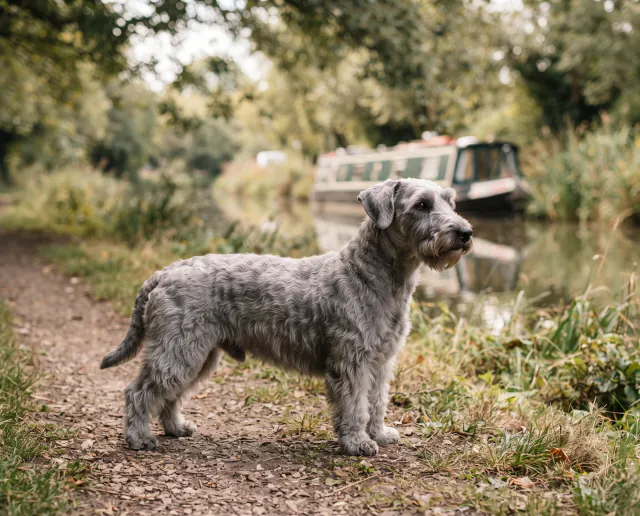
At a glance
Key facts
The essentials to compare before deciding whether this breed fits your home and routine.
- Size
- Small
- Lifespan
- 12 to 15 years
- Energy
- Medium
- Temperament
- Calm, affectionate and notably less excitable than most terriers
- Good with children
- Often good with children in a quiet household
- Exercise
- About 45 minutes a day without unnecessary intensity
- Trainability
- Moderate
- Grooming
- Clipped roughly every six weeks plus regular brushing
- Estimated monthly cost, GBP
- £85 to £150 per month
Frantisek Horak set out in the 1940s to build a terrier that could still go to ground after fox and badger but would not fight everything it met along the way, and he crossed Sealyham and Scottish Terrier stock in Czechoslovakia until he had it. The Cesky Terrier that resulted keeps the low, long body and working instinct of its ancestors but carries a noticeably softer, more biddable temperament, along with a coat that grows soft and wavy rather than harsh and wiry. It remains one of the least common terriers registered anywhere in the world, and most countries see only a trickle of litters in any year.
That rarity matters more than anything else here. A buyer set on this breed should expect a genuine wait, should be open to travelling for a puppy or considering an imported dog, and will find the national breed club a far more useful contact than a casual search of classified adverts. None of that reflects a problem with the dog. It reflects a breed that has simply never been produced in large numbers.
Temperament in the home
Compared with most terriers, the Cesky is markedly calmer, and many owners describe a dog that is content to lie quietly through an evening rather than patrol the room looking for something to investigate. Affection toward its own family runs deep, and the breed tends to be reserved rather than hostile with strangers, warming up once satisfied a visitor is not a threat. Barking is used sparingly, which suits flats and terraced housing better than the noisier end of the terrier world. Working ancestry has not vanished entirely, so small pets kept loose in the house remain a risk, and supervision around new introductions is sensible. Children who are calm themselves generally suit this breed well, since a Cesky rarely instigates rough play but can find sudden noise or chasing games overwhelming.
Exercise and training
A steady 45 minutes a day, covering a proper walk with some time to sniff and explore, keeps most adults content, and this breed does not demand the intensity that some working terriers require. Training tends to go smoothly given the calmer, more cooperative temperament, though an independent streak still surfaces occasionally and short, positive sessions work better than lengthy drilling. Recall around game or strong scent should still be built up gradually rather than assumed, since the instinct to follow a trail has not disappeared along with the harsher coat and edgier temperament of its ancestors. Puppies benefit from early exposure to a wide range of people, places and other dogs, partly because the breed is uncommon enough that many will never meet another of their own kind.
Coat and grooming
The coat is fine, soft and slightly wavy rather than harsh, growing continuously in the manner of a Poodle rather than shedding out seasonally, which is why professional clipping roughly every six weeks is standard practice rather than an occasional luxury. Between clips, brushing two or three times a week prevents the coat from matting, particularly around the ears, legs and beard. Shedding around the home is genuinely minimal as a result, which appeals to allergy conscious households, though no coat can be guaranteed fully hypoallergenic. Owners who commit to learning basic clipping themselves save considerable money over a dog’s lifetime, though achieving the neat pet trim most people want takes practice.
Health and lifespan
Twelve to fifteen years is a fair expectation for a well kept Cesky Terrier, and the breed is generally considered a sound one with relatively few widely documented inherited conditions compared with some longer established terriers. Patellar luxation and general eye health are still sensible topics to raise with a breeder, and any dog imported from overseas should arrive with clear paperwork covering its background and any testing already carried out. Because the gene pool is small worldwide, responsible breeders pay close attention to which lines are paired, and a buyer asking about this shows a seriousness that a good breeder will welcome rather than resent.
Costs and space
Running costs commonly fall between £85 and £150 a month, with professional coat clipping forming a larger share of that than it would for a smooth coated breed of similar size, alongside the usual variables of food, insurance and veterinary care. Space is rarely a limiting factor, since the calm temperament and modest exercise needs suit flats and small houses as readily as larger homes. A secure garden still matters given the residual instinct to investigate and occasionally chase, but this is a breed that copes with city living better than most terriers of its type.
Verdict
The Cesky Terrier suits an owner who wants the low shedding, working terrier heritage of the group without the constant motion, who is prepared to search patiently for a puppy, and who can commit to regular professional clipping. Quiet households, flats and first time owners drawn to a calmer dog often find it a genuinely good match.
Anyone wanting a dog readily available nearby, or expecting the higher energy and vocal habits typical of the wider terrier group, should look elsewhere. Meeting an adult Cesky before deciding gives a far truer sense of the breed’s character than any description can.