At a glance
Key facts
The essentials to compare before deciding whether this breed fits your home and routine.
- Size
- Small
- Lifespan
- 12 to 15 years
- Energy
- Medium
- Temperament
- Dignified, independent minded and quietly affectionate
- Good with children
- Often good with children who handle the long back gently
- Exercise
- About 40 minutes a day on level, forgiving ground
- Trainability
- Moderate
- Grooming
- Hand stripped regularly with the soft topknot combed daily
- Estimated monthly cost, GBP
- £80 to £140 per month
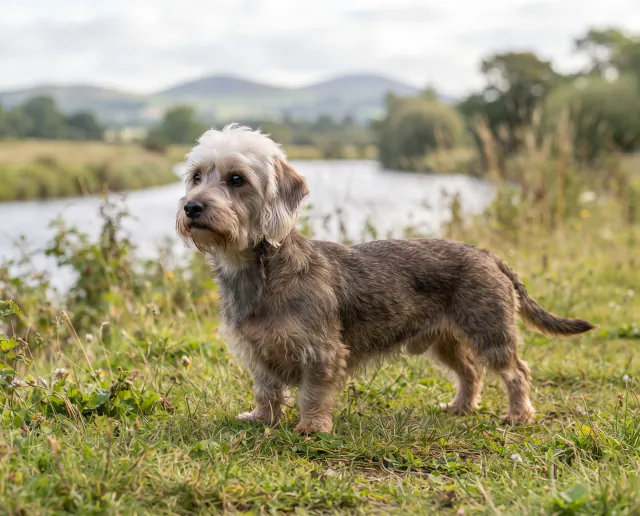
Sir Walter Scott gave this breed its name almost by accident, borrowing it from a farming character in his novel Guy Mannering who kept a pack of similar terriers, and the label stuck so firmly that the dog has never been known by anything else. Bred in the border country between England and Scotland to bolt otter and badger from riverbank setts, the Dandie Dinmont developed a body built for tunnels rather than speed, low and notably long in the back, topped with large dark eyes and a soft, silvery topknot that gives the head a distinctive, almost owlish look.
That distinctiveness has not translated into popularity. The Kennel Club lists the Dandie Dinmont among its vulnerable native breeds, meaning UK registrations have fallen low enough to raise real concern about the breed’s future, and anyone wanting one should expect a genuine wait and treat the breed club as the obvious first port of call rather than a last resort. Buying one is, in a small way, an act of conservation as much as a choice of pet.
Living with the breed
Independent minded rather than needy, the Dandie tends to form close bonds with its own household while remaining somewhat aloof toward strangers, a trait that suits owners who prefer a dignified dog to a demonstrative one. Barking is used with purpose rather than constantly, and most individuals settle well into ordinary domestic life once past puppyhood. The breed carries genuine terrier drive toward vermin, so cats and small pets already in residence tend to fare better than anything introduced as a stranger later. Older children who understand the importance of never letting a long backed dog jump from furniture or be picked up carelessly generally suit the breed well, and gentle handling matters here more than with a conventionally built terrier. Long stretches alone are tolerated reasonably well by an adult dog that has been properly settled into a routine.
Daily exercise
Around 40 minutes a day of steady walking on level, even ground suits the breed’s unusual build far better than repeated jumping, stairs taken at speed or rough scrambling terrain, all of which place unnecessary strain on a spine already extended well beyond the terrier norm. Ramps rather than steps for cars and sofas are a sensible habit from puppyhood onward. Within those limits the Dandie is a capable, willing walker rather than a fragile one, and most adults enjoy a proper outing regardless of weather. Puppies in particular should be kept to gentle, short sessions while the back and legs finish developing, and any obstacle course style play involving jumps is best avoided for life rather than just during growth.
Training and mental work
A degree of stubbornness is part of the breed’s charm and part of its challenge, and training goes further with patient, food based methods than with any attempt at confrontation. The Dandie thinks for itself readily, a legacy of working alone underground without direction from a handler, and this independence can be mistaken for slowness when it is closer to quiet defiance. Scent based games and simple problem solving toys suit the breed’s working background and give it something to occupy a naturally alert mind. Socialisation from an early age helps temper the reserve many individuals show toward unfamiliar people, though a degree of aloofness will likely remain part of the adult dog’s character regardless.
Grooming and shedding
The coat combines a harder outer layer with a softer undercoat, producing a texture that needs hand stripping a few times a year to stay in proper condition, alongside the pale, silky topknot that requires daily combing to prevent tangling around the eyes. Clipping instead of stripping softens and dulls the coat over time in the same way it does for other broken coated terriers, so owners wanting to preserve the correct texture should seek out a groomer experienced with the breed. Shedding is genuinely low when the coat is maintained this way, making the Dandie a reasonably tidy housemate despite the grooming commitment involved.
Health and costs
The long back that defines the breed’s silhouette carries a real risk of intervertebral disc problems, and owners should watch for reluctance to jump, a hunched posture, yelping when lifted or any sudden change in the back legs, all of which warrant prompt veterinary attention rather than a wait and see approach. Glaucoma has also been documented in the breed, and periodic eye checks through a vet familiar with the condition are a sensible part of routine care as the dog ages. Twelve to fifteen years is a realistic lifespan for a dog kept lean, since extra weight on a long spine multiplies the strain already inherent in the shape. Monthly costs typically run from £80 to £140, covering food, insurance and routine care, with occasional professional coat stripping adding to that where an owner does not learn the technique.
Verdict
The Dandie Dinmont suits an owner who wants a characterful, independent small terrier, will manage exercise sensibly around its unusual back, and is prepared to search for a puppy from one of the few breeders keeping this vulnerable native breed going. It rewards patience with a dignified, devoted dog unlike almost any other terrier in appearance or manner.
Households wanting an instantly biddable dog, expecting to find a puppy quickly nearby, or unwilling to manage the physical precautions the long back requires should consider a different breed. Supporting a rare native breed through a proper breeder does more for its survival than any amount of admiring it from a distance.