
At a glance
Key facts
The essentials to compare before deciding whether this breed fits your home and routine.
- Size
- Small
- Lifespan
- 12 to 14 years
- Energy
- Medium
- Temperament
- Calm, self-assured and quietly affectionate
- Good with children
- Often good with children who play sensibly
- Exercise
- About 45 minutes to an hour a day
- Trainability
- Moderate
- Grooming
- Hand stripping several times a year and regular white-coat care
- Estimated monthly cost, GBP
- £85 to £160 per month
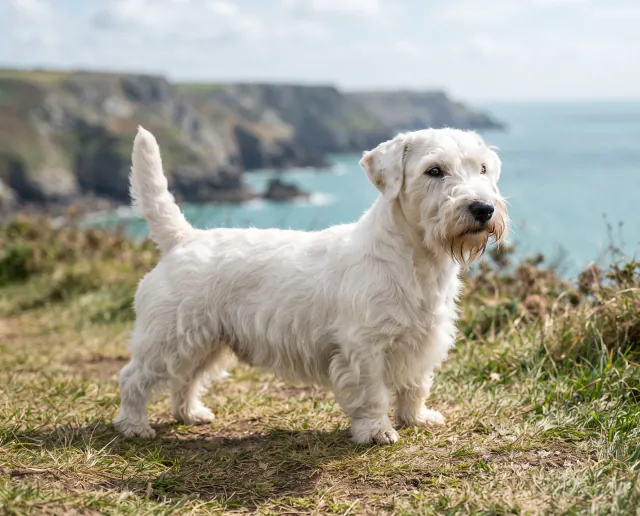
Captain John Edwardes bred the Sealyham Terrier on his Pembrokeshire estate to work otter, badger and fox alongside hounds, choosing white dogs deliberately so they could be told apart from the quarry underground in poor light. That practical decision produced one of the few white terrier breeds and a dog built low and strong enough to hold its ground against something considerably larger than itself. The name comes from the Sealyham estate rather than any town, and the breed remains closely tied to Wales in identity if not always in numbers.
Numbers are the uncomfortable part of the story. The Sealyham Terrier sits on the Kennel Club’s list of vulnerable native breeds, with annual registrations low enough that many counties see none at all in a given year. Anyone drawn to the breed needs to accept a longer search than most pedigree buyers face, a possible wait for a litter, and the breed club as the sensible starting point rather than a general search for puppies nearby. What that patience buys is a genuinely distinctive terrier, calmer in temperament than several of its wire-coated relatives and comfortable as a household companion rather than a working specialist.
Living with the breed
Sealyhams tend to be self-possessed rather than excitable, happy to potter about the house and settle for long stretches once exercised. The breed still carries real terrier substance underneath the placid manner, including a willingness to dig, investigate, and stand its ground with other dogs if challenged. Strangers are typically met with polite reserve rather than instant friendliness, and the breed can be territorial about its home and people without being unmanageable. Children who play calmly and do not corner the dog usually get on well with a Sealyham, though the combination of a low, sturdy body and a strong sense of its own dignity means rough handling is not welcomed. Small mammals kept as pets are best kept well away, since the terrier instinct that made the breed useful underground has not gone anywhere.
Daily exercise
Around three quarters of an hour to an hour a day covers most adults comfortably, and the breed is noticeably less driven than many terriers bred for stamina over open country. A couple of shorter outings with time to sniff and explore suits the temperament better than one long march. Recall is generally more manageable than in higher-drive terrier breeds, though nothing should be assumed off lead near livestock or wildlife until it has been properly tested. Puppies need modest, frequent exercise while their joints and growth plates develop rather than long walks or repeated jumping. A securely fenced garden gives an outlet for digging and patrolling that keeps the dog content between formal walks.
Training and mental work
The breed responds well to calm, consistent handling and does not need or particularly enjoy a heavy-handed approach. Sealyhams are intelligent enough to get bored with pure repetition, so short sessions covering recall, a solid leave, and settling on command tend to hold attention better than drilling the same exercise. Scent-based games suit the breed’s working background and give a mental outlet that a walk alone does not provide. Early, varied socialisation with people, dogs and everyday noises pays off in a breed naturally inclined to reserve, helping prevent wariness tipping into anxiety or unnecessary barking at visitors.
Grooming and shedding
The harsh, wiry white coat needs hand stripping several times a year to keep its texture and colour, and clipping is possible but softens the jacket and dulls the white over time in the way it does with most wire coats. Between strips, regular combing prevents matting around the ears, beard and legs, and the white coat shows staining from grass, saliva and mud more readily than a darker one, so the beard and feet often need cleaning after a walk. Shedding itself is minimal when the coat is properly maintained, which suits owners who dislike hair on furniture. Ears should be checked regularly given their drop shape, and nails and teeth need the usual routine attention.
Health and costs
Twelve to fourteen years is a realistic span for a well-kept Sealyham. Primary lens luxation, a painful and sight-threatening condition in which the lens of the eye moves out of position, has a known genetic marker in the breed, and a responsible breeder should be able to show DNA results clearing both parents or confirming a safe pairing. The BVA and Kennel Club eye scheme is worth asking about alongside this, since other inherited eye conditions occur in terrier breeds more broadly. Deafness affects some white-coated dogs and can be screened for in puppyhood if there is any doubt. Because litters are scarce, buyers sometimes travel considerable distances or wait many months, and prices reflect that scarcity rather than any inflation of the breed’s ordinary running costs, which sit in a broadly typical range for a small terrier once grooming is accounted for.
Verdict
The Sealyham Terrier suits an owner who wants a calm, characterful small dog, does not mind investing time in coat care, and is prepared to search patiently through the breed club rather than expecting a quick local litter. It settles well into quieter households and copes fine in a small home with a secure garden.
It is not the right choice for anyone wanting an instantly available puppy, a highly active exercise companion, or a dog indifferent to its own dignity. Those willing to wait generally find the search worthwhile.