At a glance
Key facts
The essentials to compare before deciding whether this breed fits your home and routine.
- Size
- Small
- Lifespan
- 12 to 14 years
- Energy
- Very high
- Temperament
- Sharp, alert and almost endlessly busy
- Good with children
- Can be good with older children used to a busy dog
- Exercise
- Two hours or more a day of varied physical and mental work
- Trainability
- Moderate
- Grooming
- A quick weekly brush is enough for the low maintenance coat
- Estimated monthly cost, GBP
- £65 to £115 per month
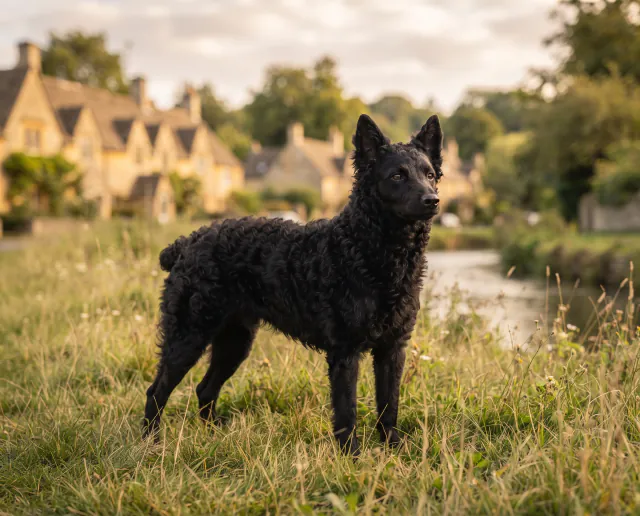
Hungarian farmers rarely kept a specialist for every job when one adaptable dog would do, and the Mudi is the result of that practicality, a herder capable of working cattle, sheep or pigs and switching to guarding the yard or hunting vermin when the flock went to market. It remains one of the least known of the Hungarian herding breeds outside its home country, overshadowed by the Puli and Vizsla, but owners who have discovered it tend to describe a dog of startling intelligence packed into a genuinely small frame.
The breed is listed on the UK Kennel Club’s Imported Breed Register, and litters are few and far between outside Hungary. A buyer should expect a wait measured in months rather than weeks, should be open to the possibility of an imported puppy, and will do best starting the search through the breed club rather than general advertising.
Suitability
This is a dog for someone experienced with intelligent working breeds, not necessarily because it is difficult natured but because its combination of drive, sensitivity and sheer busyness overwhelms an unprepared household. A Mudi notices everything, reacts quickly and needs an outlet for that alertness or it will find one unaided, often in ways an owner did not intend. Households with older children who can join in structured games do well, as do owners already involved in dog sports. It is a poor match for anyone wanting a placid dog to relax with, since even a tired Mudi tends to stay mentally switched on.
Exercise
Physical exercise needs are genuinely high for a dog of this size, and two hours or more a day of varied activity, including off lead running in safe areas, keeps most adults settled rather than frantic. Herding, agility and flyball all suit the breed’s build and temperament, and a Mudi given a proper job tends to be calmer indoors than one limited to lead walks alone. Puppies should have exercise moderated while their frame develops, with free play favoured over repetitive forced activity, but the underlying drive is present from a young age and rarely needs encouraging. Recall training benefits from an early start, since a Mudi that has learned to enjoy chasing without checking back can be genuinely difficult to call off once moving.
Grooming
The coat is short to medium length with a distinctive wave or curl, close fitting rather than shaggy, and it requires remarkably little upkeep for its appearance. A weekly brush removes loose hair and keeps the coat looking tidy, and there is little tendency to mat given the way the curl sits against the body. Shedding is moderate and fairly even through the year rather than concentrated into dramatic seasonal blows. Bathing is rarely necessary, and most owners find the breed one of the lowest maintenance aspects of what is otherwise a demanding dog to keep satisfied.
Health
Twelve to fourteen years is a realistic expectation, and the breed is generally considered a sound, healthy one, helped in part by a comparatively broad genetic base for its size. Hip evaluation under the British Veterinary Association and Kennel Club scheme is a fair question for any breeder given the athleticism the breed is bred for, and a DNA test exists for a hereditary eye condition that responsible breeders screen against. Deafness, which turns up more often in dogs carrying particular white or merle patterning, is worth asking about where a puppy’s colouring makes it relevant. Because litters are rare in most countries, health information from Hungarian and other continental breeders and clubs is often the most useful resource available.
Choosing and training
A Mudi trains quickly and enjoys the process, provided sessions stay varied and mentally engaging rather than repetitive, since boredom shows itself fast in a breed this sharp. Early socialisation matters, both to soften a natural wariness of strangers and to prevent the alert barking instinct from becoming a constant habit rather than an occasional, useful warning. Buyers should ask a breeder directly about noise levels and barking tendencies in the parents, since this is one of the more vocal small breeds and not every household is prepared for it. Given how few are bred here, meeting adult dogs of the breed before committing, even if that means travelling some distance, is time well spent.
Verdict
The Hungarian Mudi suits an active, experienced owner looking for a small dog with enormous working drive, minimal coat maintenance and a genuine appetite for training and dog sports. It rewards owners who give it a proper job far more than it tolerates a purely decorative role.
It is not suited to a quiet household, a first time owner without support, or anyone hoping that small size will translate into modest exercise and mental stimulation needs, since neither holds true for this breed.