
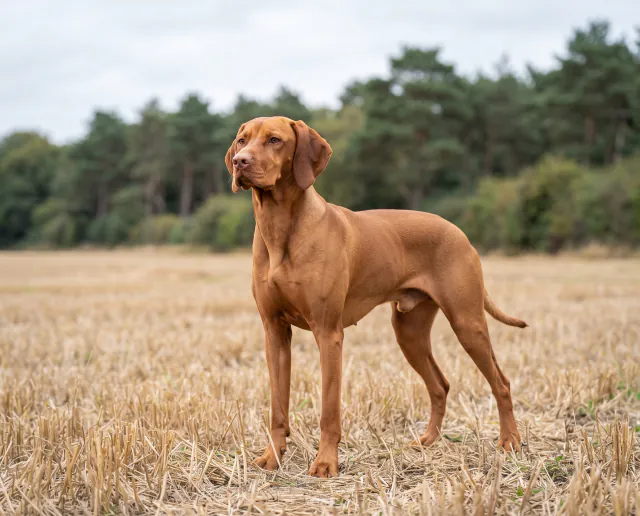
Also known as: Magyar Vizsla.
At a glance
Key facts
The essentials to compare before deciding whether this breed fits your home and routine.
- Size
- Medium
- Lifespan
- 12 to 14 years
- Energy
- Very high
- Temperament
- Affectionate, sensitive and closely attached to its people
- Good with children
- Often good with active, older children
- Exercise
- At least 2 hours a day including scent and training work
- Trainability
- Beginner friendly
- Grooming
- Weekly brushing, short coat with steady shedding
- Estimated monthly cost, GBP
- £90 to £160 per month
The mistake buyers make with this breed is rarely about exercise. Most people considering a Vizsla have read that it needs a couple of hours a day and have planned for it. What catches them out is the dog’s need for company. Vizslas were developed in Hungary to hunt, point and retrieve while staying in constant contact with a handler, and centuries of that work produced an animal that treats being left behind as something close to a crisis. The nickname attached to the breed, the velcro dog, is a description of behaviour rather than a joke.
A second misreading is cosmetic. That short russet coat looks like an easy option beside a spaniel or a setter, and buyers sometimes choose one as a tidier gundog. The coat is short, but there is no undercoat underneath it, which means the dog feels cold and wet weather keenly and still sheds fine hairs into every jumper in the house. Neither the sensitivity nor the stamina is visible in a photograph.
Temperament in the home
Vizslas are affectionate to a degree that some people find excessive. Sitting on laps, leaning against legs and sleeping under a blanket are all normal for the breed, and the dog will follow its chosen person between rooms without apparent boredom. Alone, the same dog can pace, howl, chew or scratch at doors, and separation problems are the most frequent complaint from owners who bought without planning around them. Brief absences should be built up from the first week and never tested for the first time on a full working day. Most are gentle and open with visitors, and their sensitivity extends to household mood, so shouting or tension unsettles them. Older children who can be calm suit the breed better than toddlers, mainly because a Vizsla in motion is fast and forgets where its legs are.
Exercise and training
Two hours a day is realistic for a fit adult, and the type of activity matters as much as the length. A hunting breed with an excellent nose needs to use it, so scent games, long line work in fields and searching for hidden food do more good than another mile of pavement. Free running suits them once recall is genuinely established, though the pull towards pheasants and hares is strong and takes months of work to compete with. Puppies need restraint rather than distance, with short walks and no repeated jumping while they grow. Training itself is a pleasure with this breed, because they learn quickly and want to be right. Harsh methods backfire badly. A Vizsla that has been shouted at often becomes hesitant and slow to offer anything, and rebuilding that confidence takes far longer than the original mistake did.
Coat and grooming
Maintenance is genuinely light. A weekly pass with a rubber mitt or soft brush lifts the dead hair and keeps the coat glossy, and baths are needed only occasionally. Shedding continues year round and the short stiff hairs work themselves into upholstery and clothing, so light-coloured furniture will show it. Ears hang down and should be checked and dried after swimming or wet walks. Nails, teeth and paws need routine attention, and thorns and grass seeds should be looked for after work in cover. The lack of an undercoat has one practical consequence beyond comfort. A Vizsla standing about in winter or waiting in a cold car benefits from a coat, and many owners keep a fleece for exactly that purpose.
Health and lifespan
Most Vizslas live twelve to fourteen years and stay active well into old age. Hip dysplasia is the principal screening concern, so ask for hip scores on both parents and compare them against current breed guidance. Eye conditions and epilepsy are recognised in the breed, and some immune-mediated disorders have been reported in the type, which good breeders will discuss openly rather than dismiss. Ask what has occurred in their lines and request written test certificates naming the parents. Seizures, persistent lameness, sudden stiffness or a change in appetite should be assessed by a vet rather than monitored at home. Keeping the dog lean helps the joints, and an athletic breed still needs to warm up before hard exercise and cool down afterwards.
Costs and space
Around £90 to £160 a month is a reasonable planning figure, though it is indicative only and shifts with food, insurance, grooming and veterinary care. Additional costs are worth anticipating, since owners of this breed frequently pay for daycare, a walker or a training class simply to cover working hours. A house with a secure garden is easier than a flat, but the garden is not the exercise; it is somewhere to sniff and dry off. Fencing should be solid, because a bored Vizsla can clear more height than expected. Indoors the dog needs a warm, soft bed near the family rather than a utility room, which the breed tends to treat as exile.
Verdict
A Hungarian Vizsla suits an active household with someone at home for much of the day, an interest in training and access to open ground. Given company and real work, it is an elegant, biddable and genuinely affectionate dog that stays fit for years.
Households out at work all day should look at another breed, however good the exercise plan looks on paper. The same applies to anyone who wants an independent dog, a dog that keeps to its own bed, or a firm-handed training style. Talk to owners about what their dogs do between nine and five before committing.