At a glance
Key facts
The essentials to compare before deciding whether this breed fits your home and routine.
- Size
- Small
- Lifespan
- 13 to 16 years
- Energy
- Medium
- Temperament
- Bold, self possessed and famously indifferent to instruction
- Good with children
- Better suited to older children who respect its space
- Exercise
- About 45 minutes a day on secure, well fenced ground
- Trainability
- Experienced handler
- Grooming
- Weekly brushing, with dramatic seasonal coat blows
- Estimated monthly cost, GBP
- £80 to £150 per month
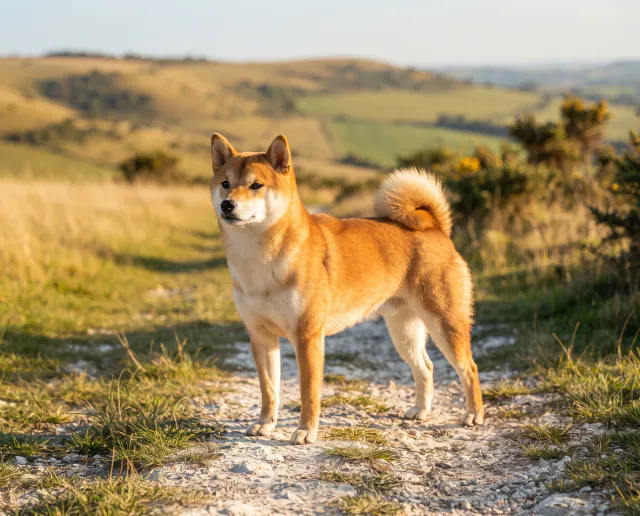
Anyone who has spent time online has probably watched a Shiba Inu video without knowing the breed’s name, usually one showing a small orange dog making an extraordinary, piercing shriek while resisting a bath or a nail trim. That noise has its own name among owners, the Shiba scream, and it sums up the breed rather well. This is a dog with firm opinions about what happens to its body and is entirely prepared to broadcast them to the neighbourhood.
Developed in the mountainous regions of Japan to flush small game and birds, the breed is one of the oldest and most numerous native Japanese dogs, and it kept the sharp, foxy alertness and hunting instinct of that history intact even as it became a popular companion breed worldwide. Small size and an appealing plush coat have made the Shiba a fashionable choice in recent years, often for owners who have not fully understood what an independent, primitive breed actually means day to day.
Living with the breed
At home a well raised Shiba is clean, self contained and often surprisingly cat like in its habits, grooming itself, choosing its own spot to settle and disliking being picked up or restrained without warning. Affection tends to come on the dog’s terms rather than constantly, and owners hoping for a demonstrative, cuddly companion are frequently disappointed. Children who respect that boundary generally get on fine with the breed, but younger children who want to hug or carry a dog are a poor match, and supervision matters more than with a naturally tolerant breed. Other dogs can present friction, since same sex aggression and general assertiveness are common enough to be typical rather than exceptional. Cats and small pets are at real risk given the hunting drive underneath the appealing exterior.
Daily exercise
Around 45 minutes of exercise a day is generally enough for an adult, though the real challenge is containment rather than duration, since the breed is a committed escape artist. Shibas climb, squeeze through improbably small gaps and clear fencing that would stop most dogs of similar size, and a garden needs checking at height and ground level. Recall cannot be relied on around any distraction, since the hunting instinct that made the breed useful in the mountains of Japan makes it deaf to instruction the moment something moves in the undergrowth. A secure, high fenced garden and a lead in any open space are not optional extras for this breed but the baseline for keeping one safely.
Training and mental work
Training a Shiba is an exercise in managing a dog that has its own view of most requests rather than one that simply learns and complies. The breed is intelligent, quick to learn what it wants to learn, and just as quick to ignore anything it judges unnecessary. Food and novelty motivate more reliably than praise alone, and short, varied, upbeat sessions get further than repetition, which the breed finds tedious and resists. Toilet training and basic house manners are usually straightforward given the breed’s natural cleanliness, but recall, loose lead walking and calm greetings all need sustained, patient work rather than a few weeks of puppy classes. This is not a breed suited to owners hoping for effortless obedience, and a trainer familiar with primitive or independent breeds is a genuinely useful resource.
Grooming and shedding
The double coat is short to medium in length but dense, and for most of the year a weekly brush with a slicker keeps it tidy and removes loose hair before it reaches the sofa. Twice a year the undercoat blows out dramatically over a period of weeks, and during that time daily brushing with an undercoat rake is close to essential, since the volume of hair shed is considerable for a dog of this size. Bathing should be infrequent, since the breed’s coat is naturally weatherproof and self cleaning, and frequent washing strips the oils that keep it that way, quite apart from the noise a bath is likely to produce. Nails, ears and teeth need the routine checks any dog needs, ideally introduced early and calmly given the breed’s general dislike of handling.
Health and costs
Thirteen to sixteen years is a realistic span for the breed, among the longer lifespans for a dog of any size. Patellar luxation and hip dysplasia both occur, and a breeder should be able to discuss hip scoring and knee checks on their breeding stock. Allergies and skin sensitivities are reported reasonably often, sometimes showing as itching or recurrent ear problems, and are worth mentioning early to a vet rather than treating as routine. Eye conditions have also been documented in the breed, making the BVA and Kennel Club eye scheme a fair question to raise with a breeder. Costs sit in the range of £80 to £150 a month for food, insurance and routine care, though fencing and garden security should be budgeted as a genuine upfront cost rather than an afterthought. The breed remains a minority choice in most countries relative to demand generated by its online popularity, so expect waiting lists from breeders who health test properly, and treat impulse buying from unverified sources as a real risk to avoid.
Verdict
The Japanese Shiba Inu suits an experienced owner with a secure garden, patience for a dog that negotiates rather than obeys, and no expectation of a naturally affectionate or biddable companion. Owners who enjoy a challenge and respect an animal’s boundaries tend to get on well with the breed.
First time owners, households with young children hoping for a cuddly pet, homes without secure fencing, or anyone drawn purely by the breed’s internet fame should think again. Properly matched to the right owner, the Shiba is a striking, clean and genuinely long lived companion.