
At a glance
Key facts
The essentials to compare before deciding whether this breed fits your home and routine.
- Size
- Large
- Lifespan
- 10 to 12 years
- Energy
- Medium
- Temperament
- Dignified, aloof with strangers and fiercely loyal to family
- Good with children
- Often good with its own family under sensible supervision
- Exercise
- One to two hours a day of varied, structured walking
- Trainability
- Experienced handler
- Grooming
- Weekly brushing that intensifies to daily during seasonal coat blows
- Estimated monthly cost, GBP
- £120 to £200 per month
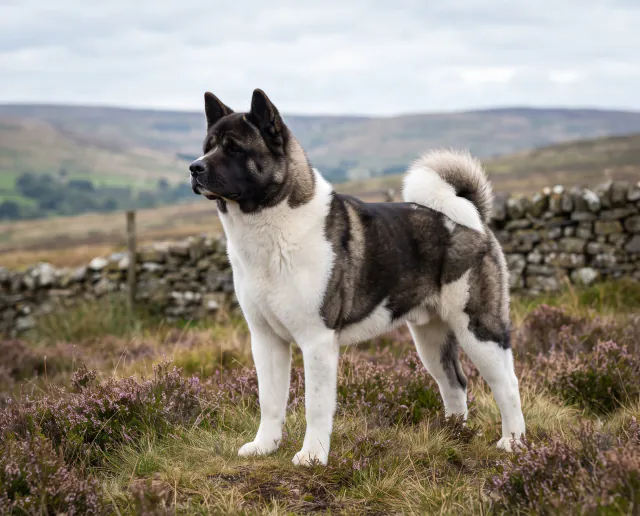
Two distinct dogs answer to the name Akita, and the split matters enormously to anyone researching the breed. What the Kennel Club registers simply as Akita is the larger, heavier American type, bred after the Second World War from Japanese stock crossed with Mastiff and other Western breeds brought back by servicemen, while the leaner original is now shown separately as the Japanese Akita Inu. A prospective owner looking at UK Kennel Club records and the breed standard is looking at the American type, a substantial, powerfully built dog closer in scale to a Rottweiler than to the fox like Shiba Inu it is sometimes confused with.
Bred originally in the mountains of northern Japan to hunt bear, boar and deer, the Akita carries real physical and mental toughness, and modern dogs retain a strong guarding instinct and considerable independence of mind. This is not a breed shaped primarily for obedience or eagerness to please, and owners who expect a large version of a biddable gundog will find the Akita a different proposition altogether, one that rewards respect and consistency far more than repetition.
Temperament in the home
An Akita is typically calm, quiet and deeply attached to its own household, often described as cat like in its self contained dignity. Strangers are met with reserve rather than friendliness, and the breed’s watchfulness makes it an effective, largely silent guardian rather than a barker. Same sex aggression is well documented in the breed, and two Akitas of the same sex sharing a home is a combination many experienced owners and breeders actively avoid, since serious fights can occur even between dogs raised together. The breed’s prey drive is significant, and small animals in the household, including cats not raised alongside the dog, are at genuine risk. With its own family, particularly children it has grown up with, an Akita is often patient and gentle, though its size and strength mean supervision around any child remains sensible regardless of temperament.
Exercise and training
An adult Akita needs a solid one to two hours of exercise most days, ideally varied between walking, structured games and time to explore rather than repetitive road walking alone. The breed’s independence shows clearly in training, where an Akita that has decided a command serves no purpose will simply decline to perform it, and traditional repetition based methods tend to produce a bored, disengaged dog. Reward based training, started early and kept consistent across every member of the household, gets far further than confrontation. Recall around wildlife or other dogs should never be assumed reliable, given the breed’s hunting background and strong prey drive, and secure fencing is essential rather than optional. Early, extensive socialisation with a wide range of people, dogs and situations matters enormously for a breed this naturally reserved and physically capable.
Coat and grooming
The double coat, with a soft dense undercoat beneath a harsher straight outer layer, needs a thorough brush weekly to control loose hair and keep the coat healthy. During the breed’s seasonal coat blow, which typically happens twice a year, shedding increases dramatically and daily brushing for a couple of weeks makes a real difference to the volume of hair around the house. Bathing is needed only occasionally, since the coat is naturally weather resistant and largely self cleaning. Nails, ears and teeth need the routine attention any large breed requires, and given the breed’s size, starting handling exercises in puppyhood makes adult grooming and veterinary visits far more manageable.
Health and lifespan
Ten to twelve years is a realistic lifespan for the breed, in line with most dogs of comparable size. Hip and elbow dysplasia occur in the breed, and the British Veterinary Association and Kennel Club scoring scheme gives buyers a genuine, comparable figure to ask breeders about rather than a vague assurance. Hypothyroidism is recognised in Akitas and can affect coat, weight and energy if untreated, so unexplained lethargy or coat changes are worth a blood test rather than assumption. Immune mediated skin conditions have also been documented in the breed, and any persistent skin problem deserves proper veterinary investigation rather than a home remedy. Bloat, a life threatening twisting of the stomach, is a risk in deep chested large breeds generally, and owners should know the warning signs and treat sudden restlessness, unproductive retching or a swollen abdomen as an emergency.
Costs and space
Feeding a dog this size is not cheap, and insurance for a breed with a guarding reputation and a handful of documented health conditions tends to sit toward the higher end for a large dog. A working estimate of around one hundred and twenty to two hundred pounds a month covers typical costs, though this varies with insurer, region and the individual dog’s health. A garden with genuinely secure fencing matters more than raw square footage, since an escaped Akita with strong prey drive and territorial instincts can create serious problems for itself and for neighbours. Rural or spacious suburban settings generally suit the breed better than a small terraced house, both for space and for the reduced friction with passing dogs and strangers that daily walks in a busy area can bring.
Verdict
The Akita suits an experienced, calm and consistent owner with secure space, realistic expectations about guarding instincts and same sex aggression, and no plan to keep a second dog of the same sex. It rewards patience and respect with genuine loyalty and a largely undemonstrative but real bond.
First time owners, households wanting a conventionally sociable dog toward strangers, or anyone unable to manage a large, independent minded animal around other dogs should choose a different breed. The Akita asks to be understood on its own terms rather than reshaped into an easier dog.