At a glance
Key facts
The essentials to compare before deciding whether this breed fits your home and routine.
- Size
- Large
- Lifespan
- 10 to 13 years
- Energy
- Medium
- Temperament
- Dignified, independent minded and reserved with outsiders
- Good with children
- Better suited to households with older, settled children
- Exercise
- About an hour a day of purposeful, well managed walking
- Trainability
- Experienced handler
- Grooming
- Weekly brushing, with two heavy coat blows a year
- Estimated monthly cost, GBP
- £100 to £190 per month
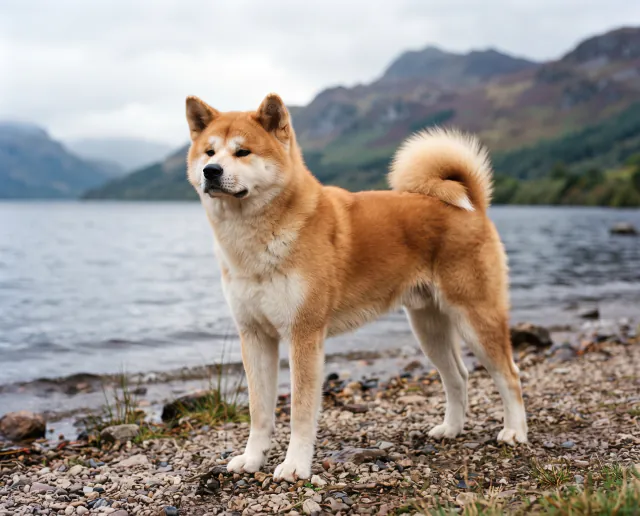
The Kennel Club separates the Japanese Akita Inu from the Akita, the larger breed developed in the United States from Akita stock taken there after the Second World War, and the two are judged as distinct breeds despite the shared name and origin. The Japanese type kept closer to the original hunting dog of the mountains of Akita prefecture, bred to track and hold bear, boar and deer, and it remains lighter, foxier in head and more overtly spitz in outline than its American cousin.
Meeting one for the first time tends to correct a few assumptions formed from photographs. The breed carries itself with genuine reserve rather than aloofness for its own sake, watching rather than approaching, and it forms close bonds with its own household while treating the wider world with polite indifference at best. That combination of loyalty and independence is precisely what makes the breed unsuitable for owners hoping for an easy, biddable companion.
Temperament in the home
Within its own family the breed is calm, dignified and often quietly affectionate, though rarely demonstrative in the way a retriever or spaniel might be. Strangers are met with cool assessment, and visitors should be introduced properly rather than left to make their own approach. Same sex dog aggression is a well recognised trait, and many adults do better as the only dog in a household or carefully managed with a dog of the opposite sex. Small animals and cats are at real risk from a breed with a strong hunting background, and this is not something training reliably overrides. Guarding instinct runs deep, so a securely bounded garden matters as much for keeping visitors safe as for containing the dog. The breed tolerates reasonable periods alone better than more clingy companion breeds, a function of general self sufficiency rather than a lack of attachment.
Exercise and training
An hour a day of purposeful walking, varied in route and including some off lead time in a securely fenced area, suits most adults, and the breed is not naturally hyperactive once past puppyhood. Puppies should have exercise carefully limited while their frame develops, since this is a substantial dog by adulthood and joint strain in the growing months has lasting consequences. Recall cannot be assumed reliable around wildlife or other dogs, given the breed’s hunting origins and independent streak, so open access land needs a long line rather than blind trust. Training calls for patience, calm consistency and an understanding that the breed questions the point of repeated commands rather than obeying automatically. Harsh handling tends to produce a shut down or defensive dog, and this is a breed where guidance from a trainer experienced with primitive or guarding types is genuinely worthwhile rather than optional.
Coat and grooming
The double coat is dense and plush rather than long, with a soft thick undercoat beneath a straight, slightly harsh outer layer that stands away from the body. For most of the year a weekly brush with a slicker and a comb through the ruff and trousers is sufficient. Twice yearly the undercoat blows out over several weeks, and during that period the volume of loose hair shed daily is considerable, calling for a proper undercoat rake and near daily attention if the house is to stay manageable. Bathing is occasional rather than routine, since the coat is naturally weatherproof and self cleaning between blows. Nail length matters on a dog this heavy, since overgrown nails alter posture and gait, and ears and teeth need the usual routine checks.
Health and lifespan
Ten to thirteen years is a fair expectation for the breed with sound breeding and sensible weight management. Hip dysplasia occurs, and buyers should ask to see hip scores for both parents, from the BVA and Kennel Club scheme or its local equivalent, rather than take assurances on trust. Hypothyroidism and a range of autoimmune skin conditions have been documented in the breed internationally, and a breeder who has researched their lines should be able to discuss what, if anything, has appeared in their dogs. Progressive retinal atrophy and other inherited eye conditions are worth asking about through the BVA and Kennel Club eye scheme. Bloat is a risk in deep chested breeds of this size, so feeding in two or more smaller meals rather than one large one, and avoiding vigorous exercise straight after eating, is sensible precaution rather than fuss.
Costs and space
This is a large, strong dog that needs a home with genuine space, a securely fenced garden and, realistically, a vehicle capable of transporting it comfortably and safely. A small flat or a home without outdoor space is a poor match regardless of how well exercised the dog is elsewhere, since the breed also needs somewhere secure to be territorial about. Monthly costs typically fall between £100 and £190, covering food appropriate to a large active dog, insurance that reflects both size and any breed specific loading, and routine veterinary care, though individual costs vary with region and insurer. The breed remains uncommon outside Japan, so prospective owners should expect a genuine search, a waiting list from a considered breeder, and should treat the Japanese Akita breed clubs as the first point of contact rather than general listings.
Verdict
The Japanese Akita Inu suits an experienced owner with a securely fenced property, realistic expectations about a reserved and sometimes challenging temperament, and the patience to train and socialise thoroughly and consistently over the dog’s whole life. Households already confident handling strong willed, independent dogs tend to get the most from the breed.
First time owners, homes with small pets, households wanting a naturally sociable dog with strangers, or anyone unwilling to manage same sex dog introductions carefully should look elsewhere. Taken on by the right owner, this is a loyal, capable and genuinely impressive companion.